


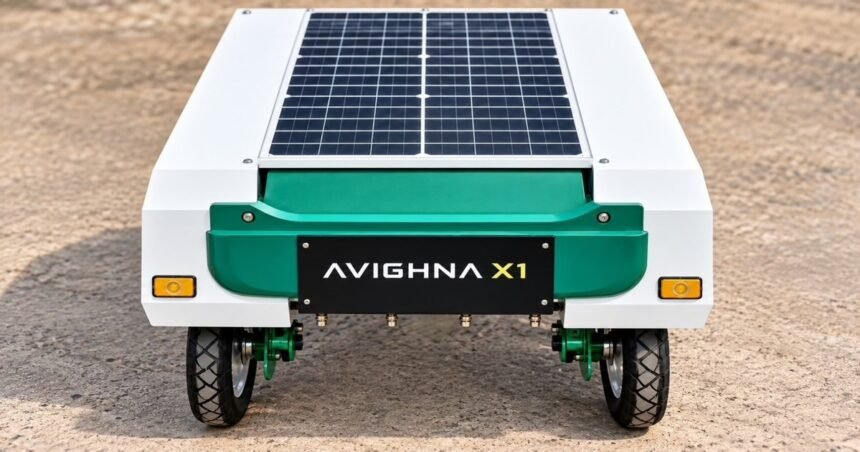
For most of India’s farmers, the hardest farm work still runs on hands and backs: weeding row after row under the sun, spraying crop after crop, sowing and fertilising by hand. Labour is getting scarcer and costlier, and the big machines built for vast mechanised farms simply do not fit India’s small, fragmented holdings. Pragyanik AI, a startup from Indore founded in 2025, looked at that mismatch and built a machine sized for the farms India actually has: Avighna X1 Lite, a compact autonomous robot that weeds, sprays, seeds and applies fertiliser on its own. Its first working prototype is built, and field trials are now under way.
Built for small farms, not big ones
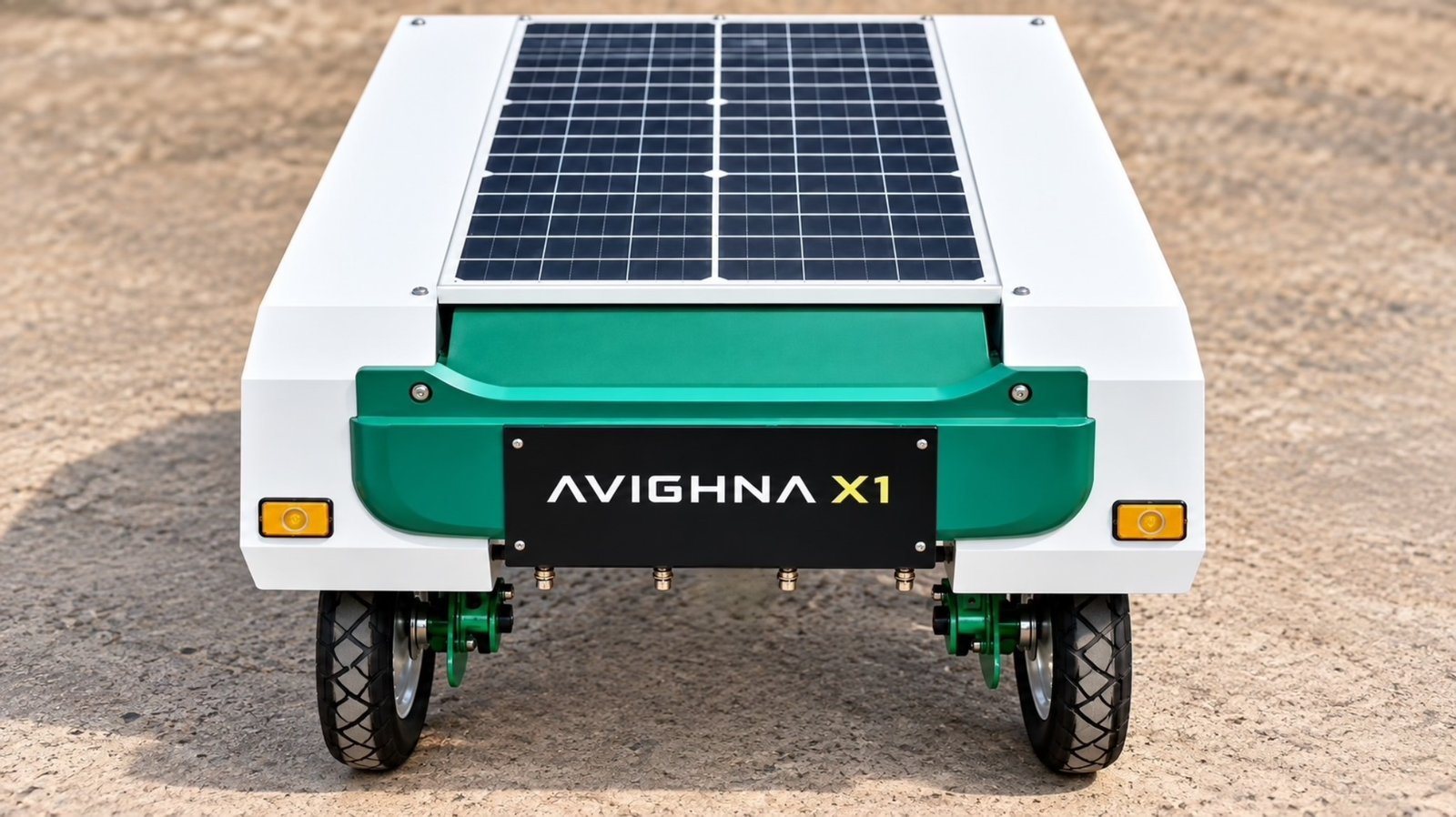
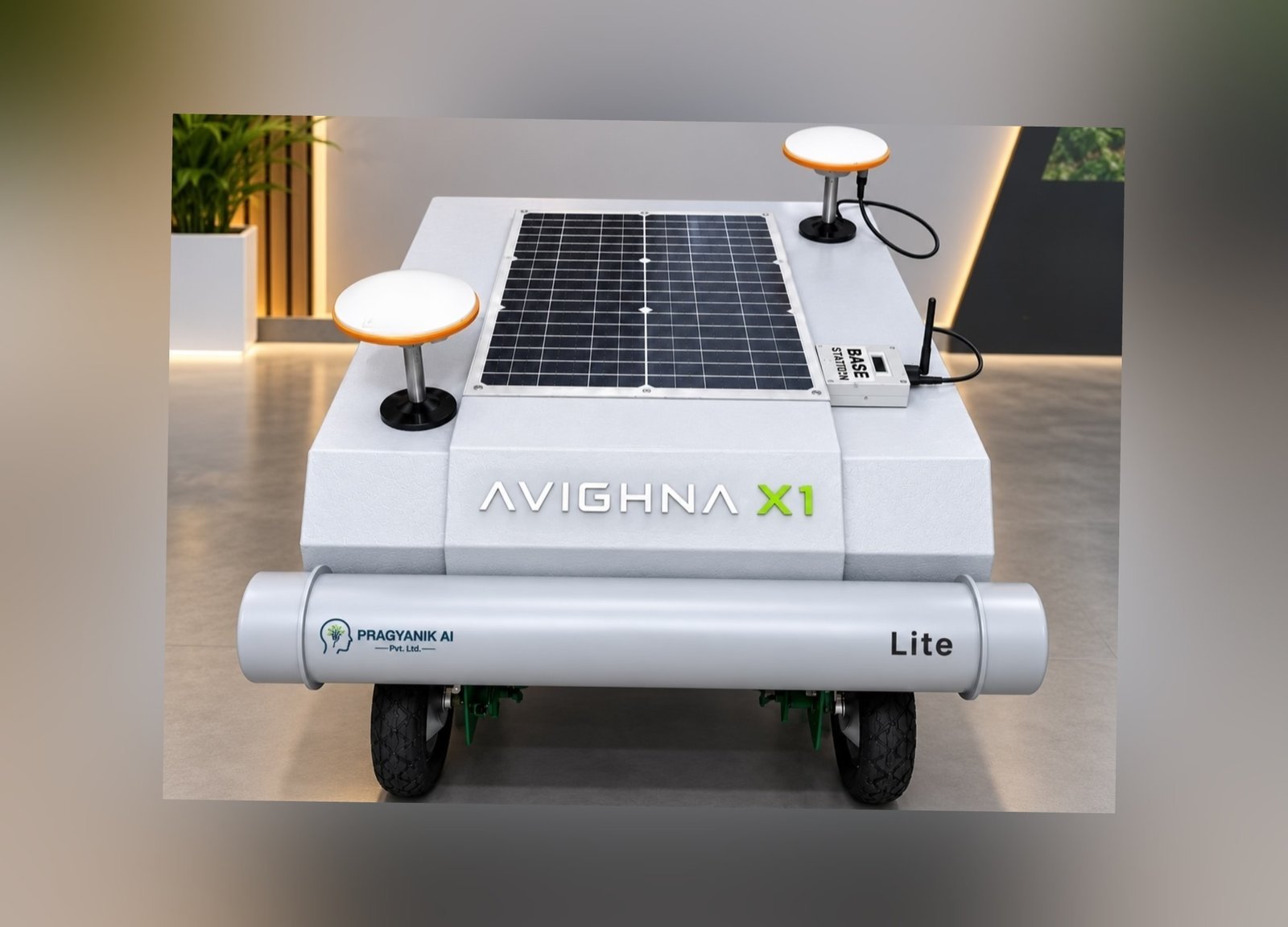
Avighna X1 Lite is deliberately small: a chassis of roughly three feet by two feet, riding on a four-wheel-drive traction system that can move through narrow crop rows where a tractor cannot turn. Its working width and ground clearance adjust to suit different crops and field conditions, so the same machine can work a vegetable plot one day and a horticulture row the next. The battery-powered robot carries 100–150 kilograms of payload and runs for eight to ten hours on a charge, with solar-assisted charging as an extra option for long days in the field.
Eyes that tell weed from crop
The heart of the machine is its vision. Cameras watch the crop rows as the robot moves, and the company’s AI processing is designed to tell weeds apart from the crop itself — then direct treatment only where it is needed. Instead of spraying chemicals across an entire field, Avighna X1 Lite targets the weed, which means less chemical use and less contact with the crop. The same vision system can watch over the crop, spot conditions that need attention, and keep a record of what it sees as it works.
Finding its way with satellites and lasers
Moving on its own through a field takes more than wheels. Avighna X1 Lite navigates with satellite positioning corrected in real time — GNSS-RTK — so it can hold its line between crop rows with the precision that seeding and spraying demand. LiDAR maps the ground around it, sensing obstacles and uneven ground so the robot can plan its route and adjust as it goes. Together, the satellite fix, the laser map and the cameras give the machine a steady sense of where it is and what lies ahead, even on ground that is never flat or uniform.
One machine, many jobs
Avighna X1 Lite is not a single-purpose machine. Its chassis takes interchangeable attachments, so the same robot can weed between rows, spray with precision, sow seed and spread granular fertiliser — sharing the battery, drive system, sensors and computer across every job. For a small farm, that matters: one machine doing four jobs is far easier to justify than four machines doing one each. The company is already building on the idea with the full-scale Avighna X1, a 12-horsepower platform designed to carry 500–600 kilograms, with integration targeted for completion by the end of 2026.
It started with levelling fields
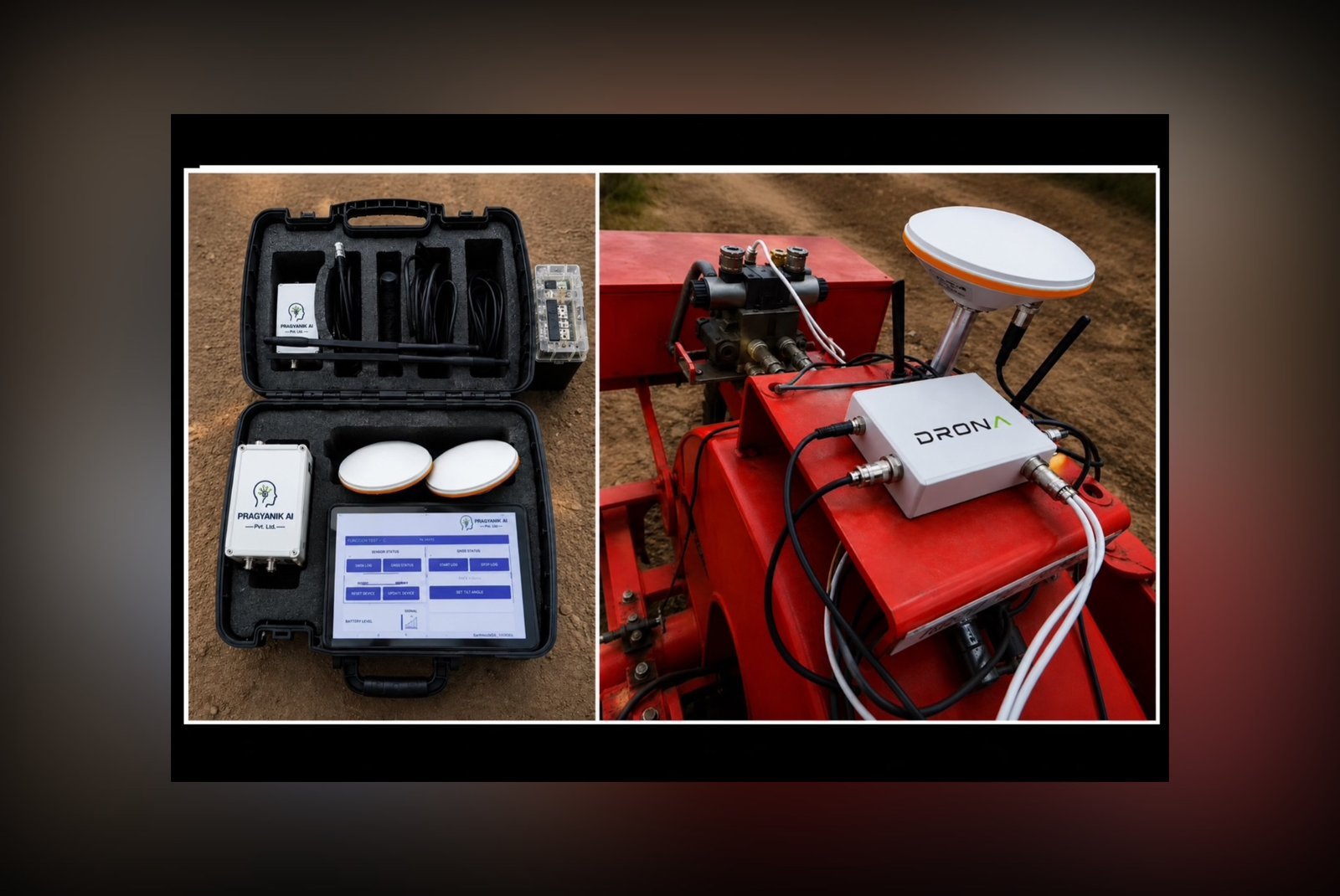
Pragyanik AI did not begin with a robot. Its first product was Drona, a GNSS-based precision land-levelling system that guides field preparation to satellite accuracy — flatter fields, better water distribution, more efficient farming. Drona has completed successful field trials, and the precision-positioning experience behind it became the foundation for the Avighna programme. The company’s work has been recognised in the Department of Science and Technology’s Annual Report 2025–26, which lists Pragyanik AI as an enterprise nurtured by the DAVV Incubation Centre in Indore under the National Initiative for Developing and Harnessing Innovations. The startup is led by founder and chief executive Mukesh Rai, with Manoj Kumar Patel as co-founder and chief technology officer.
More Read

From a land-levelling system to a robot that weeds, seeds and sprays on its own, Pragyanik AI is building its machines around the farm India actually has — small, varied and full of work that needs doing. The field trials now under way will show how far the little robot can go, and for India’s small farmers, a machine that takes on the weeding, spraying, seeding and fertilising by itself would change the shape of a working day.
Keep reading: A Greenhouse in a Box: Inside Kheyti, the Hyderabad Startup Helping Small Farmers Beat the Heat · From Kerala’s Flooded Fields to the Navy’s Docks: Inside Fuselage Innovations, the Siblings Building India’s Farm Drones · More Food Processing & Agri-Tech stories
Like stories like this? Add Exceptional Technology as a preferred source on Google to see more of our reporting in your search results and Discover feed.







