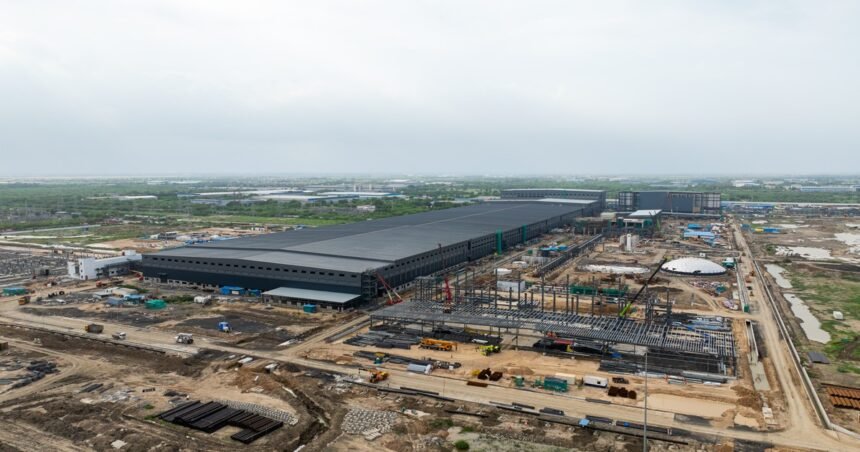
Every electric car sold in India today runs on a battery cell made somewhere else. The cell — the single most expensive part of an EV, the part that decides its range, its safety and its price — has been the one piece of the electric-vehicle puzzle India has not made for itself. At Sanand in Gujarat, the Tata Group’s battery company Agratas is building the factory that changes that.
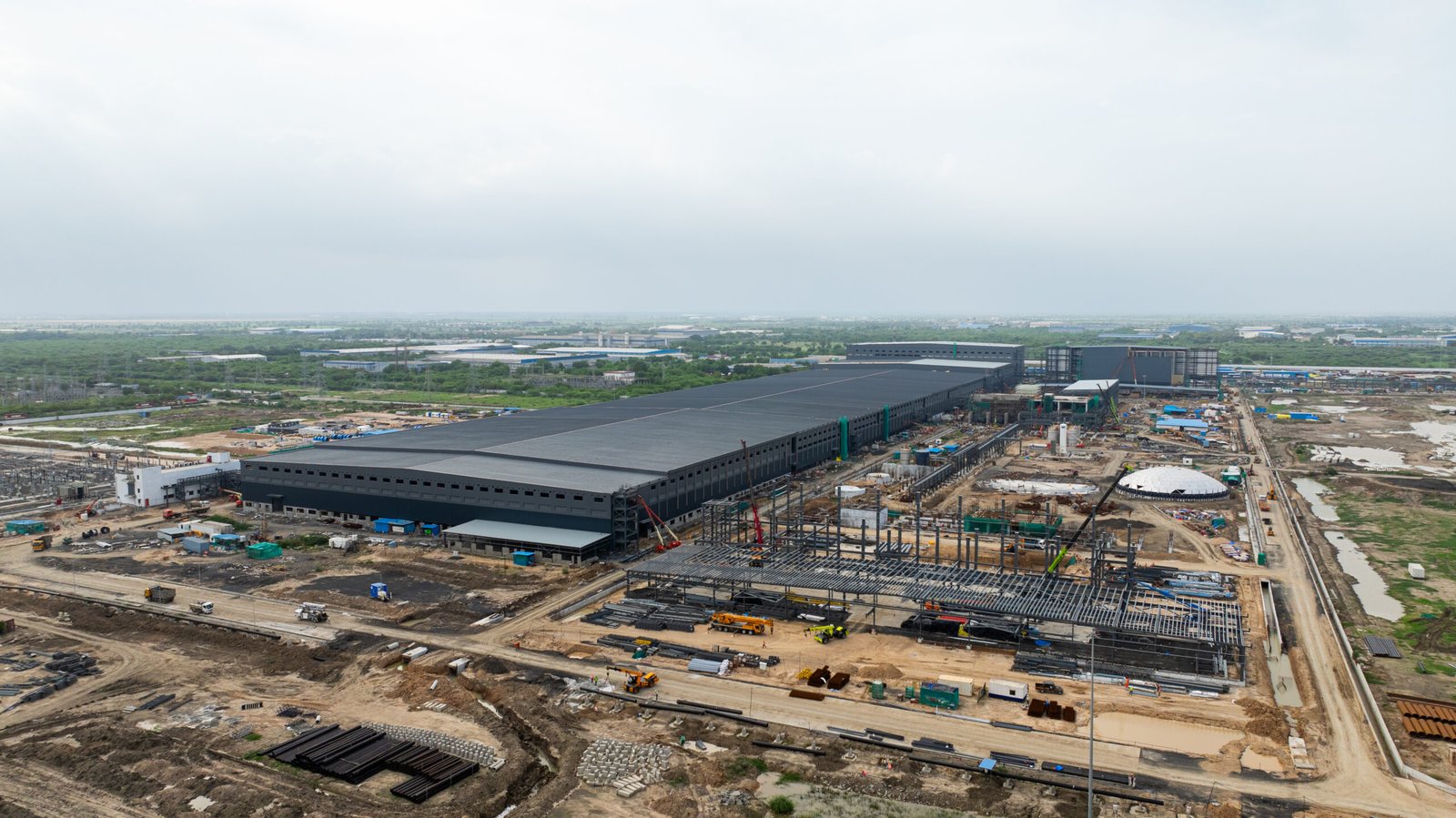
Agratas Energy Storage Solutions is Tata’s global battery business, and its first Indian gigafactory is rising on 320 acres at Sanand. The main building’s steel frame is complete — a structure 700 metres long, 150 metres wide and 34 metres tall, covering 105,000 square metres — and the first process equipment arrived on site in September 2026. The company says production will begin in 2027, with an initial capacity of 20 GWh a year: enough cells, at full tilt, for hundreds of thousands of electric vehicles.
The cell itself is the project
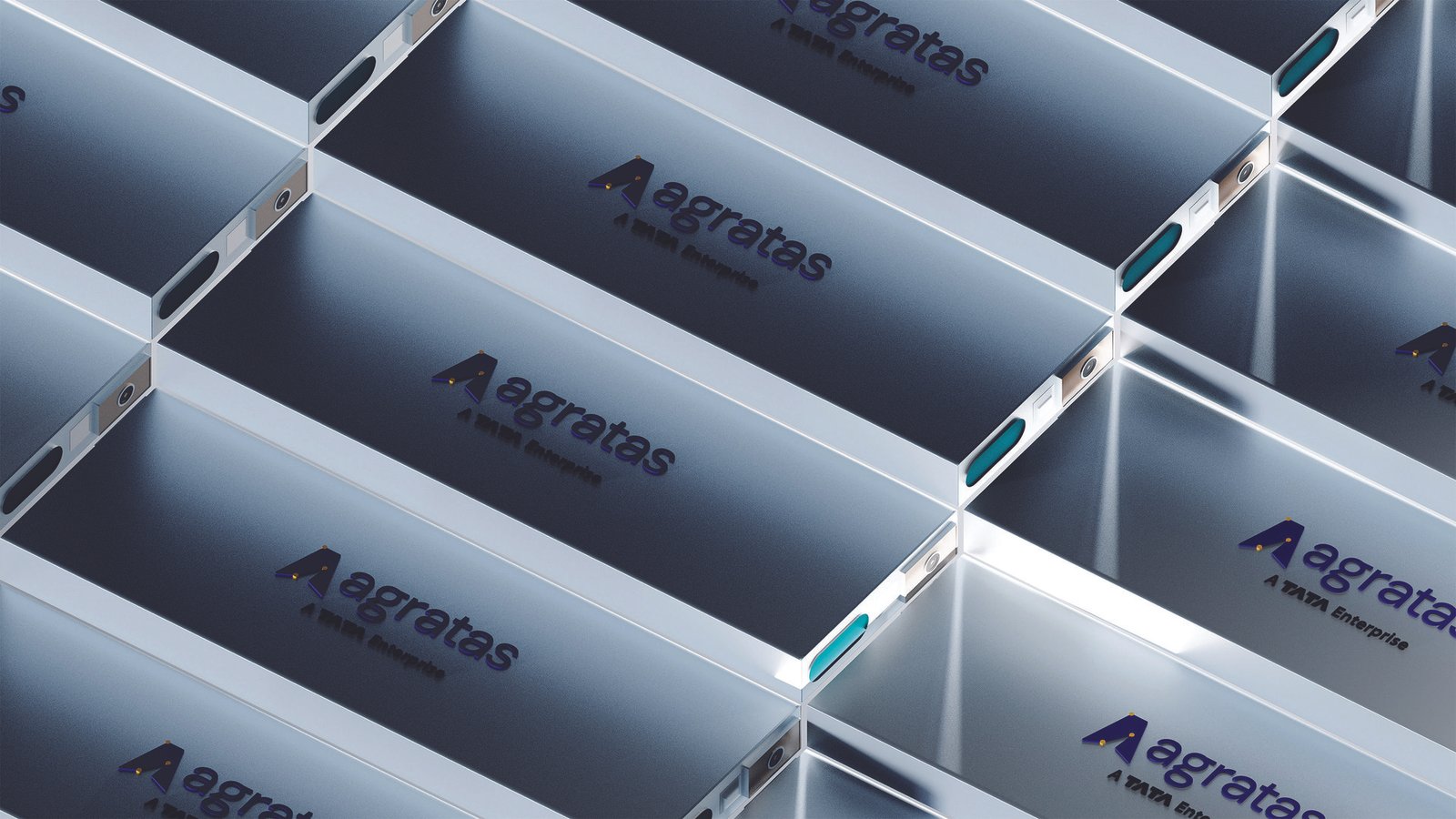
What makes Agratas different from other gigafactory announcements is what it is choosing to build inside the building. Rather than relying entirely on licensed foreign technology, Agratas made a strategic decision to engineer its own indigenous intellectual property — its own lithium iron phosphate (LFP) cell technology, developed from scratch. Its research labs in Bengaluru work on LFP chemistry tuned for mass-market vehicles, while its Oxford lab advances nickel manganese cobalt (NMC) formulations for Jaguar Land Rover’s luxury cars.
To make that bet safely, Agratas built testing labs and pilot lines that can validate raw materials down to the powder level — checking the chemistry of every input before it ever reaches a production line. The company has hired specialists from 30 different countries and built supply partnerships to secure ethically sourced, fully traceable precursor chemicals.
One factory, two continents
Sanand is only half of the plan. Agratas is building a second gigafactory at Bridgwater in Somerset, in the UK, and the two plants together are planned for around 60 GWh of capacity. The two sites will run identical manufacturing execution systems, SCADA frameworks and operational-technology software — the same digital backbone in Gujarat and in Somerset — so engineers can benchmark yields across plants and move a process from lab scale to high-volume production without re-engineering it.
That digital thread runs in both directions. Forward, it captures raw-material provenance, production data and test records into a digital Battery Passport for every cell. In reverse, live telemetry from the battery management systems of cars on the road reports back how cells actually perform — their thermal stress, their degradation, their discharge patterns — so the company’s chemical engineers can calibrate exactly how much active material the next generation of cells needs.
More Read

The automation is deliberately phased. Edge computers on the shop floor watch control limits — ambient humidity, slurry-coating temperature, chemical recipe limits — and alert operators the moment a variable drifts out of bounds. A fully closed-loop, AI-driven factory is the company’s stated goal for three to five years from now, once its models have enough real production data to learn from.
Why the timing matters
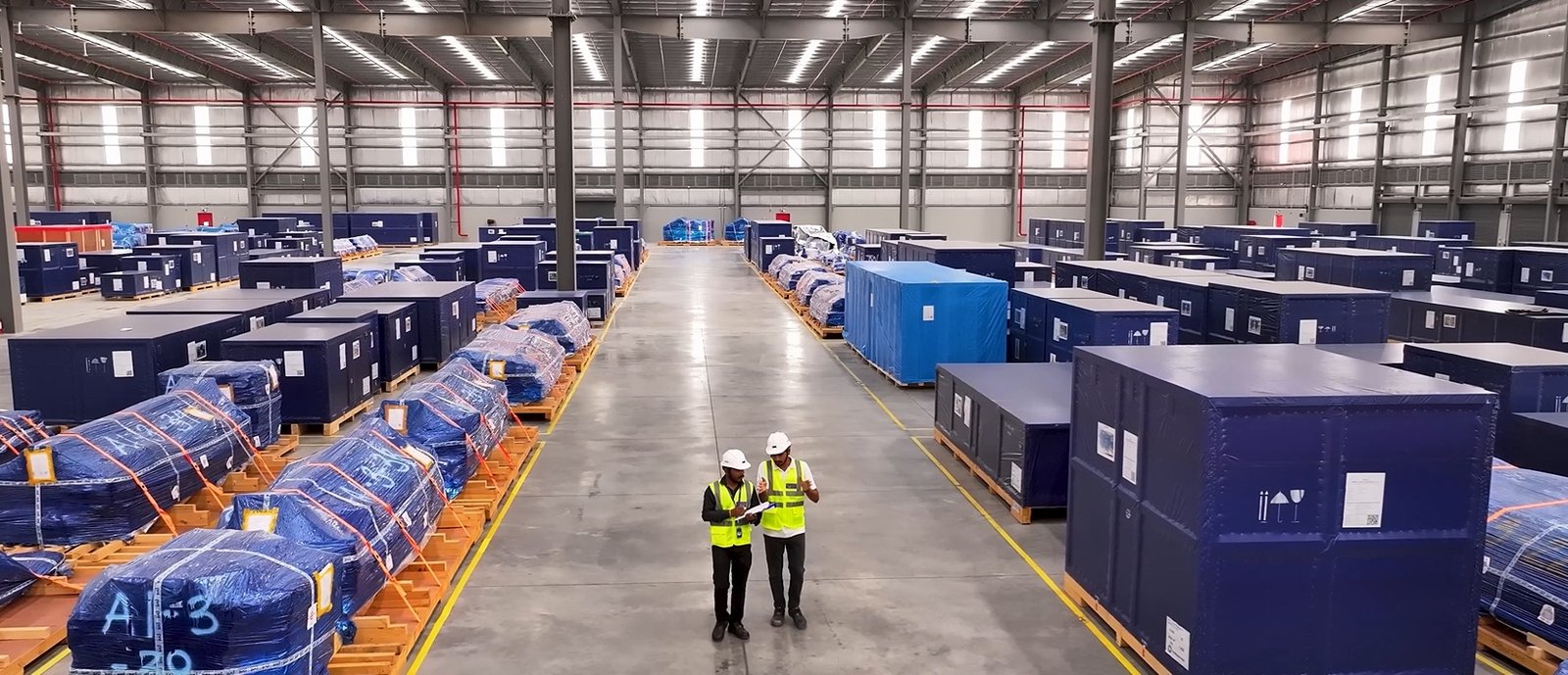
India’s government has put Rs 18,100 crore behind domestic cell manufacturing through the ACC production-linked incentive scheme, which requires 25% domestic value addition within two years and 60% within five. As of March 2026, only 1 GWh of capacity had been reported under the scheme — which is exactly why a 20 GWh plant matters. Agratas’s anchor customers are already in place: Jaguar Land Rover and Tata Motors, whose passenger-vehicle chief Shailesh Chandra said at the India EV Conclave 2026 that domestic cell manufacturing would begin within a year, with deeper localisation of battery materials following over the next two to three years.
The build itself is a Tata Group effort: Tata Projects is executing construction with Tata Consulting Engineers, and Tata Technologies is collaborating on battery design and enterprise systems. In its latest financial filing, Agratas reported total expenses of around Rs 1,144 crore in FY26, with assets more than doubling to Rs 14,515.93 crore as the gigafactories take shape. Tata Sons holds 88% of the company, with AESC Apollo Holdings holding the remaining 12%.
For India, the Sanand gigafactory is the moment the EV story stops being only about the cars and starts being about the cell inside them. The frame is up, the machines are arriving, and the chemistry is being written in Bengaluru. In 2027, the first cells roll off the line — made in India, for India’s electric future.
Keep reading: Every Drop Counts: Inside Solabot, the Ghaziabad Startup Cleaning India’s Solar Panels Without Water · A Coating Thinner Than a Hair: Inside TriNANO, the Mumbai Startup Making Solar Panels Work Harder · More Energy & Power stories
Like stories like this? Add Exceptional Technology as a preferred source on Google to see more of our reporting in your search results and Discover feed.