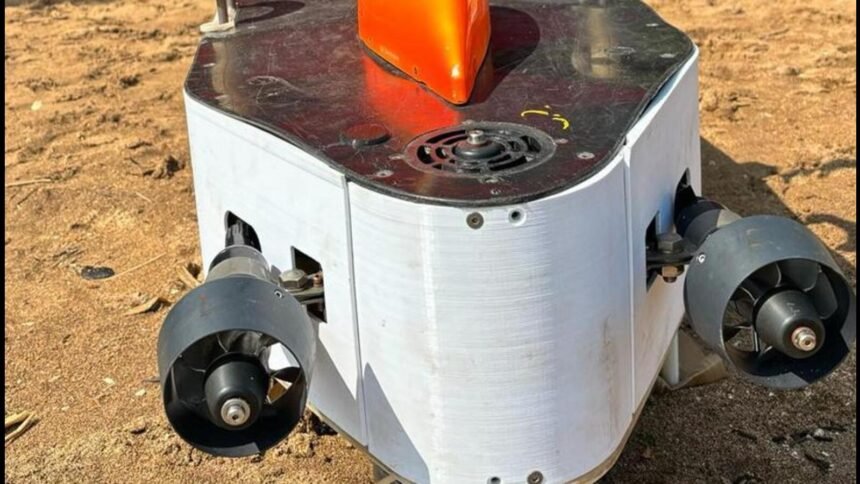
India’s coral reefs are some of the most delicate ecosystems in its waters, and they are under strain. Warming seas are bleaching corals, and keeping track of what is happening down there has always meant sending divers into the water — slow, difficult work that depends on the weather and the sea. A team of scientists in Goa has built a better way to watch over the reefs: a robot that swims out to the corals on its own, scans them, and brings the data home. It is called C-BOT, and Indian companies are now lining up to take it from the laboratory to the sea.
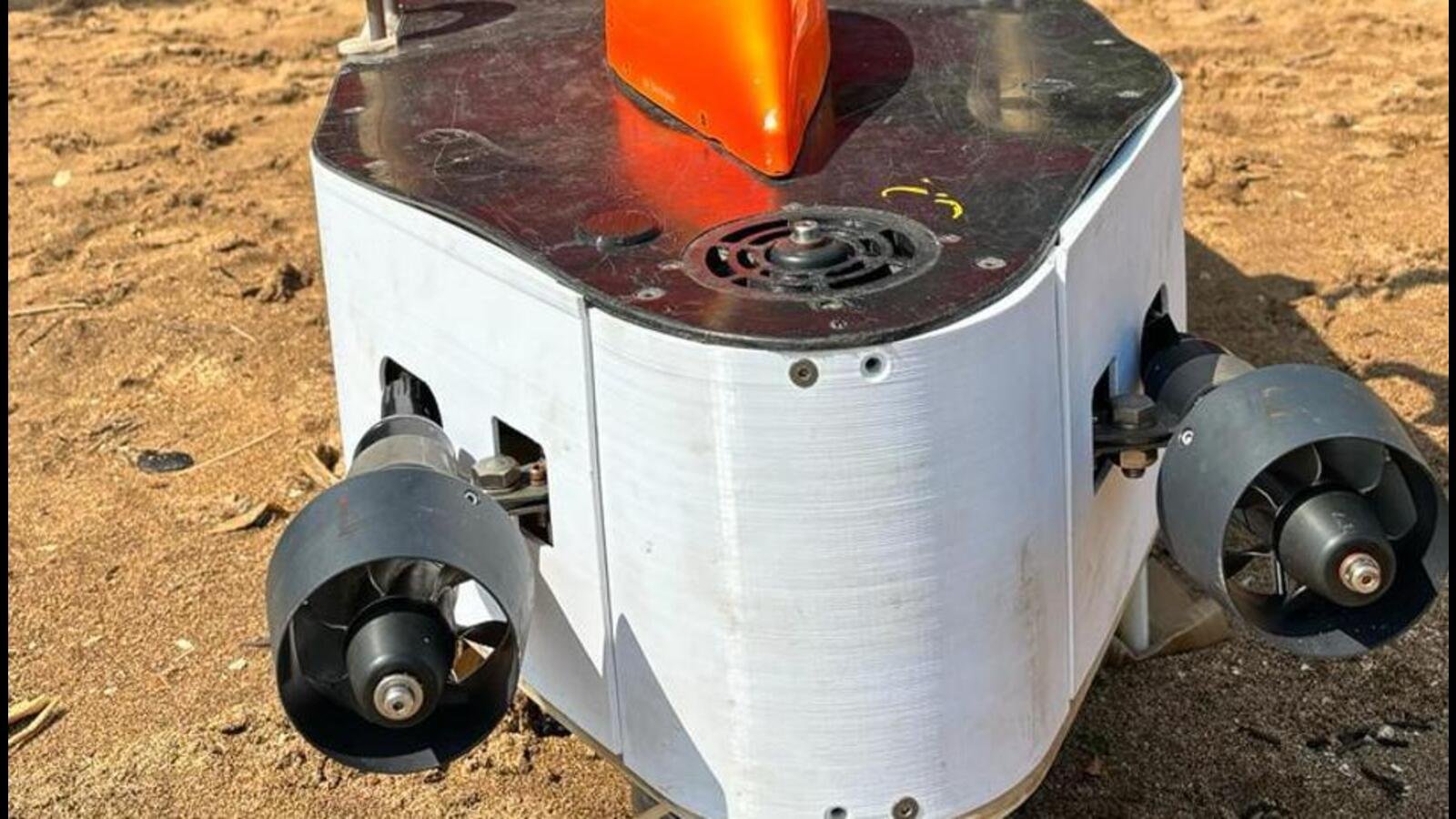
C-BOT — the Coral Reef Monitoring and Surveillance Robot — was built by the CSIR-National Institute of Oceanography (CSIR-NIO) in Goa and launched in January 2024 by Dr N Kalaiselvi, Director General of the Council of Scientific and Industrial Research. It is an autonomous underwater vehicle that can dive to 200 metres, carrying specialised sensors and high-resolution cameras. The institute says the robot navigates to a coral formation on its own, scans it, and returns with data and photographs in real time, giving scientists a steady, repeatable record of reef health that divers alone could never build.
A robot that reads the reef
The clever part is what C-BOT does with the pictures it takes. The institute is building photogrammetry tools that turn its photographs into precise measurements of a coral structure’s area and volume, so researchers can track how a reef changes year after year. The same sensors that read the reef also measure the water around it, helping scientists understand why corals are bleaching and which reefs are recovering. The institute says the robot can also help with bathymetric surveys that map the seafloor, work the Indian Navy is interested in, and even checks on the underwater health of dams and gates.
From the lab to the factory floor
The most exciting part of the story is what happened next. CSIR-NIO’s technology is now moving into Indian industry. In December 2025, the institute signed a technology transfer agreement with Krishna Defence & Allied Industries Ltd of Mumbai for C-BOT at its Blue Innovation Forum in Goa. In November 2026, it transferred the technology to Corrosion Protection Ltd of Bhubaneswar, Odisha — a deal the institute says was finalised within two days of the company’s request — so the robot can move toward wider commercial production and deployment. Two Indian firms, two transfers, one home-grown robot: the path from a Goa laboratory to the open sea is now open.
Deeper waters ahead
CSIR-NIO is already thinking bigger. The institute says its underwater vehicles have operated at depths of 500 metres, and it plans to extend that reach to 2,000 metres and then 6,000 metres, opening up the deep Indian Ocean to Indian-built robots. C-BOT was the first step: a small, sure-footed machine proving that India can build the eyes to watch over its own reefs. Now, with Indian companies carrying it forward, those eyes are about to reach a great many more reefs.
Keep reading: No Divers, No Dry Dock: Inside Mafkin Robotics, the Chennai Startup Cleaning India’s Ship Hulls With Robots · Only Water in Its Wake: Inside Cochin Shipyard’s FCV Pilot-01, India’s First Hydrogen Fuel Cell Ferry · More Shipbuilding & Maritime stories
More Read

Like stories like this? Add Exceptional Technology as a preferred source on Google to see more of our reporting in your search results and Discover feed.