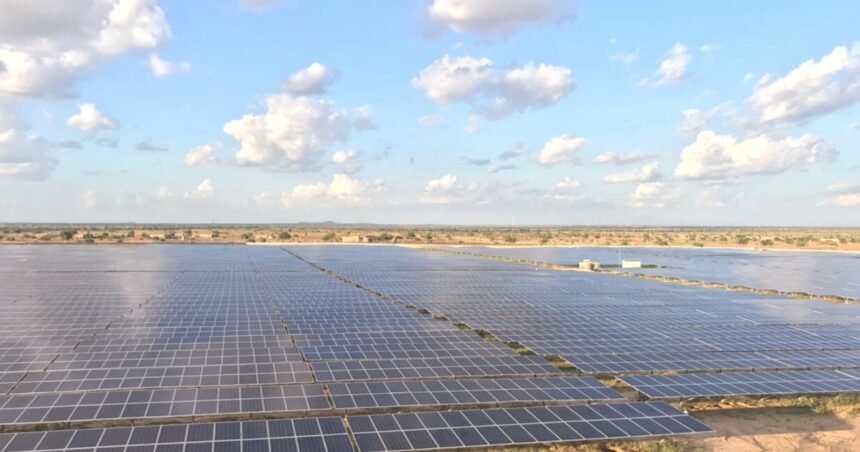
Every solar panel is a sandwich. Glass on the outside, solar cells in the middle — and holding the whole thing together through 25 years of heat, rain and dust is a thin layer most people never see: the encapsulant. In January 2026, Mumbai-based RenewSys India launched a new way of delivering that layer — CONSERV® AUGMENSHEET, which the company says is India’s first encapsulant supplied in reel form, made to insulate the busbars and junction boxes inside a solar module.
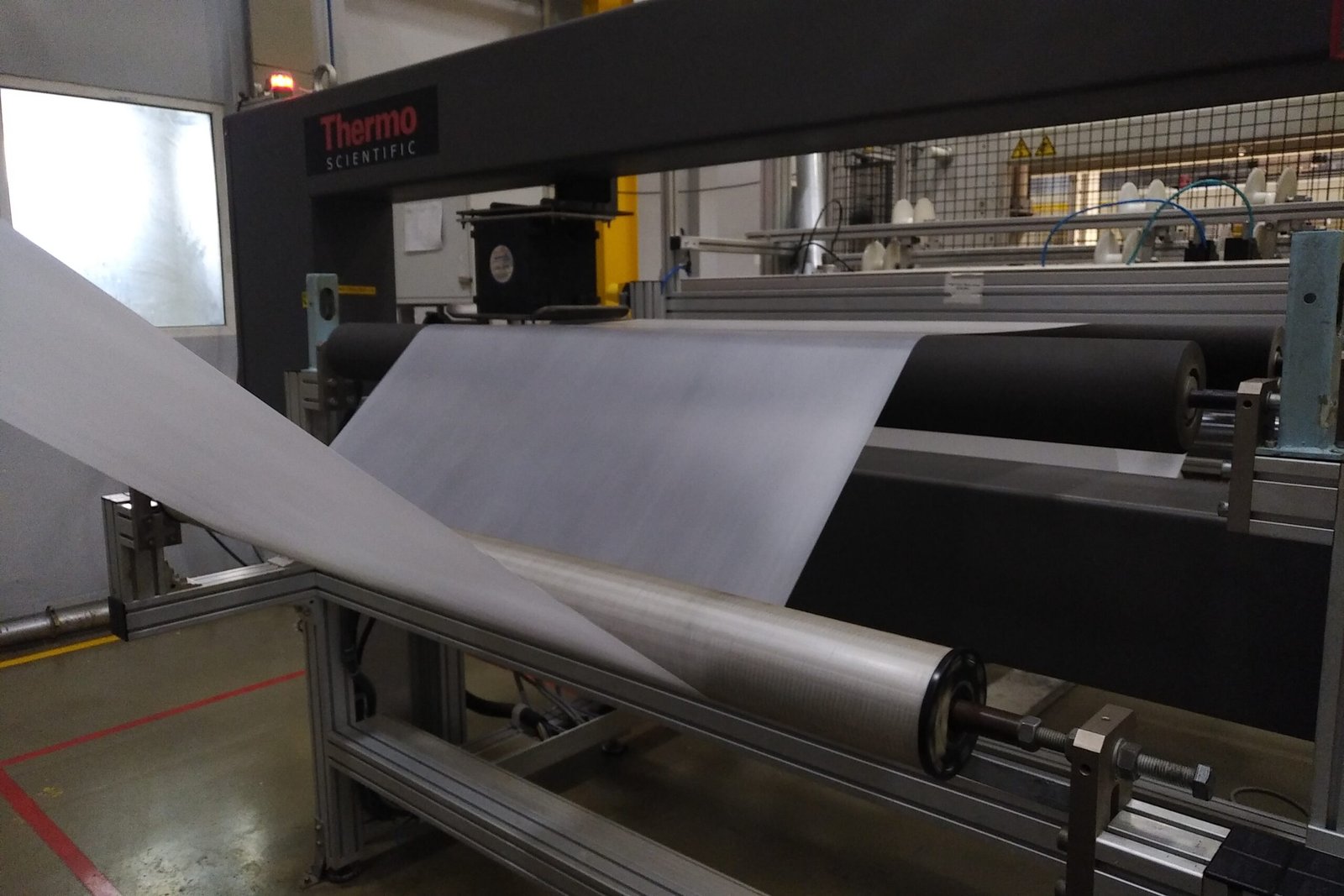
Until now, that insulation has typically arrived as cut sheets, laid by hand or by semi-automated steps. A reel changes the rhythm of the factory floor: it feeds straight into a fully automated module line, unrolling exactly where it is needed, at exactly the width the module design calls for.
A reel, not a sheet
AUGMENSHEET is built on RenewSys’ established CONSERV encapsulant technology and comes in three chemistries — EPE, EVA and POE — so module makers can pick the formulation that suits their cells and their lamination process. It is supplied in widths from 30 mm to 100 mm, customised to the module design, with rolls of 60 to 100 linear metres. The range is UL certified (File No. E353124).
The sheet is designed to cover the busbar and junction-box areas of a module, sealing them tight and squeezing out the air bubbles that can form during lamination — bubbles that, left in place, become weak points in a panel’s long life outdoors. The company says its optimised formulation minimises bubble formation, improves electrical insulation and gives a uniform material flow with strong wet-out, so the layers bond cleanly. It works with modern module architectures, including glass-to-glass and glass-to-backsheet builds, and with high-efficiency cell technologies such as TOPCon and PERC.
For a module factory, the payoff is practical rather than glamorous: automatic feed-in, higher throughput, consistent processing and less manual handling on lines that are increasingly built to run without stopping. “CONSERV® AUGMENSHEET reflects our deep understanding of evolving module manufacturing challenges and our focus on practical, performance-driven innovation,” said Avinash Hiranandani, Vice Chairman and Managing Director of RenewSys India, at the launch. With the launch, the company says it became the only manufacturer in India offering encapsulants in reel form.
The company behind it
RenewSys is the renewable-energy arm of the ENPEE Group, a manufacturing conglomerate whose history stretches back to 1961, and it describes itself as India’s first integrated manufacturer of solar PV modules and their key components — encapsulants, backsheets and solar cells. The company says it now holds around 30 GW of encapsulant capacity and 4 GW of backsheet capacity, with 5.6 GW of module capacity across its plants in Hyderabad, Bengaluru and Khopoli, Maharashtra, and a high-efficiency solar cell line under installation in Hyderabad.
More Read

The scale around the product keeps growing. In March 2026 RenewSys commissioned a 3 GW TOPCon module plant at Khopoli, an AI-powered, fully automated facility spread over 7 lakh square feet. And in November 2026 it signed a 1.2 GW supply agreement with Gujarat module maker Kosol Energie, to deliver CONSERV POE encapsulants and PRESERV backsheets for high-efficiency TOPCon modules over twelve months. RenewSys also says it is India’s first solar manufacturer to hold an EcoVadis Platinum sustainability rating.
India’s solar factories are racing to automate, and every automated line needs its materials to arrive in a form machines can handle. A reel of encapsulant is a small thing — a roll of film, a few centimetres wide. But it is the kind of small thing that decides whether a panel leaves the line quickly, cleanly and built to last decades in the sun.
Keep reading: Solar Without a Rooftop: Inside SundayGrids, the Bengaluru Startup Selling Sunshine by the Biscuit · The Box That Turns Sunlight Into Power: Inside Oriana Inverters, Pune’s New Solar Inverter Maker · More Energy & Power stories
Like stories like this? Add Exceptional Technology as a preferred source on Google to see more of our reporting in your search results and Discover feed.