


India now runs more than 168 gigawatts of solar power, much of it in the dusty, sun-baked states where panels work hardest — and where dust settles fastest. A dirty panel can lose a meaningful slice of its output, and washing a gigawatt-scale plant the old way takes tanker after tanker of water that arid districts can ill afford. Greenleap Robotics, a Delhi startup born at IIT Delhi, has spent years building a different answer: robots that clean solar panels with no water at all.
A flick, not a wash
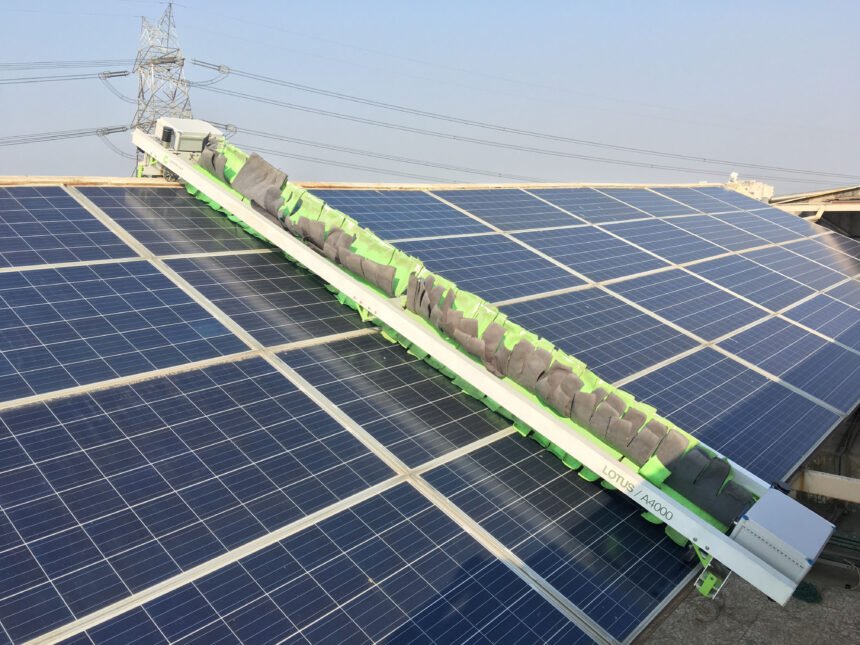
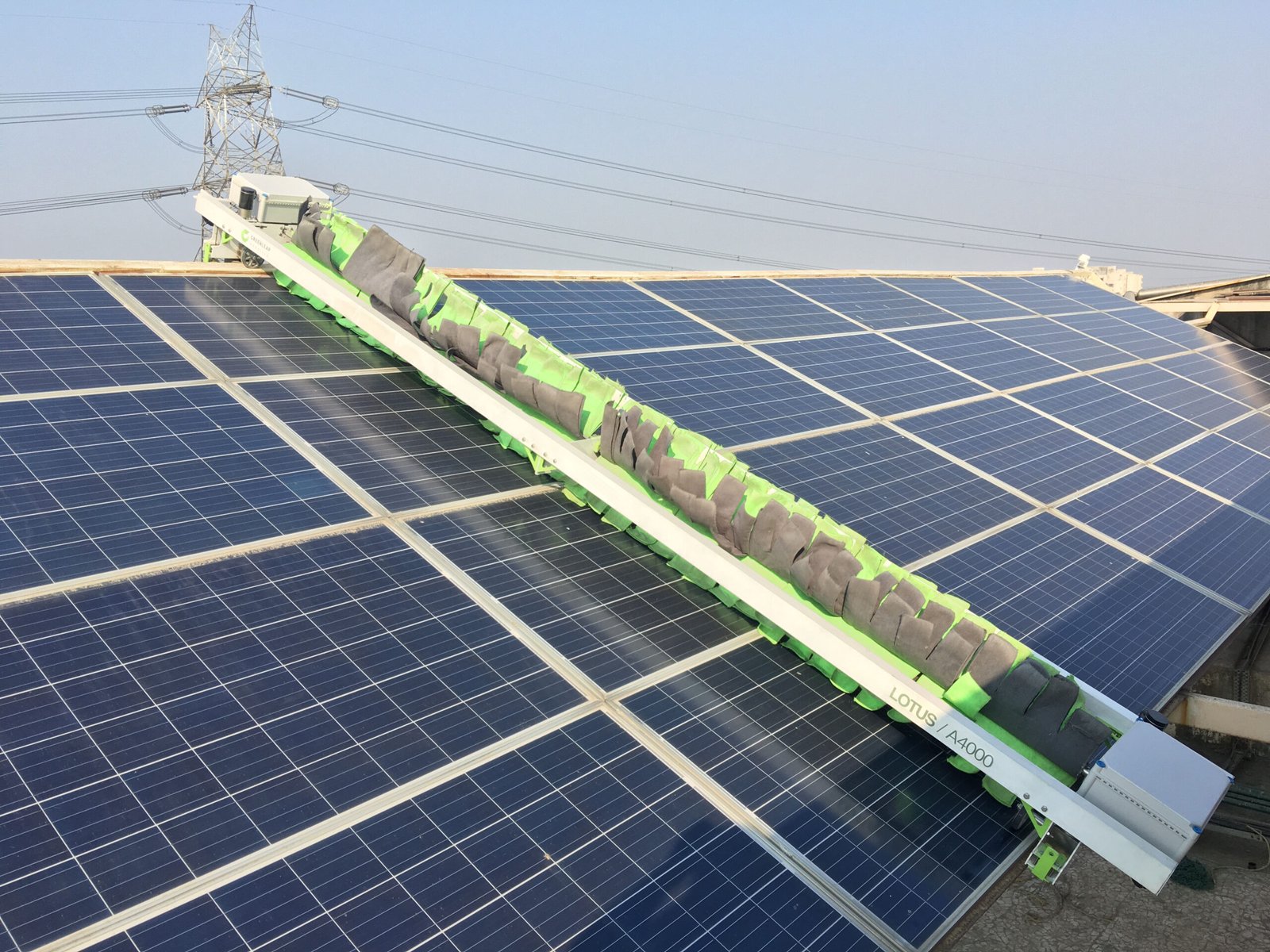
The flagship LOTUS A4000 is a fully autonomous robot that lives on a solar row. Instead of water and brushes, it uses ultra-soft microfiber fins that spin along the length of the machine, generating airflow and a controlled flicking action that lifts dust and debris off the glass without scratching or dragging it across the surface — protecting the panel’s anti-reflective coating. The company says a single pass clears up to 98% of soiling, and that daily cleaning can deliver up to 10% more generation than cleaning once a fortnight.
Each A4000 is dedicated to one row, with its own solar-powered docking station at the end where it rests and recharges — a full charge takes under two hours. The robot cleans a standard 1 MWp plant in under two and a half hours, running up to three hours on its standard 12 Ah battery, or four and a half on the extended pack. Its sibling, the LOTUS P4000, is the shareable version: a semi-autonomous, worker-friendly machine that one person can lift, move between rows and park, with lengths from two to eight metres to fit different plants.
Built for the Indian sun
The engineering is deliberately rugged. A patented dual-drive system with real-time orientation control lets the robot cross panel-to-panel misalignments of up to 40 mm, and its wheels run on the module frame so the load transfers to the structure beneath. The frame is high-grade aluminium and stainless steel, the motors are brushless units rated for more than 5,000 hours, and the machine is built to keep working in 50 kmph winds, with in-lab simulations giving a factor of safety of 5.62. More than 80% of the major components are designed and manufactured in-house.
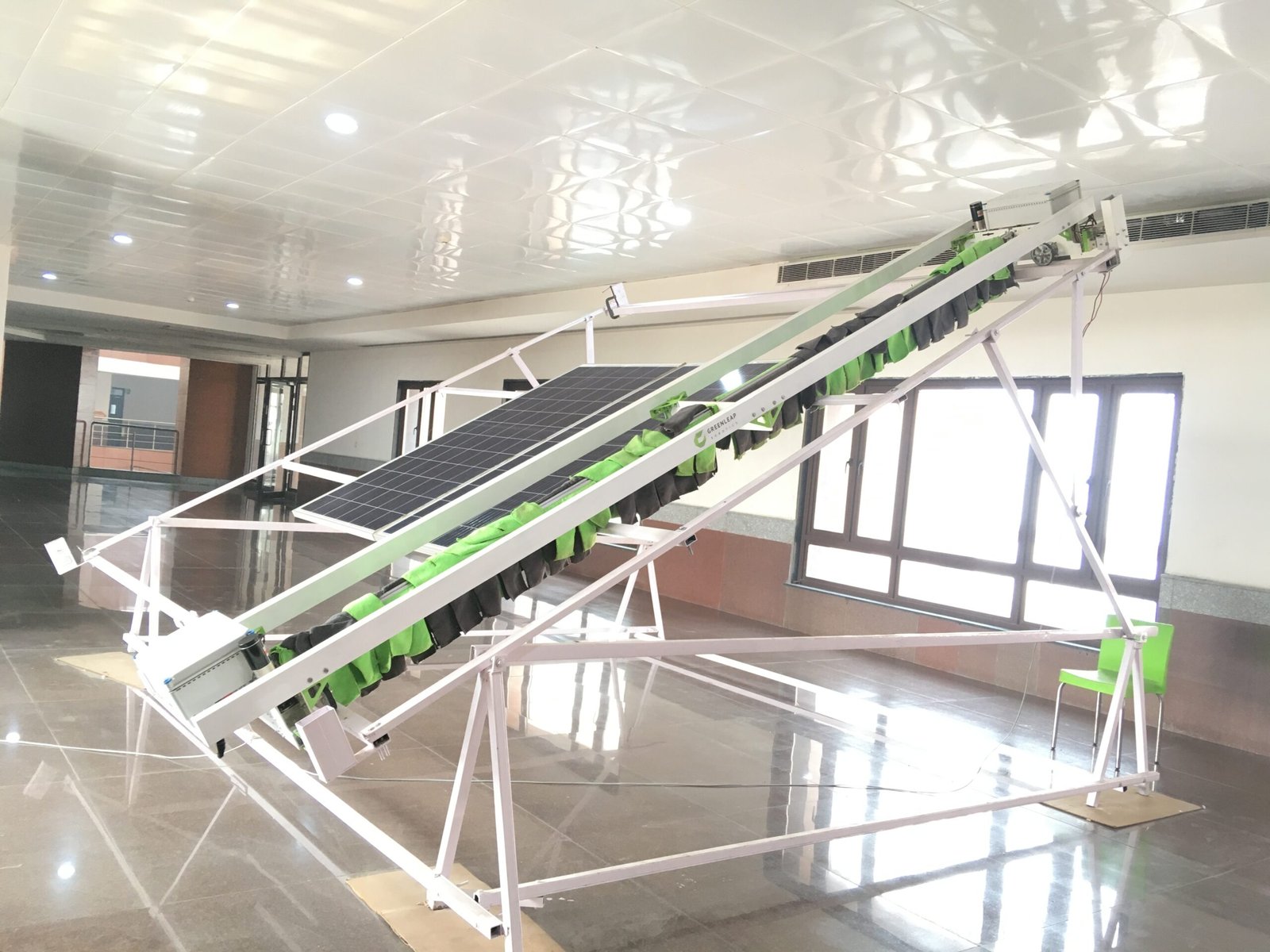
Inside, the robots run on an ARM Cortex M4 processor with a 4G communications link, automotive-grade electronics and IP65 protection, and every unit is managed through the company’s cloud dashboard, which can tie into a plant’s existing SCADA system for monitoring, alerts and cleaning reports. The machines were put through more than 100 hours of continuous indoor and outdoor testing in IIT Delhi’s facilities before they went to the field.
The company behind it
Greenleap Robotics was founded by a team of IIT Delhi graduates and is incubated at the institute’s Foundation for Innovative Technology Transfer (FITT), with support from the Department of Science and Technology and the Atal Incubation Mission. Its manufacturing unit is in Ghaziabad, Uttar Pradesh.
More Read
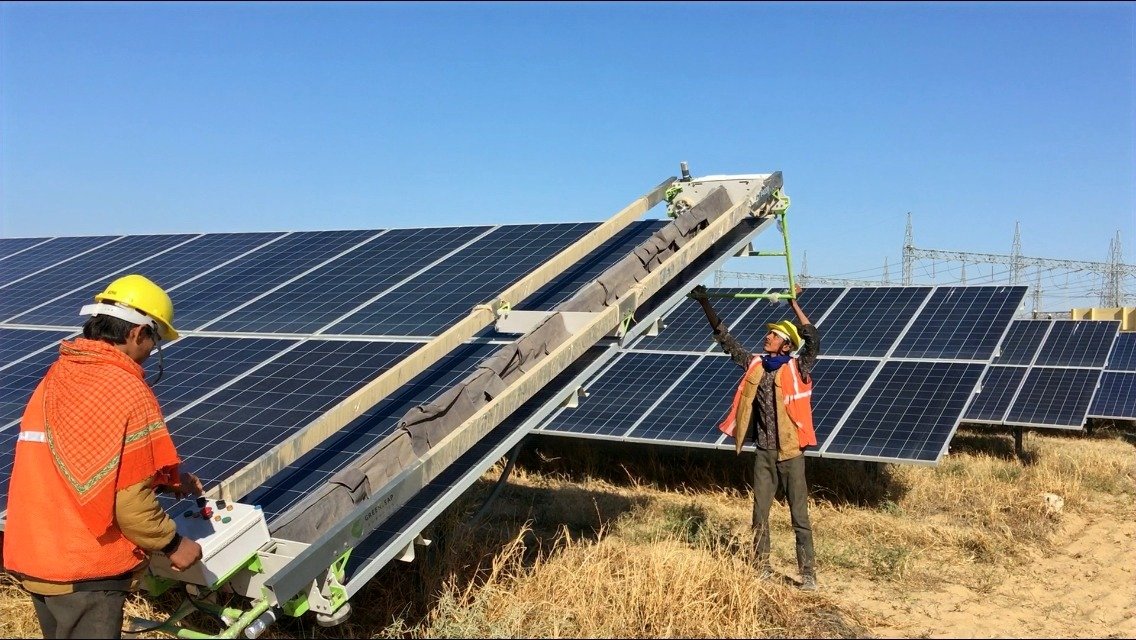
The numbers the company reports today show how far the idea has travelled: more than 1,000 robots supplied, over 2 GWp of installations, a presence at more than 55 sites across 15 Indian states, and deployments in Nepal, Indonesia, Africa and Australia. The company says its robots have saved more than 65 million litres of water. Its machines are tested and approved by Tier-1 module makers including LONGi, Canadian Solar, JA Solar, Trina Solar and Risen, are UL tested and ISO 9001 certified, and the company says a plant typically recovers its investment in under nine months.
India’s solar boom was built on panels; keeping those panels clean is the quiet, daily work that decides how much power they actually deliver. A robot that does it without a litre of water, every day, on its own — that is the kind of small machine that keeps a giant energy transition running at full strength.
Keep reading: The Reel Holding India’s Solar Panels Together: Inside RenewSys’ CONSERV AUGMENSHEET · Solar Without a Rooftop: Inside SundayGrids, the Bengaluru Startup Selling Sunshine by the Biscuit · More Energy & Power stories
Like stories like this? Add Exceptional Technology as a preferred source on Google to see more of our reporting in your search results and Discover feed.







