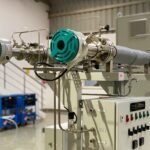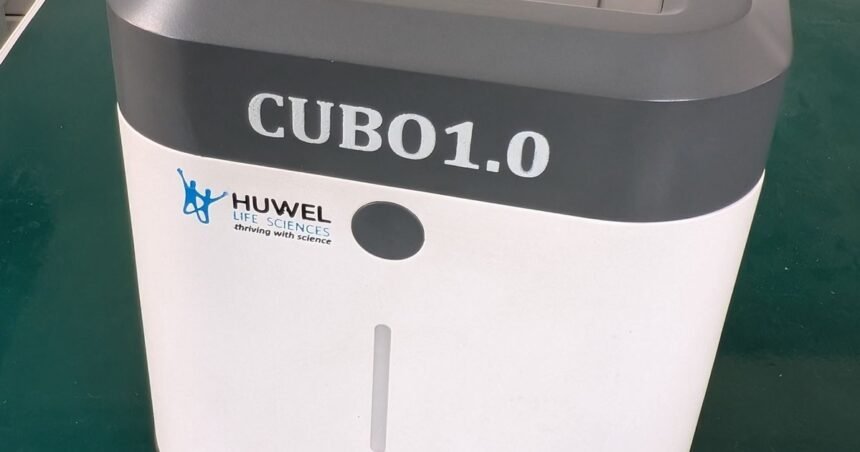
A tuberculosis test used to begin with a journey. A sputum sample travelled from a village clinic to a district hospital, then on to a city laboratory with a big PCR machine, and the answer came back days later — if it came back at all. A Hyderabad company has spent a decade shrinking that journey down to a box you can hold in one hand. Huwel Lifesciences builds molecular diagnostic machines and test kits that carry DNA-level testing into the smallest clinics in India — and in October 2025, the Indian Council of Medical Research validated two of its tuberculosis tools, including the first open-system RT-PCR test for lung TB ever cleared in the country.
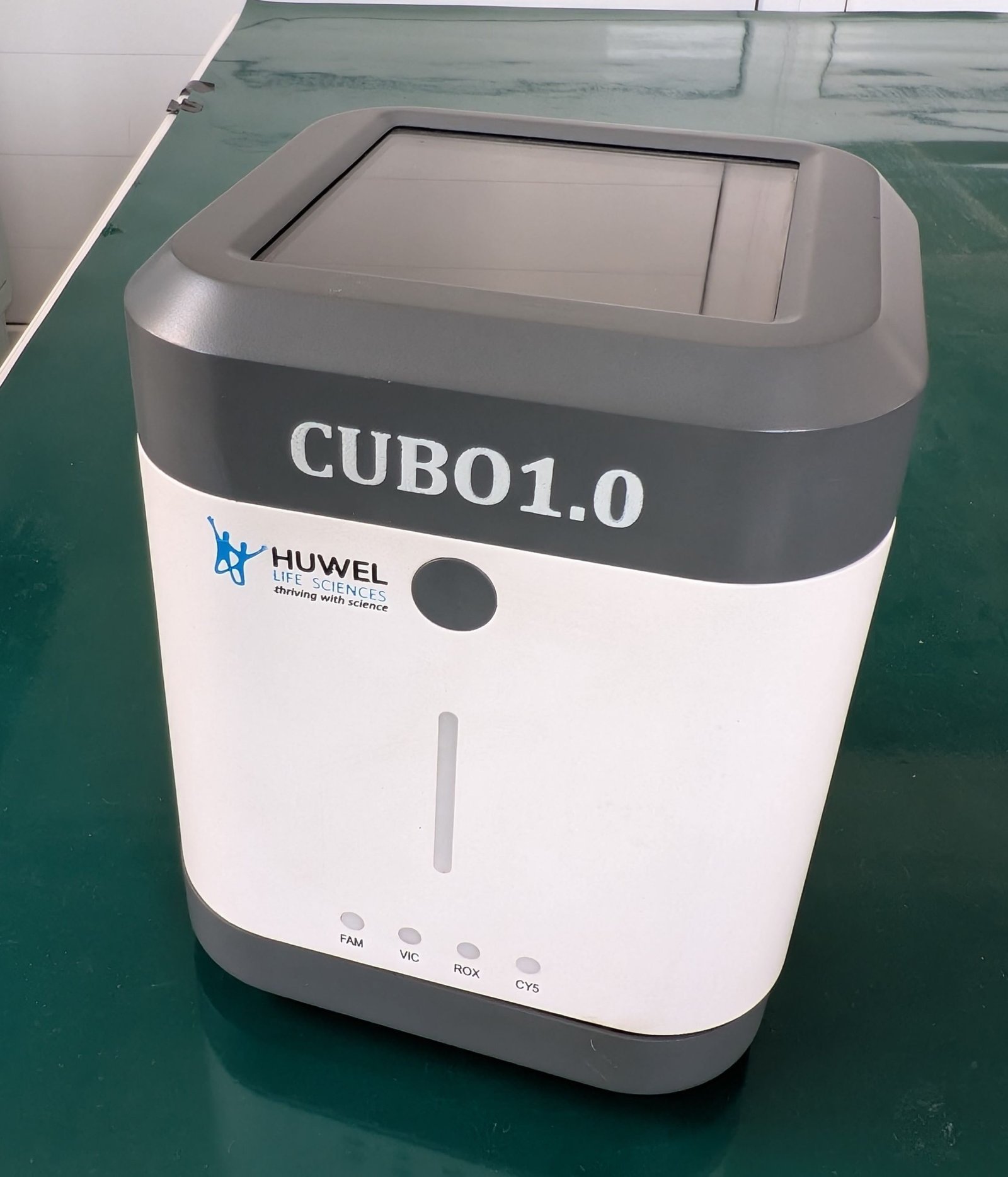
Huwel’s Cubo 1.0, a handheld real-time PCR analyser. (Image: Huwel Lifesciences)
The test that runs on any machine
The centrepiece is Quantiplus MTB FAST, Huwel’s RT-PCR kit for detecting the tuberculosis bacterium. Most molecular TB tests are tied to one company’s closed machine; Quantiplus is an open system, which means it runs on any standard PCR machine a laboratory already owns. The Indian Council of Medical Research, announcing the validation in October 2025, called it the first open-system RT-PCR assay validated for the detection of lung TB. The kit processes up to 96 samples in a single run, needs no separate DNA extraction step, and returns results in under 60 minutes. The ICMR noted it could cut TB testing costs by around a fifth, letting public laboratories scale up testing without buying new machines.
The evidence behind it is a multicentric diagnostic-accuracy study published in the Indian Journal of Medical Research, run at Christian Medical College Vellore, King George’s Medical University Lucknow and the ICMR–National Institute for Research in Tuberculosis in Chennai. The improved version of the kit targets three tuberculosis genes — IS1081, MPT64 and IS6110 — and was measured against liquid culture, the reference standard, and against the Cepheid Xpert test.

More Read

Huwel’s Quantiplus MTB FAST detection kit. (Image: Huwel Lifesciences)
The second ICMR-validated tool takes a gentler route to the same answer. The UniAMP MTB Nucleic Acid Test Card detects tuberculosis from a tongue swab instead of a sputum sample, a kinder option for children and for patients who struggle to produce sputum. It runs on Huwel’s UniAmp, a palm-sized nucleic acid testing device that matches the accuracy of laboratory qPCR and delivers results in 7 to 30 minutes, with readings available through a mobile app. India carries the world’s largest tuberculosis burden, and every test that is faster, cheaper and easier to reach moves the fight forward.
From 52 million COVID tests to a handheld lab
Huwel Lifesciences was founded in Hyderabad in 2015 by Shesheer Kumar, its managing director, and Dr Rachana Tripathi, its chief executive. The pair had already built one diagnostics company — RAS LifeSciences, acquired by bioMérieux in 2012 — before starting Huwel. When the pandemic arrived, the young company supplied nearly 52 million COVID tests across India, won ICMR approval for its coronavirus kits, and was named one of the country’s top startups by NITI Aayog.
Today the company makes almost everything in-house at its CE and FDA-compliant facility in the TSIIC Medical Devices Park at Patancheru, Hyderabad: RT-PCR kits, oligonucleotide synthesis, enzymes and reagents, nucleic acid extraction kits, and even medical-grade laboratory plasticware from its own clean rooms. The catalogue runs to more than 100 validated diagnostic products spanning tuberculosis, infectious diseases, antimicrobial resistance, viral threats, genetic disorders and cancer, and the plant can turn out more than 100 million PCR tests a year. The work is backed by the USAID and the Bill & Melinda Gates Foundation, and the government has provided Rs 15 crore to develop room-temperature-stable PCR reagents that survive without a cold chain.

The UniAmp palm-sized nucleic acid testing device. (Image: Huwel Lifesciences)
Cubo, and the clinic without a lab
The newest member of the family is Cubo 1.0, an ultra-compact, affordable RT-PCR platform built to take laboratory-grade molecular testing beyond centralised labs — into rural clinics, district hospitals, mobile health units and border areas. Huwel announced Cubo in April 2026 with Avio Smart Market Stack, formerly Bartronics India, and on 30 September 2026 the two companies deepened the partnership into a nationwide commercialisation platform aimed at private hospitals, diagnostic chains, independent laboratories, medical colleges and smaller facilities in Tier-II and Tier-III cities. The planned assay menu covers tuberculosis, respiratory infections, influenza, viral panels, women’s health, sexually transmitted infections and fever panels.
The backing is already in place: Bartronics is investing up to Rs 50 crore for a 15 per cent stake in Huwel, with an option to take 15 per cent more. For a bootstrapped company of around 37 people that has grown from a pandemic-era test maker into a full-stack molecular diagnostics house, it is the fuel to put a PCR lab in places that have never had one. For the patient in a small town, the difference is beautifully simple: the lab comes to them, the answer comes the same day, and the treatment can start while it still matters most.
Keep reading: Drinking the Sky: Inside Akvo, the Kolkata Startup Making Water From Thin Air · Ten Minutes, 65 Tests: Inside Clinics On Cloud, the Pune Startup Putting a Health ATM in Every Village · More Chemicals, Materials & Life Sciences stories
Like stories like this? Add Exceptional Technology as a preferred source on Google to see more of our reporting in your search results and Discover feed.