


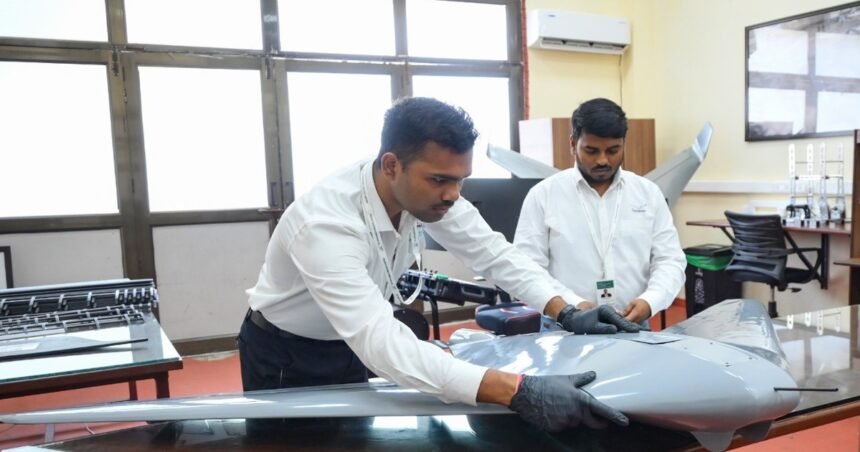
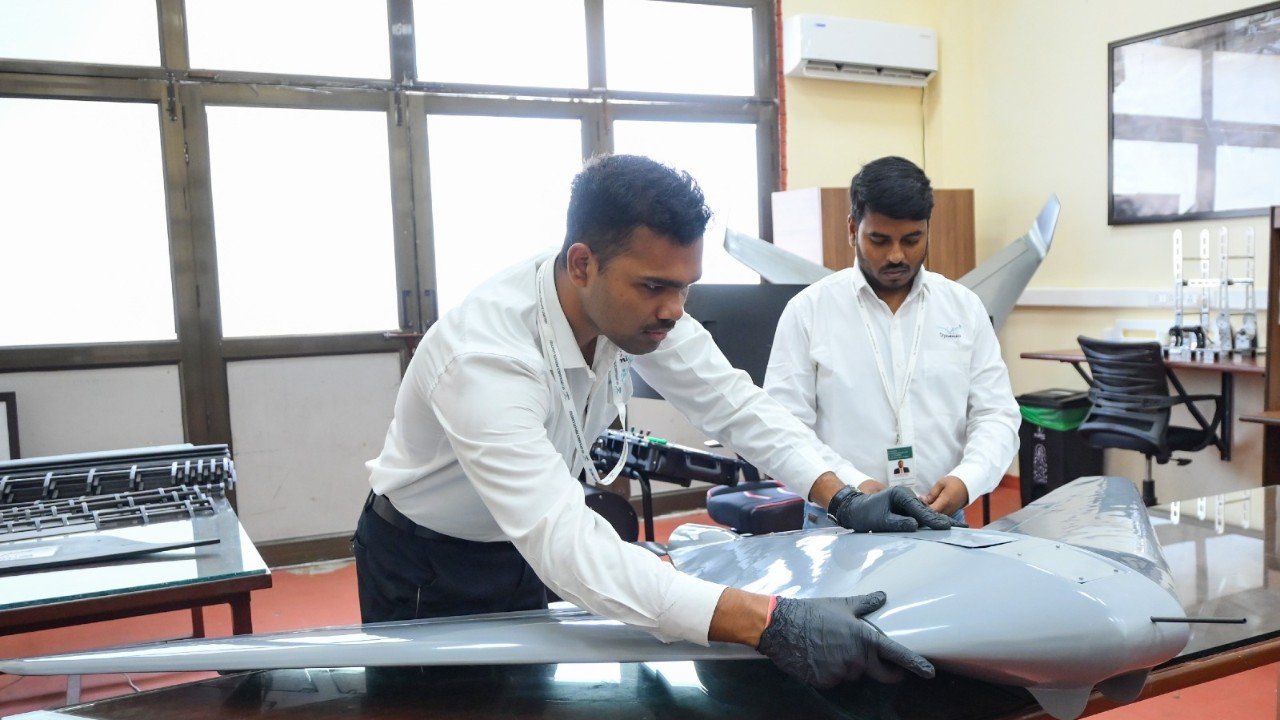
On a workbench in a laboratory at IIT Kanpur sits a grey, two-metre flying wing that looks more like a model aircraft than a weapon — until you learn what it is built to do. It is the APJK-6C100, an AI-enabled loitering munition from VU Dynamics, a startup incubated at the institute. The company says the drone can fly 100 kilometres on its own, find its target without GPS, and dive onto it with a 6 kg warhead. It was first shown publicly in November 2024, and a full demonstration for DRDO officials and Army procurement representatives followed at the institute’s UAV Dynamics Lab on 10 November 2025. It is one of the most ambitious pieces of defence hardware ever to come out of an Indian university lab.
VU Dynamics was founded in 2022 at IIT Kanpur’s Startup Incubation and Innovation Centre (SIIC) by Prof. Subrahmanyam Saderla, an Associate Professor in the Department of Aerospace Engineering who has worked on drones since 2006, and Dr Sravanthi Saderla. The APJK-6C100 — named after A.P.J. Abdul Kalam — grew out of a DRDO Young Scientist Laboratory project, and the team built it end to end in the institute’s UAV Dynamics Lab, from the airframe to the flight software.
A hundred kilometres, on its own
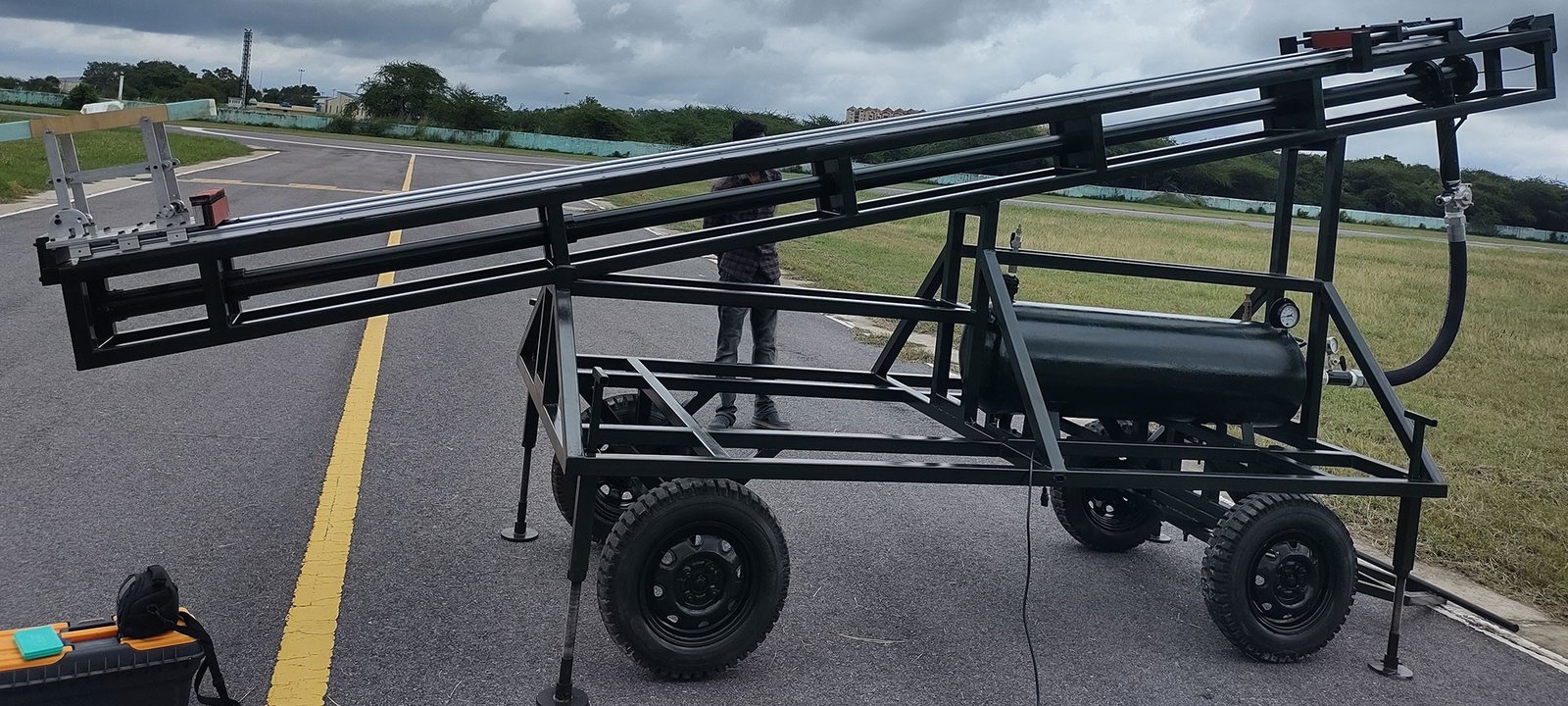
The numbers, as the company and the institute describe them, are striking for a machine that weighs just 20.5 kg at take-off. The APJK-6C100 cruises at 144 km/h, with a top speed of 180 km/h in its terminal dive, and stays airborne for 50 minutes. Its 2-metre wingspan folds away, so the whole aircraft packs into a canister or onto a catapult launcher, ready for a forward unit to carry and fire. It can operate up to 4.5 km above sea level, in all weather, day or night.
What sets it apart is how little it needs from the operator once it is airborne. A 1080p electro-optical camera with 30x zoom and a thermal imager feed live pictures to the ground station over an encrypted datalink with a 100 km radius, and if the link is jammed or GPS is denied, the drone falls back to autonomous mode and keeps prosecuting its target. The company says the aircraft can loiter undetected, pick out high-value targets such as armour or command posts, and dive onto them. A second, smaller variant trades range and punch for portability: 40 km of range with a 2 kg warhead.
Built to disappear
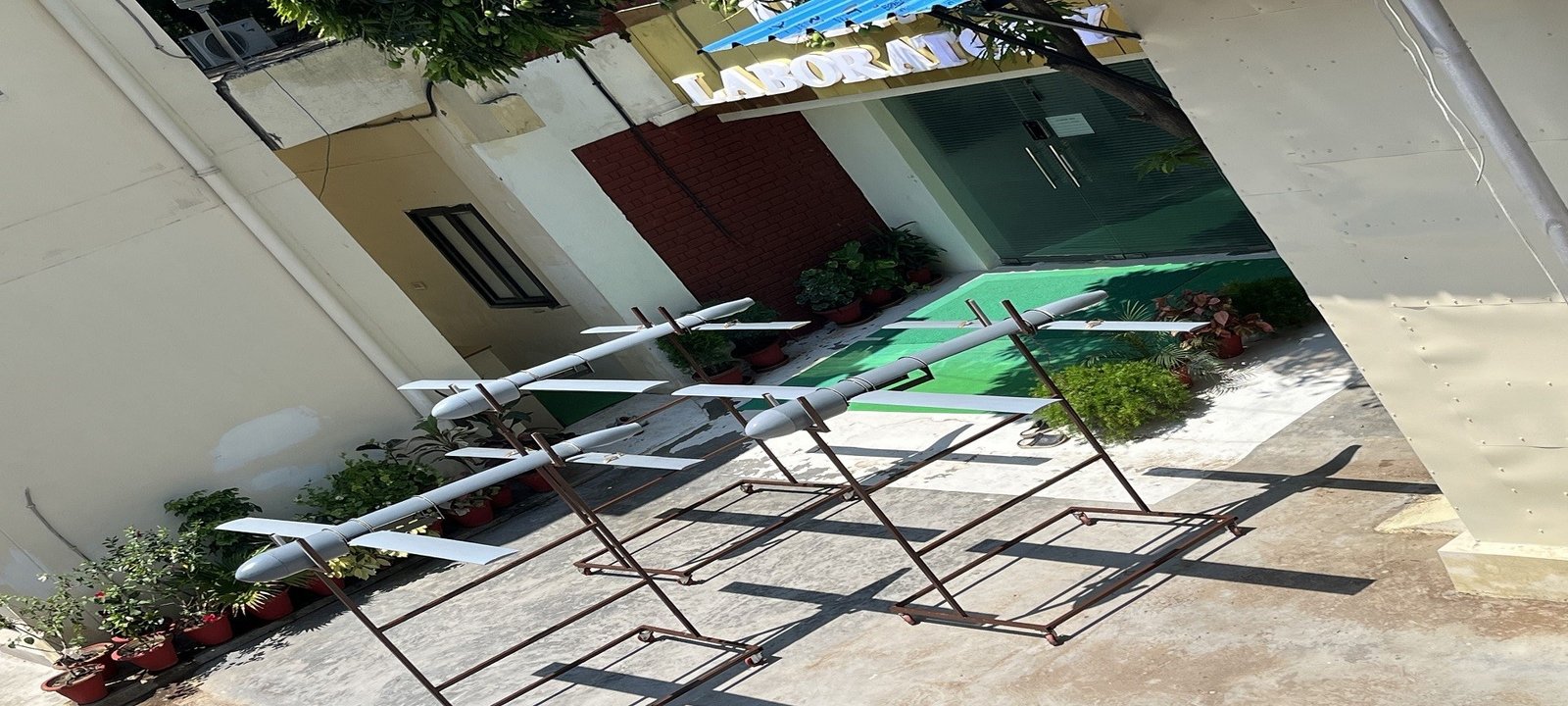
The airframe is shaped around a single idea: be hard to see. Its blended-wing body keeps the radar cross-section low, serpentine inlets shield the electric ducted fan from infrared seekers, and composite materials keep it light and rugged. Twin vertical stabilisers and a ventral fin keep it stable, pop-out wings deploy in seconds, and a programmable fuze lets the 6 kg high-explosive fragmentation warhead detonate on contact or in the air. The warhead bay sits under the belly, so the aerodynamics stay clean.
The same lab builds more than one kind of aircraft. Alongside the APJK-6C100, the team has built a hand-launched flying-wing surveillance drone, payload-dropping drones for defence use, and a software-in-the-loop flight simulator for the kamikaze drone itself — the kind of test infrastructure that lets a team fly a thousand missions before the real aircraft ever leaves the ground.
More Read

From a professor’s lab to a factory floor
In May 2025, VU Dynamics joined forces with PATH Group, the Indore infrastructure company, to take the aircraft from the lab to production. The founder told The Hindu BusinessLine that VU Dynamics has become a subsidiary of PATH, with a factory coming up at MHOW near Indore — and that within a month of the deal, the company could be producing 200 drones a day. IIT Kanpur’s Director, Prof. Manindra Agrawal, said the same month that VU Dynamics and fellow IIT Kanpur drone startup EndureAir have both begun supplying the armed forces.
The company also took its aircraft to the Drone Expo & Conference in New Delhi in September 2026, putting the APJK-6C100 in front of the wider defence and industry audience. Full-scale trials were planned for early 2026, the next step on the road from a lab demonstration to a weapon in service. IIT Kanpur has spoken of a ₹1,500 crore revenue target for the drone technology over the next five years.
Why it matters
India has imported loitering munitions for years. The APJK-6C100 is a bid to change that — a complete system, airframe to autonomy, designed and built in an Indian university lab and now heading for Indian production lines. A 100 km reach, GPS-denied flight and a radar-evading shape, from a team that started in a campus incubator in 2022, is exactly the kind of leap the country’s defence labs were set up to produce. The next Indian loitering munition the Army fields could be one that was born in Kanpur.
Keep reading: Built in Vadodara, Ready for the IAF: Inside India’s First Made-in-India C-295 · Friend, Not Foe: Inside Navyug, the Noida Company Teaching Indian Army Tanks to Tell Friend from Foe · More Aerospace & Defense stories
Like stories like this? Add Exceptional Technology as a preferred source on Google to see more of our reporting in your search results and Discover feed.







