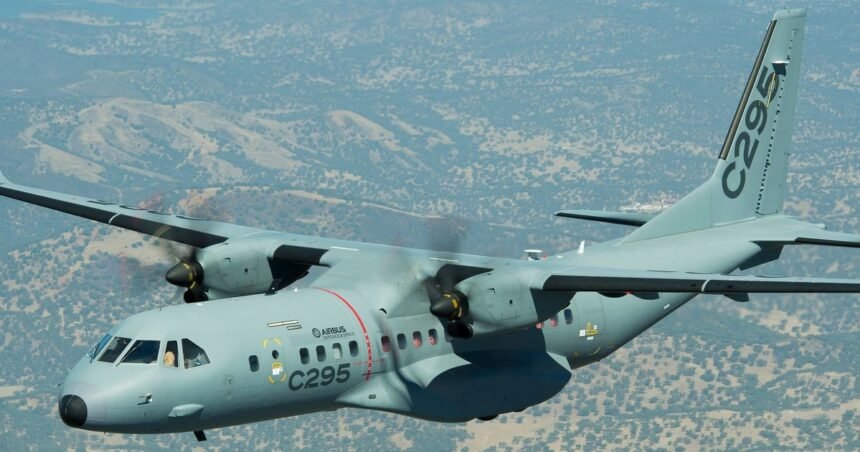
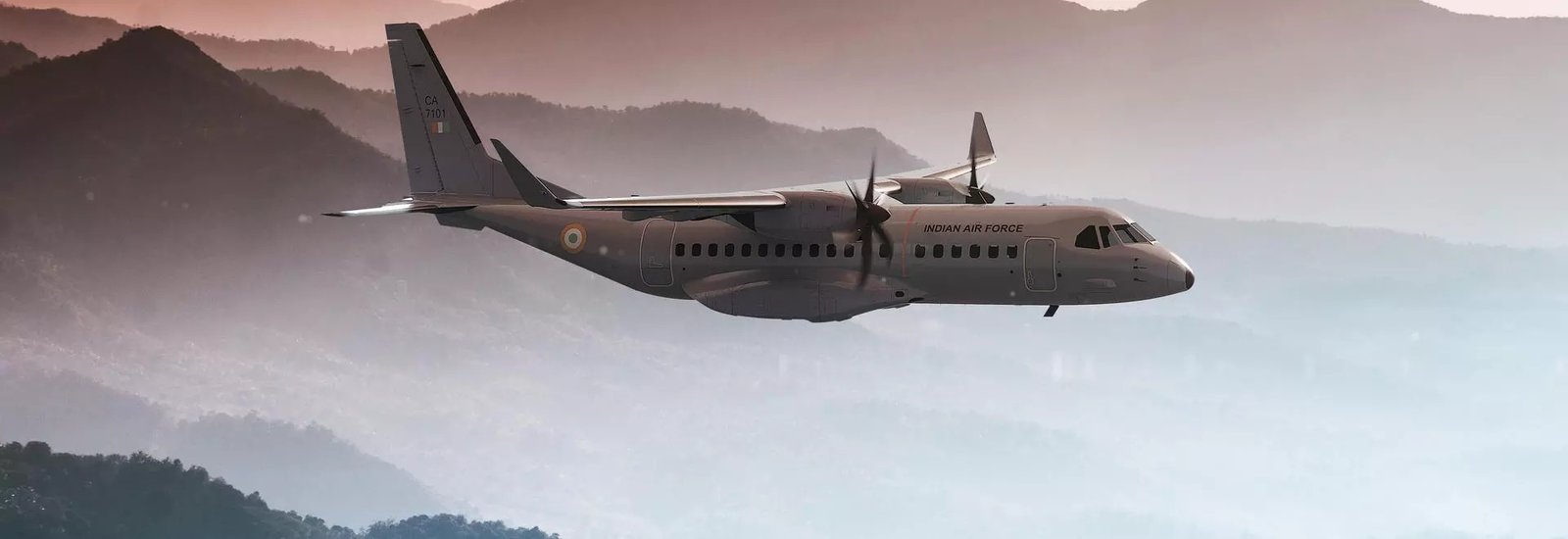
On the morning of 10 June 2026, a grey twin-turboprop lifted off a runway in Vadodara, Gujarat, and flew into history. It looked like any other military transport aircraft in the Indian Air Force — except that this one had been built in India, by an Indian private company, on an Indian assembly line. The first Made-in-India Airbus C295 had just completed its maiden test flight, and with it, India joined the small club of countries where private industry builds complete military aircraft.
It is the first of 40 C295s that Tata Advanced Systems Limited (TASL) will build at its Vadodara facility under a landmark programme with Airbus Defence and Space — a programme Airbus itself calls a game changer for Indian aerospace.
A deal six decades in the making
The story starts in September 2021, when the Ministry of Defence signed a Rs 21,935 crore agreement with Airbus for 56 C295 transport aircraft to replace the Indian Air Force’s ageing Avro-748 fleet, which has served for more than six decades. The first 16 aircraft would arrive in fly-away condition from Airbus’s final assembly line in Seville, Spain — the first was handed over in September 2023 — while the remaining 40 would be built in India. That split is what makes the programme historic: never before has a private Indian company manufactured a complete military aircraft.
The home of that work is the Tata Aircraft Complex in Vadodara, inaugurated on 28 October 2024 by Prime Minister Narendra Modi and Spanish President Pedro Sánchez. Under a transfer-of-technology arrangement, Airbus provides the engineering documentation, tooling and technical support, and TASL assembles the aircraft from components made in India and sourced from the wider Airbus supply chain — work that flows down to Indian MSME suppliers across the country. The first India-built aircraft rolled out of the line in May 2026, and on 10 June it took to the skies over Vadodara on its maiden test flight.
The workhorse itself
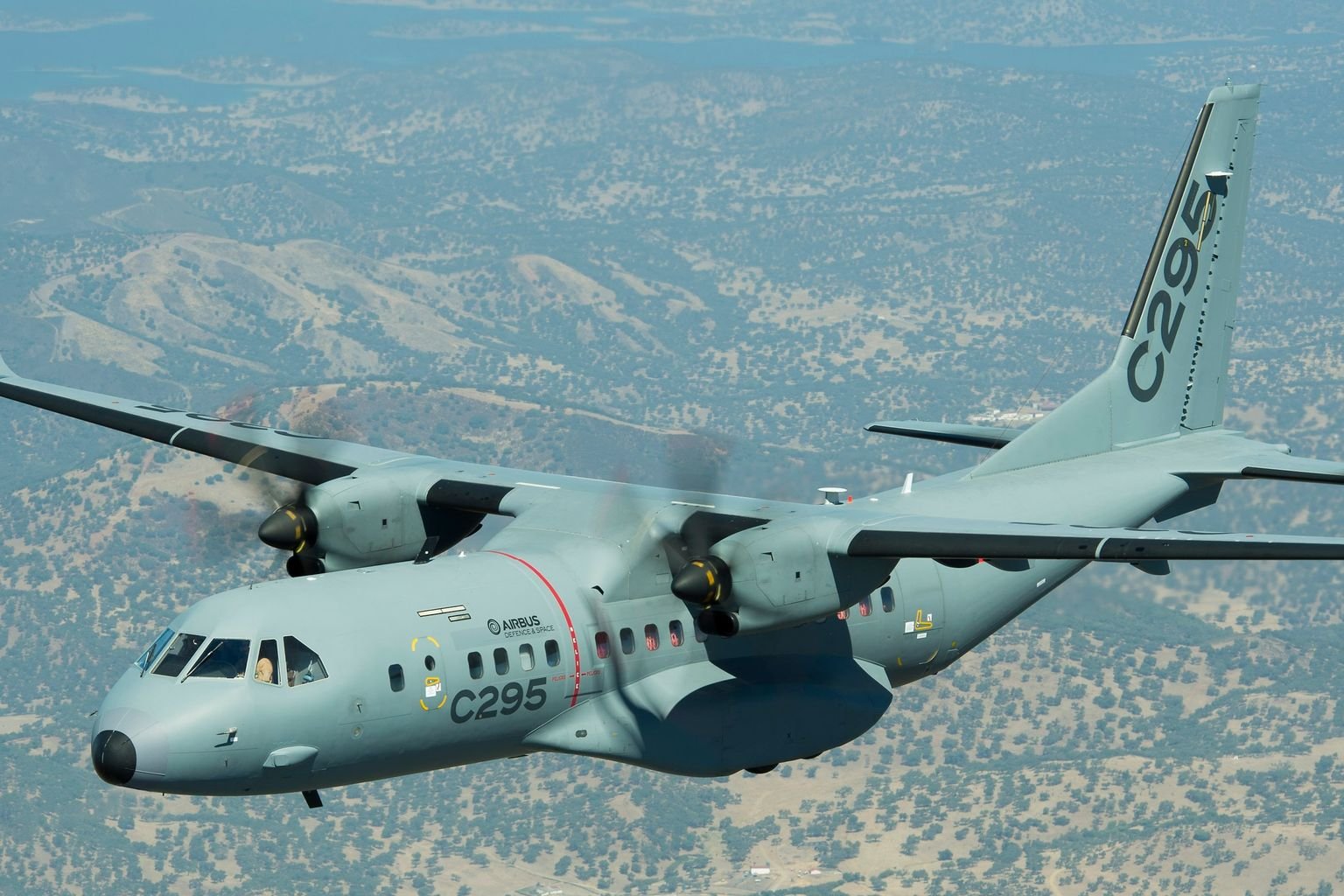
The C295 is a medium tactical transport aircraft, and it earns its keep by going where bigger aircraft cannot. The company says it can lift up to nine tonnes of cargo or carry up to 71 troops, with a cruise speed of 260 knots — about 480 km/h — and a pressurised cabin 12.69 metres long, the longest unobstructed cabin in its class. Two Pratt & Whitney Canada PW127G turboprops give it up to 13 hours of endurance, and its short take-off and landing performance lets it operate from unpaved, soft or sand and grass airstrips as short as 670 metres — the kind of rough forward strips that matter most in the Himalayas and the deserts.
It is built to be many aircraft in one: troop and cargo transport, paratroop drops, medical evacuation with 24 stretchers, disaster relief, and maritime patrol. The Indian aircraft also carry an indigenous electronic warfare suite, with a radar warning receiver and missile approach warning system made by Bharat Electronics Limited and a countermeasure dispensing system made by Bharat Dynamics Limited.
More Read
The final checks before handover
Since its maiden flight, the first Vadodara-built aircraft has been going through its final phase of validation and flight-testing, the post-production evaluation every new aircraft completes before delivery. Airbus has said it is working closely with TASL and its Indian industrial partners to complete the programme’s validation requirements, and handover to the Air Force is expected in the coming weeks. When it arrives, it will be the 17th C295 in the IAF’s fleet — and the first that was ever built on Indian soil.
The moment has already caught the attention of the country’s aviation leadership. Civil Aviation Minister Ram Mohan Naidu visited the TASL facility in July 2026, calling the project truly special and pointing to civil aircraft as the next goal for the line — a sign of where this capability could go once the military programme is running at full pace.
Why it matters
Forty aircraft, built over five years through to August 2031, mean sustained, high-precision work for Indian engineers, technicians and suppliers — and a production line that can keep growing. The Vadodara line proves that Indian private industry can meet the exacting standards of global defence manufacturing, not as a subcontractor on someone else’s programme, but as the builder of the aircraft itself. From a runway in Gujarat, India’s aerospace story has just taken a very large step forward — and the next forty aircraft will be built right here at home.
Keep reading: Friend, Not Foe: Inside Navyug, the Noida Company Teaching Indian Army Tanks to Tell Friend from Foe · The Spaceplane That Lands on a Runway: Inside AnduraX, the Andhra Startup Building India’s Reusable Return From Orbit · More Aerospace & Defense stories
Like stories like this? Add Exceptional Technology as a preferred source on Google to see more of our reporting in your search results and Discover feed.