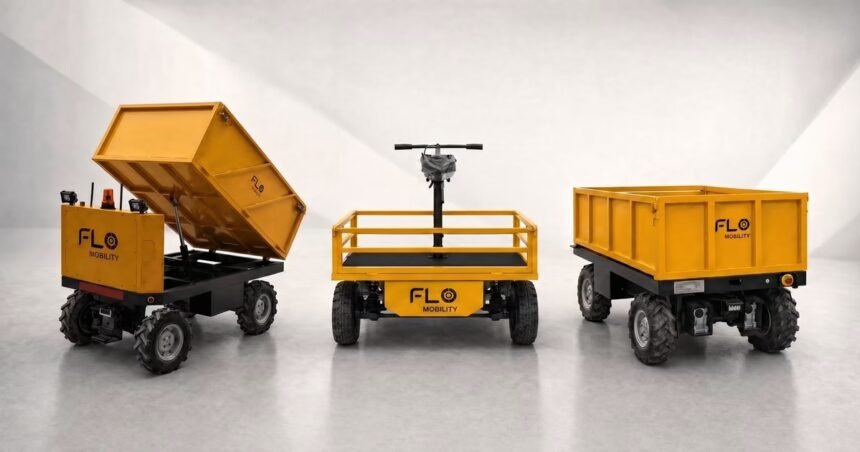
On a building site, the hardest job is also the most invisible one: moving material. Sand, bricks, blocks, steel, mortar — tonnes of it, every day, carried from the store to the workface by hand, by wheelbarrow, by tired legs. It is slow, back-breaking work, and on a big site it eats whole teams of workers. Now a bright-yellow robot from Bengaluru is taking it over. It has no driver, no cabin and no exhaust — and it is already hauling loads across some of India’s biggest construction projects.
The robot is the Flo MMR Gen 5, the material-movement robot built by Flo Mobility. The company says it autonomously carries up to 1,000 kg of material across a site, safely and reliably, around the clock — and that more than 50 of its robots are already at work across 10 Indian states, having moved over 2.5 lakh tonnes of material and covered more than 50,000 km.
A tonne on wheels, no driver in sight
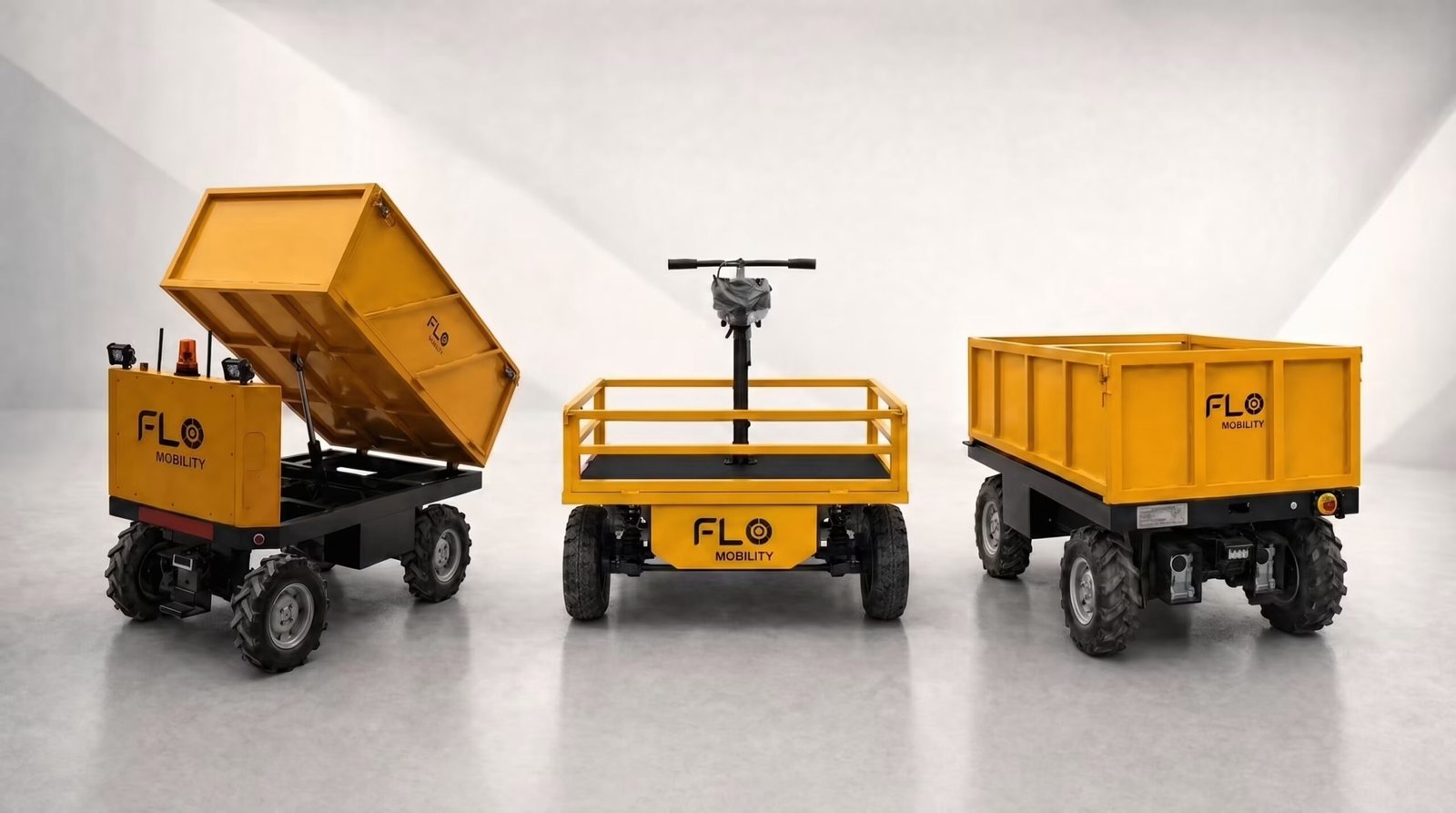
The MMR Gen 5 is a compact, battery-powered autonomous mobile robot built for one job: last-mile material movement inside a construction site. Its load capacity runs from 500 to 1,000 kg, it measures 1,560 mm long, 850 mm wide and 1,172 mm tall, and it rides on a four-wheel electric drive with 200 mm of ground clearance. It tops out at 5 km/h, climbs 12-degree slopes and runs for 12 hours on a charge, with a hydraulic tipper that unloads itself at the drop point.
What makes it autonomous is the sensor stack on top. A 32-beam LiDAR watches 360 degrees out to 200 metres, fused with camera vision and GPS navigation, while on-board Edge AI reacts in under 100 milliseconds. The robot plans its own path around the site, avoids obstacles and people, and keeps moving while the layout changes around it — exactly what a live construction site does every day. It can also be driven remotely when a human wants the controls.
Built for the mess of a real site
Construction sites are the opposite of the clean, flat warehouses most robots are designed for. Flo built the MMR Gen 5 for slopes, slurry, loose sand and uneven ground, in dust, heat and rain. The robot is IP65 dust-sealed, its batteries swap out so it can keep running across multiple shifts, and a Fleet Platform watches every machine from one dashboard — with 99.9% uptime, over-the-air updates and remote tele-operation from anywhere in the world.
That matters because the work it replaces is genuinely hard. The company says its robots deliver six times the efficiency of manual material movement, and that sites using them have cut accidents by 67%. The machine handles aggregates, concrete and mortar, blocks and bricks, steel and formwork, equipment and tools, hazardous loads, excavated material and site waste — the unglamorous loads that keep a site moving.
More Read

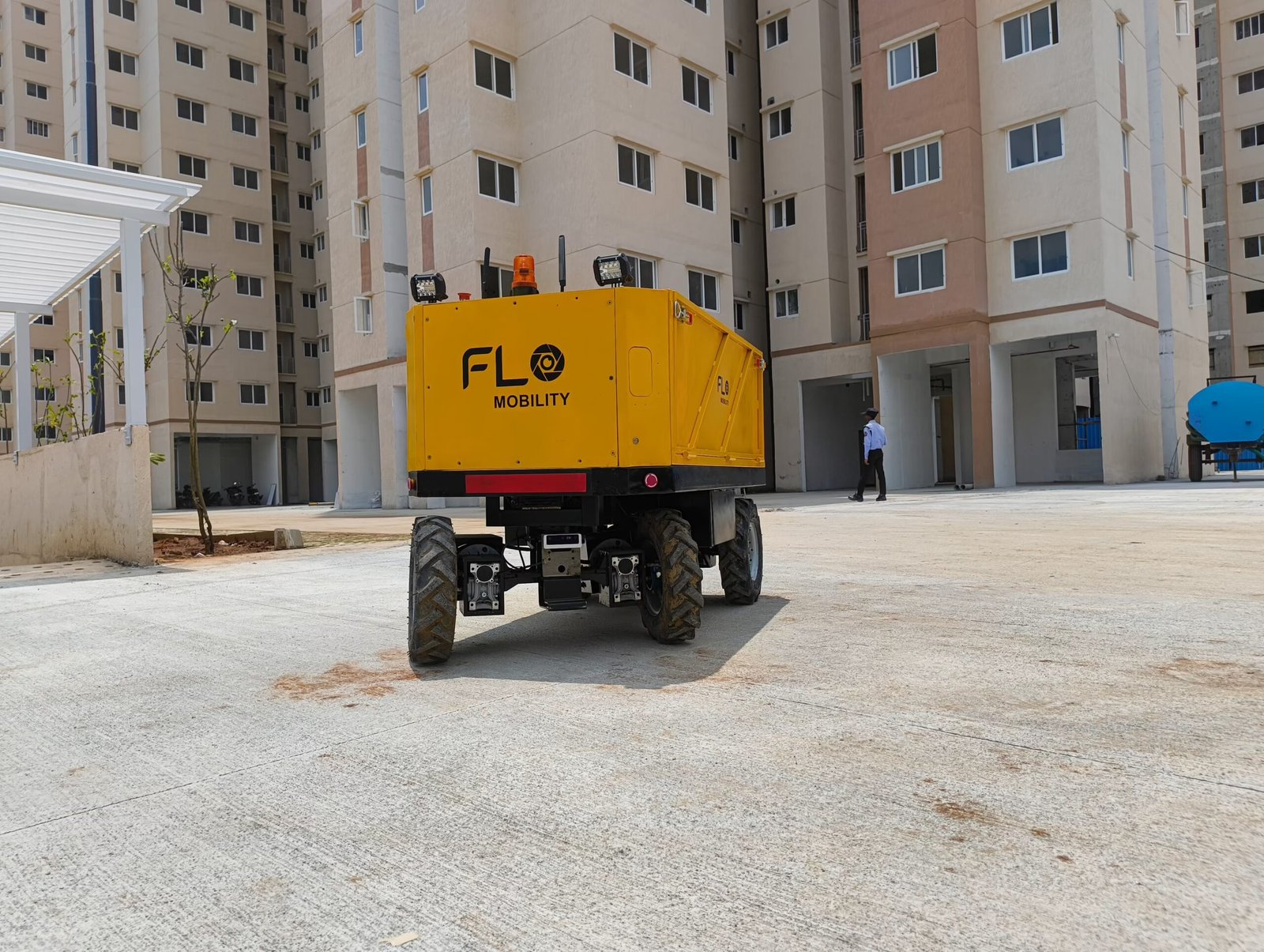
And the business model is built for adoption: Flo offers its robots as a service, on subscription or pay-per-use, so a contractor gets the machine, the maintenance, the software updates and the operational support without buying a robot at all.
Five days in the desert
The clearest proof of what the robot can do comes from a trial far from Bengaluru. At the Stargate Data Centre site in the UAE, Flo ran a five-day trial with contractor ALEC, and the numbers tell the story: more than 140 trips, 28 trips a day, 400 kg on every trip. The company says the robot carried 93% of the physical hauling work, freed four workers from carrying loads, saved each worker 2.1 km of walking a day, and returned 858 hours a month to skilled work.
It is the kind of result that travels fast in construction. Flo’s customer list now reads like a roll call of Indian building: L&T, Godrej Properties, Sobha, Embassy Group, Total Environment, KEC International and Capacité Infra, among more than 15 companies across 32 projects. The company has also made its first international deployments, in Dubai and Abu Dhabi.
The company behind it
Flo Mobility was started in Bengaluru by Manesh Jain and Pratik Patel, and its path to construction was not a straight line. The team began by building autonomous navigation kits to retrofit onto existing machines, then narrowed in on the one problem where autonomy pays off fastest: moving material around a site. The first market-ready robot found its first customer — luxury builder Total Environment — in early 2024, and L&T is now its biggest customer.
The engineering is homegrown. The company filed its first patent in 2021 and received the grant in 2024, with two more patents under review, and its robots carry CE, ISO and TPI certifications. In May 2026, Flo raised a $2.5 million pre-Series A round co-led by Mela Ventures and Arali Ventures, with participation from ARTPARK — the AI and robotics park backed by IISc Bengaluru — and Blume Founders Fund, to scale manufacturing, deepen its autonomy stack and take the robots to new markets. The 25-member team is now building what comes next: painting and wall-finishing robots, on the way to becoming the world’s largest construction robotics company.
Why it matters
India is building at a pace few countries can match — and every one of those sites runs on material moved by hand. Labour is getting scarcer, sites are getting bigger, and the workers who do the hauling are the same skilled hands a site needs for the work only humans can do. A robot that carries the tonne, climbs the slope, works the night shift and never gets tired does not replace the builder. It gives the builder their day back.
That is what makes the bright-yellow MMR Gen 5 so quietly exciting. It is not a concept video or a lab demo. It is a machine already doing the hardest, least glamorous job on India’s building sites — and doing it driverless, electric and six times faster than the way it was done before.
Keep reading: The Mumbai Company Weaving Parachutes for India’s Astronauts: Inside Kusumgar · The Copper Inside Every Transformer: Inside Rational Engineers, the Thane Company Winding India’s Power Grid · More Manufacturing & Engineering stories
Like stories like this? Add Exceptional Technology as a preferred source on Google to see more of our reporting in your search results and Discover feed.