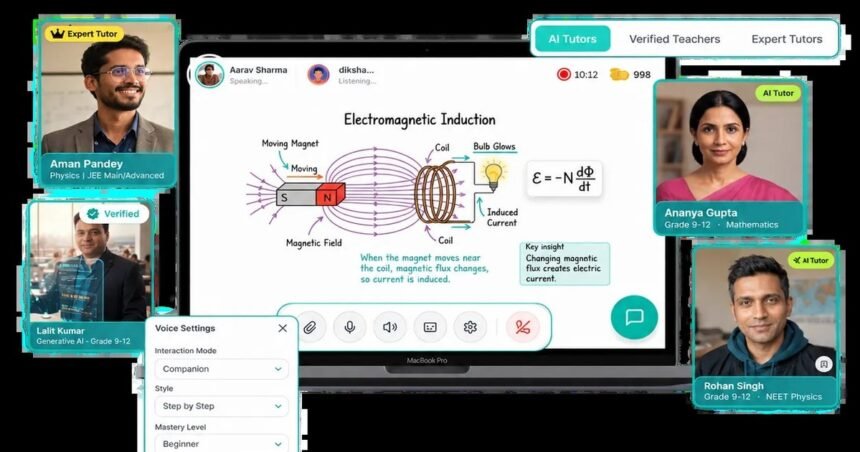
Ask a general-purpose chatbot a Class 6 science question and it will hand the child the answer, neatly wrapped, in seconds. That is exactly the problem YoLearn.ai set out to solve. On National Education Day, 11 November 2026, the Indian K-12 AI tutoring company launched Pragya — a large language model built for one job only: teaching Indian schoolchildren the way India’s own education policy says they should be taught.
Pragya — Sanskrit for “wisdom” — is, the company says, India’s first large language model designed specifically for school education. It is built around the National Education Policy (NEP) 2020 and the National Curriculum Framework (NCF) 2023, fine-tuned on CBSE curriculum data, and it already teaches Classes 1 to 8 in English, Hindi, Hinglish and more than 12 Indian languages.
Built to teach, not to tell
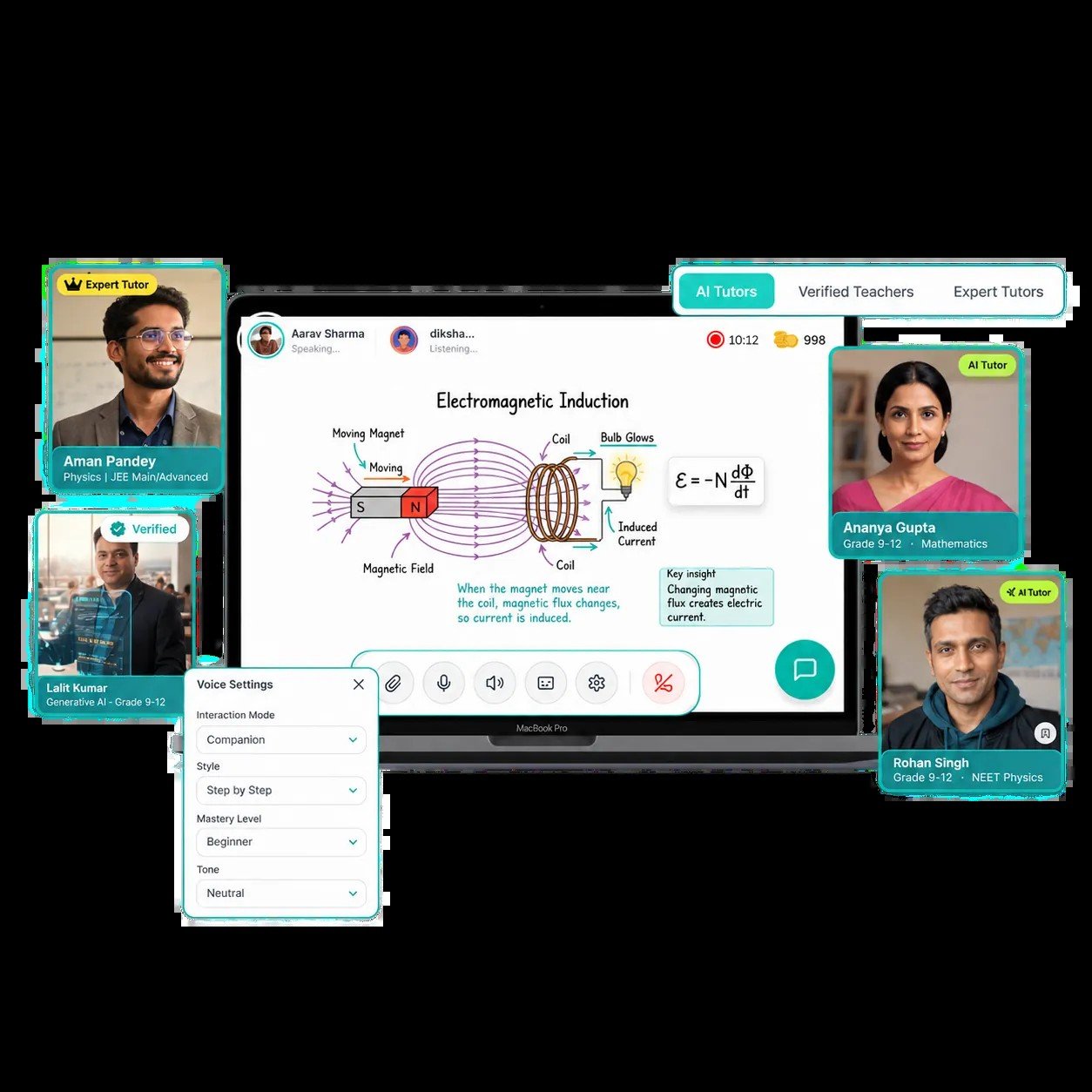
Most AI models learn from the open internet and are tuned to be helpful — which usually means giving the answer as fast as possible. Pragya is tuned the other way. The company says NEP 2020 sets what it teaches towards and NCF 2023 sets how it teaches: Socratic, step-by-step guidance that helps a student work the answer out for themselves, starting from the child’s own world — home, festivals, games, nature — and building understanding over rote learning.
Every answer Pragya gives is mapped to the learning goal for the child’s class. The company says each response carries the NCF learning goal it serves, the NCERT passage it is based on, and the pedagogical style used — so a parent or teacher can see not just what the child was told, but what the child was meant to learn. Answers are built around the 127 curricular goals and 368 competencies of NCF-SE 2023, and the model adjusts its tone, depth, language and teaching method to each of the four NEP stages — Foundational (Classes 1 to 2), Preparatory (Classes 3 to 5), Middle (Classes 6 to 8) and, soon, Secondary (Classes 9 to 12).
A 27-billion-parameter model, fine-tuned on Indian classrooms
Under the hood, Pragya is built on a base model of around 27 billion parameters, fine-tuned with LoRA on more than 20,000 curated teaching samples. The company says over 70% of those samples carry an Indian context — examples from Indian life and culture, and from the Indian Knowledge Systems that NEP 2020 asks schools to use — and about a fifth are in Hinglish, the way millions of Indian children actually speak.
The training data spans concept explanations, worked examples and story problems, Socratic dialogues and misconception correction, activity-based lessons and formative checks. Fine-tuning ran over ten training stages with a checkpoint after each, and the company says each checkpoint was tested on chapters never seen in training before the best one was chosen for Pragya. It teaches English, Hindi, Mathematics, EVS and Science, and Social Science — and a child can ask in English, Hindi, Hinglish or more than 12 Indian regional languages, and get the reply in the same language.
More Read
Judged by teachers, not just benchmarks
The company says it evaluated Pragya on 5,000 NCERT-aligned questions, judged by a panel of 20 practising teachers who scored answers on NEP-style teaching, correctness, the right level for the class and the student’s language. Teachers preferred Pragya’s answer in 92% of the comparisons against a leading general-purpose model — a result the company puts down to the model being built to teach rather than to answer.
Pragya is also trained, hosted and governed in India, the company says, with the full training pipeline run in-house and all student data kept on Indian infrastructure — so the schools, publishers and state governments building on it are not exposed to a foreign provider’s pricing, policy changes or data terms. It is designed to stay on the lesson, teaching only the selected class and subject, with answers tied to curricular goals and every answer reportable for review — and for personal concerns, it guides a child to a parent or teacher.
From one model to a whole tutoring ecosystem
Pragya is already live in public testing for Classes 1 to 8 — anyone can try it in the playground on the company’s website, with no account needed — and it now powers the YoLearn.ai AI tutor across the company’s network of 20,000 partner schools, on web, Android and iOS. The roadmap runs in three phases: Pragya-1 for Classes 1 to 8, now in public testing; a full K-12 model; and then subject-specific tutoring models, alongside AI teaching assistants for teachers.
YoLearn.ai, led by founder and CEO Kirti Prakash Mishra, describes itself as an India-focused K-12 AI tutoring infrastructure company. With Pragya, it has built something Indian classrooms have never had before: an AI that knows the CBSE curriculum, speaks the child’s language, and teaches the way India’s own education policy asks — one question, one small step, at a time.
Keep reading: No Signal, No Problem: Inside 169Pi’s Alpie Seed, the 9-Billion-Parameter AI That Runs Entirely on Your Phone · The Chennai Startup Building India’s Quantum-Proof Internet: Inside YesPanchi’s QSecura · More Industrial Automation & Technology stories
Like stories like this? Add Exceptional Technology as a preferred source on Google to see more of our reporting in your search results and Discover feed.