
Picture this: you are on a flight somewhere over the Deccan, or in a village where the signal comes and goes, or in an office where confidential documents can never leave the building. You open your AI assistant — and nothing happens. No connection, no answer, no help. For most of today’s AI, that is simply how it works: the brains live in a faraway data centre, and without the internet, there is no intelligence at all.
A small Mumbai lab called 169Pi thinks that is the wrong way round. Its new model, Alpie Seed 9B, is built to live on the device in your hand instead. It reasons, writes code, and reads images and video — entirely offline, on a laptop or a phone you already own.
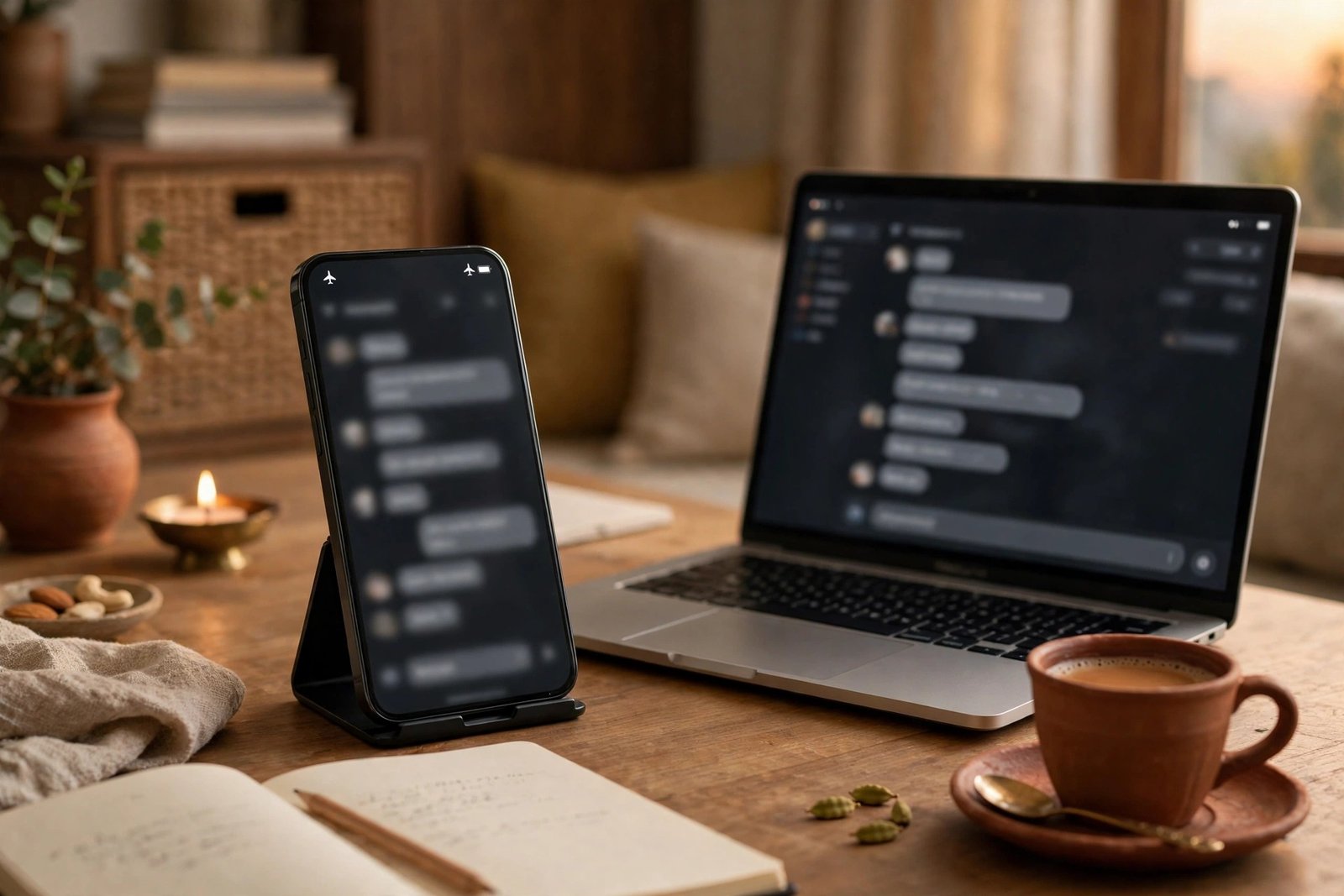
A 9-billion-parameter brain that fits in your pocket
Alpie Seed is a 9-billion-parameter multimodal reasoning model — one system that handles text, images and video, with a thinking mode for hard problems and a faster mode for everyday questions. It is built on the Qwen3.5-9B foundation and refined through 169Pi’s own post-training pipeline: supervised fine-tuning followed by reinforcement learning, guided by a seven-part reward system that scores correctness, penalises hallucination, and rewards clear, well-structured explanations.
The training itself is part of the story. The team ran it on just eight NVIDIA H100 GPUs — 3,034 training steps, about 3,472 GPU-hours in total. “The usual story in AI is that you need thousands of GPUs and a big cheque to compete. We built Seed without either,” says founder and CEO Rajat Arya. “We trained it in 4-bit from day one because that was the only way a small team could afford to build it, and it turned out to be the right call, because 4-bit is what actually runs on a laptop.”
That 4-bit build is the whole point: squeezed down to about 5 GB, the model fits on ordinary hardware, and it carries a native context window of 262,144 tokens — room for long documents, large codebases and thick reports in a single conversation.
What it can actually do
In 169Pi’s own evaluations, Alpie Seed scores 87.30% on MMLU and 84.32% on GPQA Diamond, the hard-science benchmark. On coding, it resolves 61.20% of real issues in real GitHub projects on SWE-Bench Verified — ahead of its Qwen3.5-9B base, and ahead of the 34% the company cites for Sarvam’s 30-billion-parameter model — and records 72.99% on LiveCodeBench. On vision, it scores 90.30% on OCRBench, reading documents, charts and handwritten notes.
More Read

The demo makes it tangible. In 169Pi’s own offline test, a phone in airplane mode photographs a restaurant menu and the model reads every visible line, then lists each dish with its price — Goat Curry, Chicken Naga, Shakti Baingan — reasoning its way through the image, with nothing sent to any server.

It also speaks India’s languages. The company evaluated the model across ten Indian languages — Hindi, Bengali, Gujarati, Kannada, Malayalam, Marathi, Odia, Punjabi, Tamil and Telugu — recording 73.67% overall on MMLU Indic, with Hindi strongest at 77.55%.
Tested on the hardware people already own
169Pi put the model through its paces on consumer devices, offline. On a 16 GB MacBook M2 it generates about 14 tokens a second; on an iPhone 17 Pro, about 9.6; on a Samsung Galaxy Z Flip8, about 5.9; on an RTX PRO 4500 workstation, about 111. Even a Windows PC with no graphics card at all keeps answering, at about 2 tokens a second. The model is free to use under the Apache 2.0 licence — on Hugging Face, Ollama, LM Studio and the PocketPal app — and anyone can try it in the Alpie Playground without installing anything.
The brothers behind it
169Pi was founded by brothers Rajat Arya, 28, and Chirag Arya, 24 — named by Forbes India among its 30 Under 30 in 2025. The name comes from 169, the square of 13, and pi, the mathematical constant. From the start, the brothers bet on small language models: their earlier work includes a model built on 1-bit representations, designed to slash the compute AI needs. An early user of their work is ISRO, which is testing a PDF agent the team built, and they are also building education material from NCERT textbooks for state-run schools in Bihar.
Alpie Seed is the foundation, not the finish. Alongside the model, 169Pi is opening invite-only access to Alpie Local, a coding agent built on Alpie Seed that runs entirely on a developer’s own machine, with a VS Code extension and a desktop agent to follow. The ambition is an AI ecosystem that lives on the devices people already own — in India, and wherever a connection cannot be taken for granted.
That is the shift Alpie Seed represents: intelligence that does not wait for a signal. The cloud will always have its place, but the most useful AI of all might be the one that keeps working when the bars disappear.
Keep reading: The Chennai Startup Building India’s Quantum-Proof Internet: Inside YesPanchi’s QSecura · Dinner Cooks Itself: Inside Posha, the Bengaluru-Born Robot Chef · More Industrial Automation & Technology stories
Like stories like this? Add Exceptional Technology as a preferred source on Google to see more of our reporting in your search results and Discover feed.