Turn on a tap to wash your hands. Around ten to twelve litres of water rush out every minute, much of it bouncing off your palms and disappearing down the drain. Now imagine that happening hundreds of times a day, in every washroom of every office tower in a city — alongside hidden leaks nobody can see and cooling systems quietly losing millions of litres to the sky. Chennai-based startup EarthFokus looked at that picture and saw something most of us miss: a fortune in water, hiding in plain sight.
Founded in 2019 by Arun Subramanian and Rishi Vandan, and incubated at IIT Madras, EarthFokus helps commercial buildings monitor every drop they use, find the leaks they cannot see, recover water that would otherwise drift away as vapour, and cut everyday use at the tap. The company says its solutions have now helped more than 130 commercial buildings save over five billion litres of water.
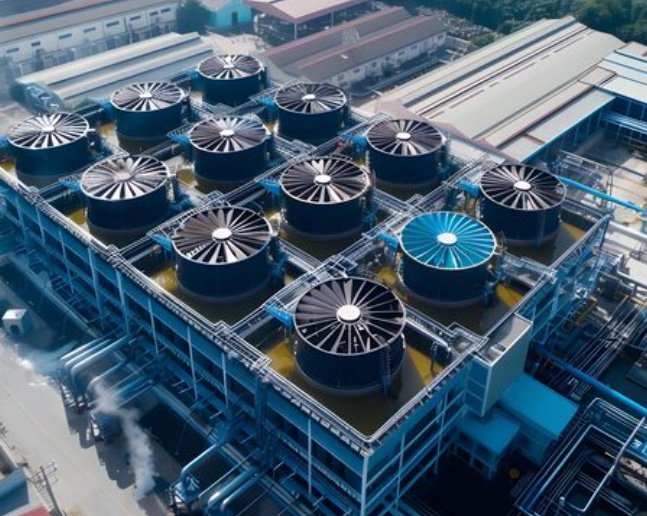
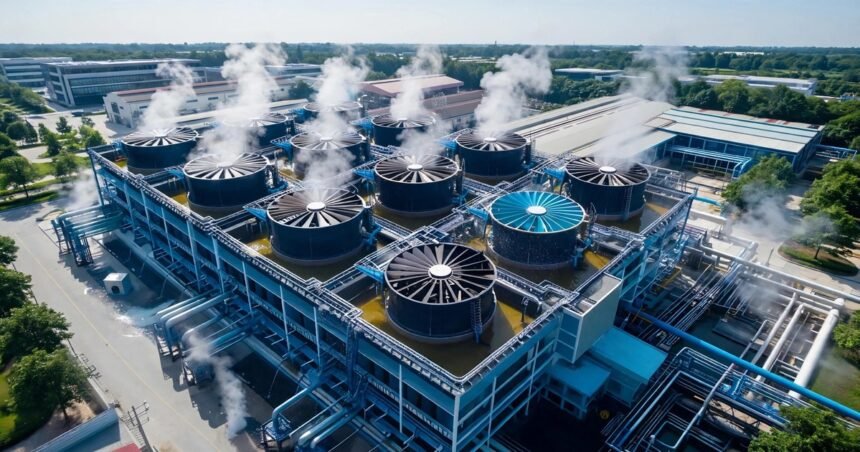
Aerial view of industrial cooling towers — the setting for EarthFokus’s EcoVapure water recovery. (Image: EarthFokus)
It began with a tap
EarthFokus started with a small experiment. In 2019, Arun, an engineer, was approached by a neighbour who wanted to reduce water use in their garden. Around the same time, Chennai was living through its Day Zero water crisis, when the city’s reservoirs ran critically low. The crisis made the value of every litre obvious — but Arun began by looking at something much more ordinary: a tap.
A conventional tap can release around ten to twelve litres of water a minute, yet washing your hands needs only a fraction of that. The team built a fixture that could bring the flow down to as little as half a litre a minute, using only as much water as the task actually requires. The product found its moment during the COVID-19 pandemic, when frequent handwashing became essential, and early corporate orders followed, including from Cognizant.
More Read

But the founders soon hit an unexpected hurdle. Customers saw the fixture as just another plumbing accessory, not as a way to cut a whole building’s water use. That realisation changed the company. Instead of simply selling water-saving products, EarthFokus began helping clients measure consumption and prove the savings its interventions delivered. From a tap, it grew into a full water-saving system.
Three ways buildings stop wasting water
As the startup worked with more buildings, it found that inefficient taps were only one part of the problem. Hidden leaks, poor monitoring and water lost through cooling towers offered far bigger opportunities. Its three solutions tackle a different part of the puzzle.
1. WaterOS: spotting leaks before they become bigger problems
Think of WaterOS as a monitoring system for a building’s entire water supply. IoT-enabled flow meters and sensors sit at key points — supply lines, floors, washrooms and cooling towers — continuously collecting data and sending it to the cloud, giving facility managers a near-real-time picture of how water is being used.
AI then learns what normal looks like, based on time of day, occupancy and seasonal variation, and flags anything unusual. A restroom might typically see heavy use during office hours and almost none overnight — so if the system detects a steady flow at 2 am, it can raise the alarm. The cause could be a running toilet or a leaking valve that might otherwise go unnoticed for weeks. Unlike a monthly water bill, which reveals consumption long after the fact, WaterOS helps teams catch the problem while the water is still being wasted.
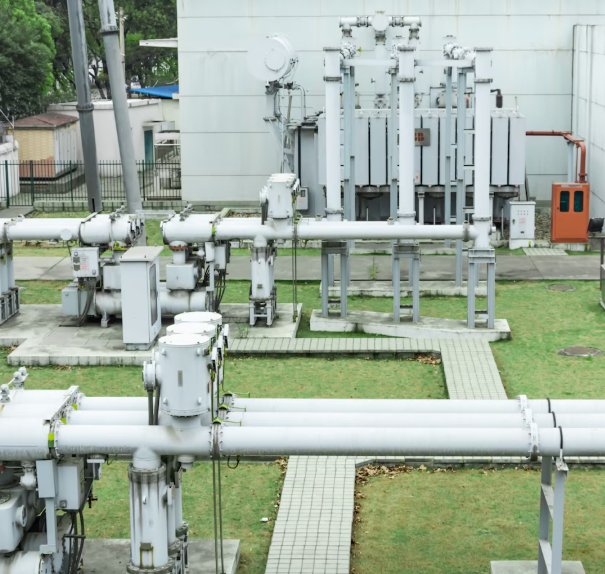
Industrial water infrastructure, monitored by EarthFokus WaterOS sensors. (Image: EarthFokus)
2. EcoVapure: recovering water from cooling towers
Some of the biggest water losses in a building happen where occupants rarely look. Cooling towers, used in offices, factories and data centres, remove heat by letting water evaporate. That evaporation is essential to the cooling process — but it also means water is continuously lost, along with smaller losses from drift and blowdown.
EarthFokus developed EcoVapure to win some of that water back. Its deployed technology, called Capture, is designed for cooling towers that produce a visible plume of water vapour. As the plume passes over a specially designed surface, droplets gather and grow until they fall back into the cooling system — or are collected separately for other uses. The company says the technology can recover roughly 30% of evaporation loss, and that the recovered water comes back with up to 90% lower dissolved solids, with no impact on cooling performance. A second approach, called Convert, is in development for towers without visible plumes. EcoVapure was showcased at WEFTEC 2026 in New Orleans, in the event’s Innovation Pavilion.
3. WaterFokus: saving water without changing habits
WaterFokus works at the tap itself. Its aerators mix air into the water as it leaves the tap, while other low-flow fixtures use restrictors or specially designed nozzles — so the stream still feels strong while using far less water. The company says its fixtures can cut fixture water use by up to 70%, and it manufactures them in metal, built to last, rather than in plastic that needs frequent replacement. The idea is to make conservation almost effortless: install the fixture, and less water is used without asking anyone to change their routine.
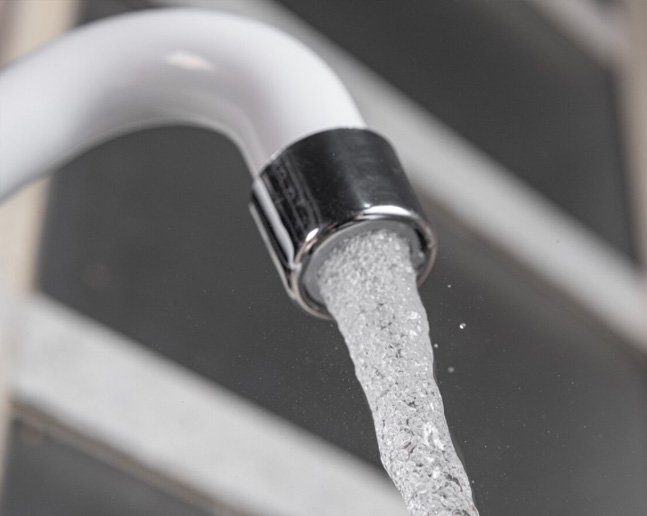
A WaterFokus aerator in action — air mixed into the stream keeps the feel of a full flow while using far less water. (Image: EarthFokus)
What the numbers say
The approach is already showing up in real buildings. WeWork India, which once relied on manual readings to track water use across its centres, now has a continuous picture of consumption through IoT metering. “The biggest shift has been moving from estimated, manual figures to accurate, real-time data across every asset,” says P. Seshashayan, Manager, Energy & Sustainability, at WeWork India Management Ltd. According to the company, consumption fell from 45 litres per person per day to 29 litres — and WeWork has set a target of reaching 20 litres per person per day by FY28.
EarthFokus has also worked with IBM and Cognizant. The company says introducing its water-saving fixtures at Cognizant’s Chennai operations helped cut daily water demand by nearly 80%. Its client list also includes Cisco, Tata Communications and JLL India.
For Rishi, the impact becomes most meaningful when he can put the numbers into perspective — picturing what five billion litres could have meant for cities facing water shortages, including Bengaluru during its recent water crisis. Looking ahead, EarthFokus wants to expand EcoVapure and develop water-recovery technology that can be adopted in India and scaled internationally.
For him, though, the underlying problem remains simple. Whether it is a tap, a reverse-osmosis system or a cooling tower, we often use more water than we actually need. “The basic problem is that we end up using more than what we need because we take water for granted,” he says. EarthFokus exists to make sure we stop taking it for granted — one tap, one sensor and one cooling tower at a time.
Keep reading: Kills Germs, Leaves Only Oxygen: Inside NIT Warangal’s Ozone Disinfection System · The AI Scribe That Speaks 15 Indian Languages: Inside EkaCare’s Voice Scribe for India’s Public Hospitals · More Chemicals, Materials & Life Sciences stories
Like stories like this? Add Exceptional Technology as a preferred source on Google to see more of our reporting in your search results and Discover feed.