


In an old-age home in Bengaluru, a resident who stumbles no longer has to call for help — and nobody has to keep a constant watch. Within two seconds, a caregiver and the family get an alert. The alert comes from Sentinel, an AI system built by Bengaluru startup iHelp Robotics that turns ordinary CCTV cameras into round-the-clock guardians for senior citizens.

The cameras were already on the wall
Sentinel starts from a simple observation: old-age homes and care facilities already have CCTV cameras everywhere, and almost nobody watches them. As co-founder A Mohammed Musharaff puts it, nobody can sit in front of CCTV screens all day to check if someone has fallen — and that is the problem Sentinel solves.
The system plugs into the cameras a facility already owns — it works with any CCTV brand — and feeds them into a single computer unit installed on site. At the Bengaluru home where it is being piloted, seven cameras feed one such box. Its models watch the video, understand what is happening in each frame, and raise the alarm only when something matters.
There are no wearables to charge, no sensors to strap on, and nothing for residents to remember to carry. The company deliberately avoided sensor-based systems, and the intelligence lives in the cameras that were already there.
Two seconds, and someone knows
When a resident falls, Sentinel spots it and alerts a caregiver and the family within two seconds. But the system does more than wait for emergencies. Its models learn to recognise each resident and keep a quiet log of daily routines — including whether a person actually eats at mealtime. Merely holding a plate does not count as a meal.
Sentinel also watches the perimeter. It flags intruders, and it alerts staff if a resident steps out and does not return within 30 minutes. Staff can see every alert and recording on a dashboard, so a missed meal or a changed routine reaches a human being instead of sitting unnoticed on a hard drive.
More Read

Behind the alerts is a reason Musharaff states plainly: elderly people rarely complain about pain or a limp. They feel they have seen so much in life that they should not complain like a small child. Sentinel is built to notice what they will not say.
Nothing leaves the building
Privacy is designed into the system rather than added afterwards. Everything is processed on the box installed on site, and the company says no data is taken outside the facility — it is processed and destroyed there itself. For families trusting a camera system with their parents’ daily lives, that on-site design is the whole point.
One platform, four kinds of help
Sentinel is one expression of a larger platform the company calls MITRA — a real-time multimodal AI system that reads vision, audio, depth and motion from edge hardware and turns it into guidance a person can act on. It runs entirely on the device, with no dependence on cloud connectivity.
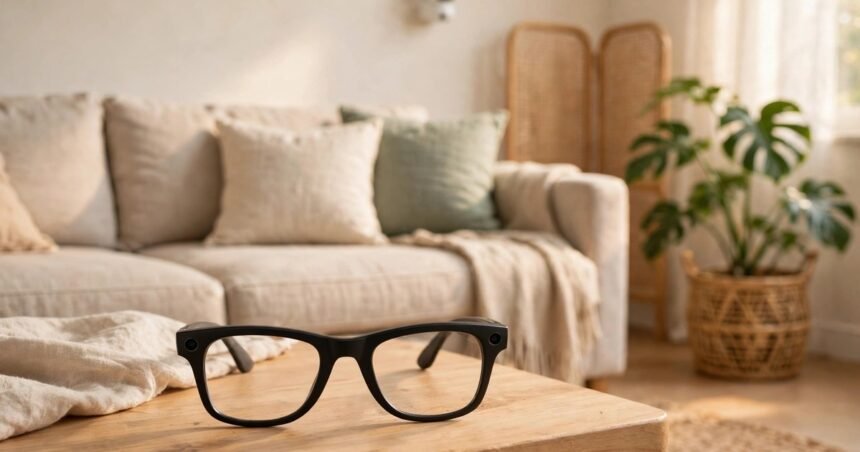
The same intelligence layer adapts across four kinds of care: smart glasses that guide people with visual impairment — the company calls MITRA the world’s first intelligent companion for the visually impaired — plus elderly care, dementia support and Alzheimer’s care, with fall-risk alerts, caregiver notifications, contextual reminders and safe-zone awareness.
iHelp Robotics was founded by Vivek Tiptur Umapathi and A Mohammed Musharaff. Vivek is a Carnegie Mellon Robotics Institute graduate with more than 12 years building production computer vision and driver-assistance systems; Musharaff is an AI and machine-learning engineer specialising in real-time computer vision that runs on edge hardware. The company is headquartered in Bengaluru and is a qualified deeptech startup under the National Deeptech Startup Policy.
What comes next
The company showcased Sentinel at the Bengaluru Tech Summit 2026, and the pilot at the Bengaluru old-age home is only the beginning. iHelp Robotics says it is in talks with an elder-care provider to extend the system to individual homes, and it has partnered with a CCTV manufacturer. It is also developing a version for the neonatal and intensive care units of an Indian hospital, to track patients in comas.
For a country where families are spread across cities and continents, and where the cameras in a care home already record everything and understand nothing, Sentinel closes a gap that has been hiding in plain sight. The cameras were already on the wall. Now they are finally watching over the people they were installed to protect.
Keep reading: Lights Off, Machines On: Inside Antropi Robotics’ Autonomous CNC Factory · Forty-Eight Paise a Second: Inside Avataar’s Varya, India’s Own Video AI · More Industrial Automation & Technology stories
Like stories like this? Add Exceptional Technology as a preferred source on Google to see more of our reporting in your search results and Discover feed.







