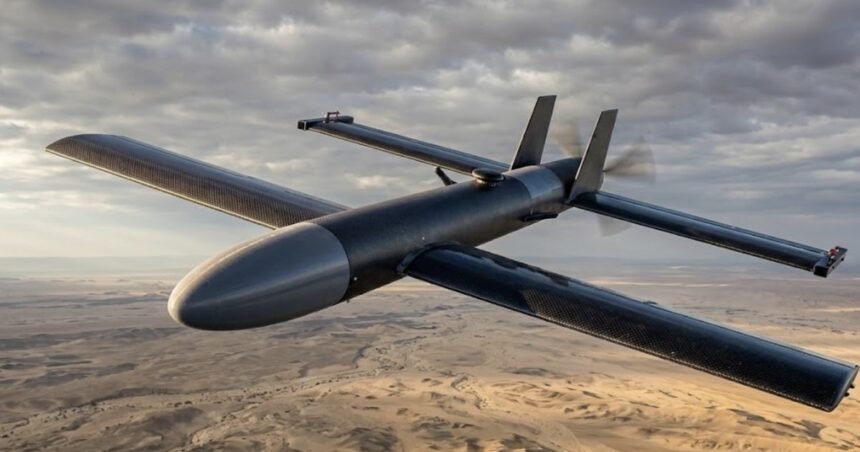
A large multirotor drone climbs into the sky over dry, open country, a small fixed-wing aircraft slung beneath it. Then, high above the ground, the carrier lets go. The little aircraft drops, steadies itself, and flies on alone — no runway, no launcher, no crew anywhere near the target. That is the moment Bhopal-based Rodella Aerospace has been building towards, and the aircraft at the centre of it is the Firebird-E.
A munition that starts its mission in the air
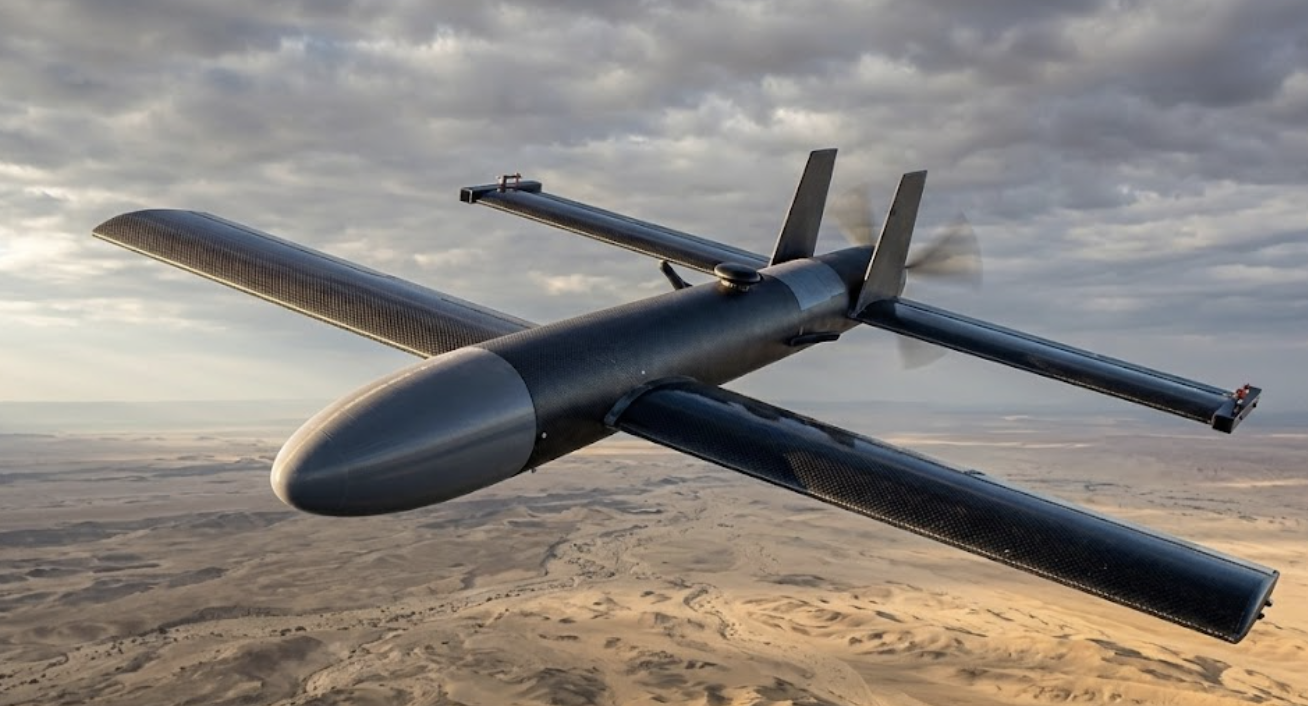
Rodella Aerospace Labs was founded in 2019 by Vasu Gupta and Vaishali Gupta, and it began with the unglamorous work of building fixed-wing and multirotor drones for intelligence, surveillance and reconnaissance. The Firebird-E is what that foundation grew into: an air-launched loitering munition, known in military shorthand as an air-launched effect. Instead of being fired from the ground, it is carried aloft by a larger airborne platform and released closer to where it is needed, so the launch platform itself can stay far from hostile air defences while the munition covers the last stretch on its own.
Test footage released by the company in July 2026 shows the idea working end to end: the carrier drone lifts off with the Firebird-E mounted beneath it, climbs, releases it mid-air, and the munition transitions into autonomous flight over arid terrain. It is a small, elegant piece of choreography — two aircraft doing the job that used to need a launcher, a crew and a fixed position on the ground.
Built to find its own way to the target
Once released, the Firebird-E navigates itself. The company says it flies with autonomous navigation and terrain-aware path planning, and strikes with what it calls LIDAR-fused precision, detonating on proximity as it dives onto its target. It is built for anti-personnel and anti-vehicle roles, and it can be launched from the air or from the surface — a flexibility that matters when the same system has to work from a drone, a vehicle or a fixed position.
The numbers the company publishes for the Firebird-E are compact and deliberate: a cruise speed of 100 km/h, a dive speed of 180 km/h, an operational range of 50 km and a 2 kg warhead. Nothing about it is oversized. The point of the design is not raw power but the combination of silence, reach and precision — a small aircraft that arrives unannounced, finds its target itself, and finishes the job.
A family, not a single aircraft
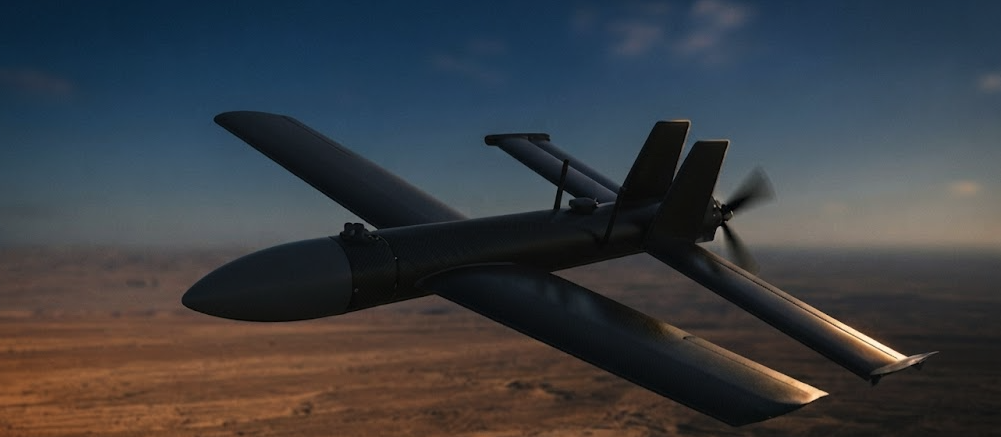
The Firebird-E is one of three strike aircraft Rodella now builds, and the other two show how far the same thinking stretches. The Firebird-5E is a compact one-way attack platform that carries a 5 kg payload out to 100 km, with an 80-minute endurance and terminal dive speeds above 300 km/h. It can launch from a mother drone, a pneumatic launcher, a RATO booster or a vehicle-mounted rail, and it flew at the Indian Air Force’s Droneathon 2026 in Pokhran in September 2026.
More Read

At the other end of the range sits the Firebird-G, a petrol-powered one-way attack drone that carries a 20 kg warhead in its nosecone, cruises at 180 km/h and stays airborne for five hours over a 750 km range, at an all-up weight of 40 kg. Between the three, Rodella covers the short tactical strike, the flexible multi-launch mission and the long deep-strike run — all designed, built and flown from Bhopal.
Why it matters
Loitering munitions have become one of the defining weapons of modern warfare, and until recently India bought nearly all of them from abroad. Rodella’s Firebird family is part of the change: a small team in Bhopal, seven years into building drones, now fielding an air-launched strike system, a multi-launch attack aircraft and a long-range kamikaze drone of its own design. The Firebird-E’s trick — starting its mission in the sky, released from another aircraft — is exactly the kind of idea that turns a small startup into a serious defence supplier. Bhopal is not where most people look for the future of Indian air power. Rodella is giving them a reason to start.
Keep reading: The Drone That Needs No Runway: Inside Asteria Aerospace, the Bengaluru Company Flying for the Indian Army · Small Drone, Sharp Eyes: Inside ArthX’s YUKI, the Micro Recon Drone Now Flying for the Indian Army · More Aerospace & Defense stories
Like stories like this? Add Exceptional Technology as a preferred source on Google to see more of our reporting in your search results and Discover feed.