High in the Himalayas, where the air thins above 6,000 metres and there is no runway for a hundred kilometres in any direction, a small white-and-carbon aircraft lifts straight up off a ridge, folds its four lift rotors back, and settles into level flight. For two hours it watches the valleys below with a camera that can read a vehicle from kilometres away, day or night, then comes back down vertically onto the same patch of rock it left. The Indian Army flies this aircraft. It was designed and built in Bengaluru, by a company that has been quietly writing India’s drone rulebook for over a decade: Asteria Aerospace.
The drone that needs no runway
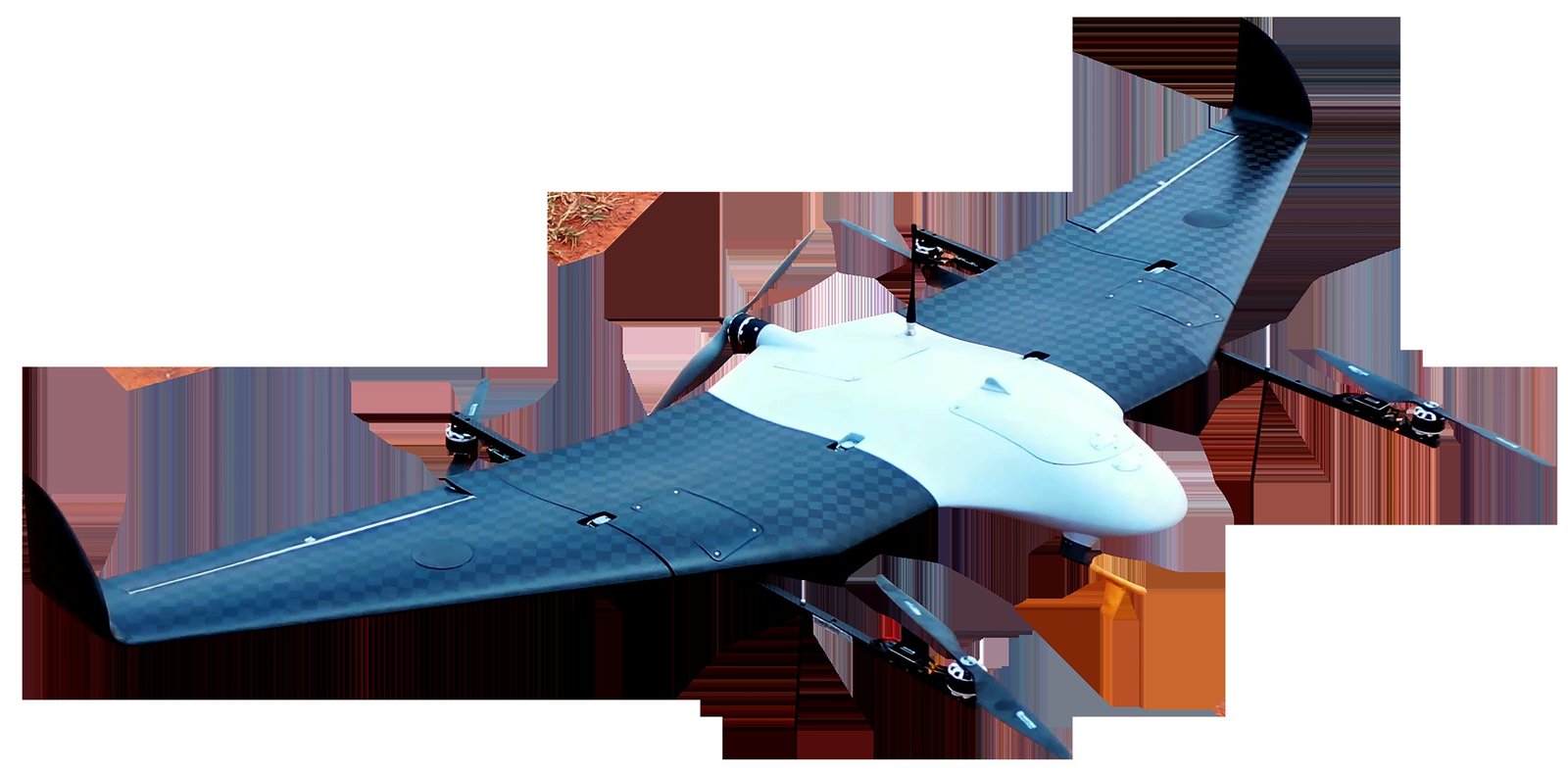
The aircraft is the AT-15, Asteria’s flagship for defence and homeland security. Its blended-wing design gives it the efficiency of a fixed-wing aeroplane with the launch flexibility of a quadcopter: it takes off and lands vertically from confined spaces, then cruises on a pusher propeller. The company says it stays airborne for up to 120 minutes, reaches 20 kilometres line of sight, and operates at altitudes up to 6,000 metres above mean sea level — the thin-air, high-wind regime where border surveillance actually happens. At 8 kg maximum take-off weight, built entirely from carbon-fibre composites, it is man-portable: a small team can unpack it, assemble it and launch it in minutes.
The eyes of the AT-15 are a dual-spectrum EO-IR payload with 20x optical day zoom, 640p thermal resolution and 4x digital thermal night vision, panning a full 360 degrees. The company says the payload supports real-time target detection and tracking, automated motion detection and precision artillery targeting — the capability the Army calls Direction of Own Artillery Fire. Its communications run over an AES-256-encrypted digital datalink with mesh networking, and the aircraft carries dual GPS, automatic return-to-base and terrain-aware flight planning.
In December 2024, Asteria delivered its largest-ever AT-15 contract to the Indian Army. The company says the delivery comprised 160 VTOL targeting drones with Direction of Own Artillery Fire capability — the biggest single deployment in its history, and a milestone its co-founder Neel Mehta described as proof of Asteria’s support for the evolving needs of India’s defence forces.
Three certificates from the DGCA
Asteria’s claim to fame is not a single aircraft but a regulatory first that no other Indian drone maker can match: it is the first Indian manufacturer to hold three DGCA type certifications — two in the small category and one in the micro category. The story starts with the A200, a 1.995 kg survey-grade quadcopter carrying a 24.1 MP APS-C camera and a survey-grade L1/L2 multi-band GNSS receiver with full PPK capability. In October 2019, an A200 became the first drone in India to receive a Unique Identification Number — U0000001 — on the DGCA’s Digital Sky platform, and in October 2022 it became India’s first micro-category drone to receive DGCA type certification.
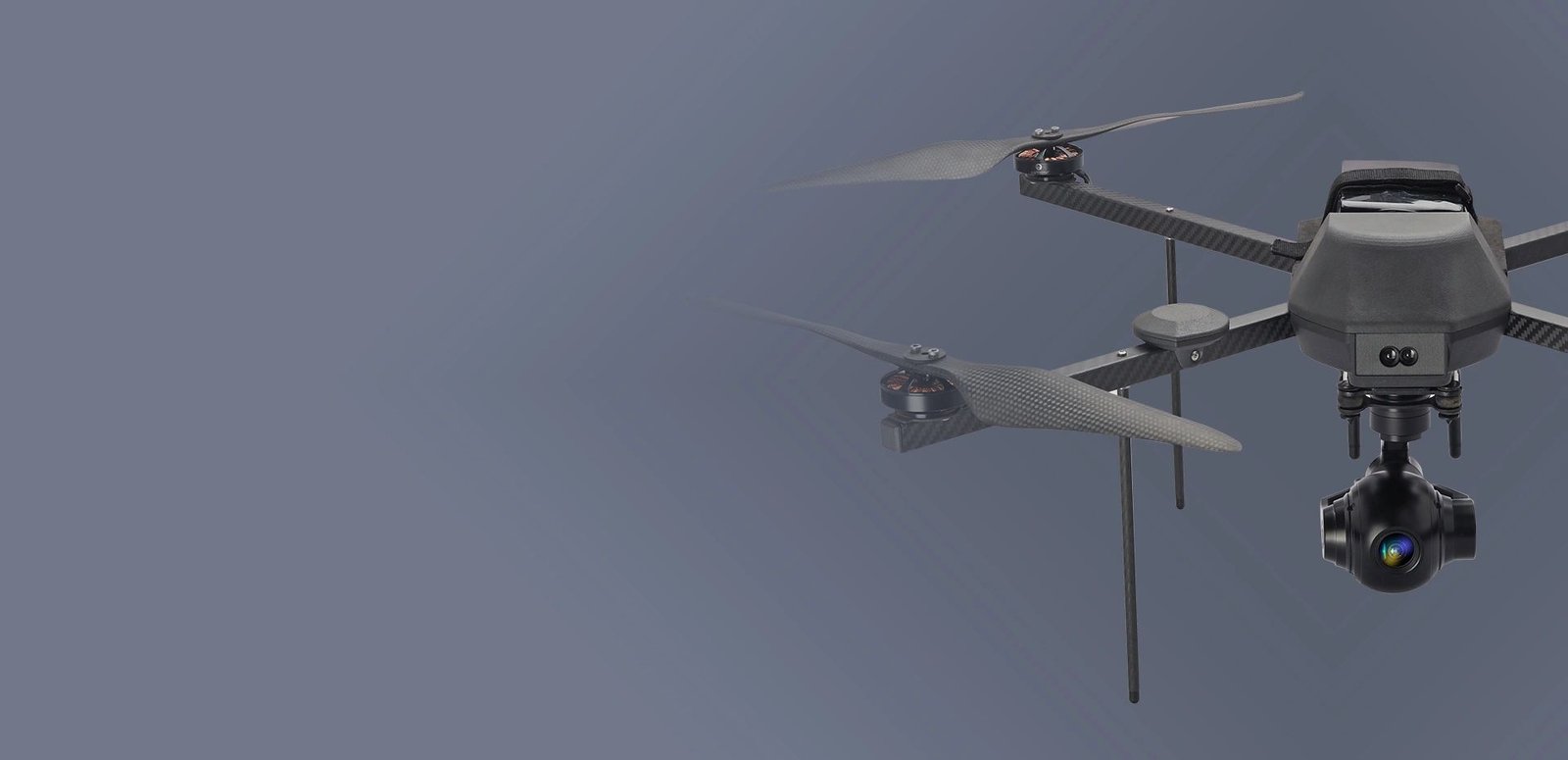
The current generation, the A200-XT, flies for more than 40 minutes with a 2 km range at under 3 kg, and its bigger sibling, the A410-XT, stretches that to 60 minutes and 4 km at under 7 kg. Both carry the same philosophy as the original: survey-grade accuracy, automated take-off and landing, and a single operator with a laptop-based mission planner. The company says the A200-XT’s high-resolution imaging and precise geotagging make it a workhorse for cadastral mapping under the government’s SVAMITVA scheme, digitising land parcels across rural India.
More Read

From the border to the freight corridor
Asteria’s drones work far beyond the border. The company says its aircraft fly pipeline surveillance for Pipeline Infrastructure Ltd, coal-mine surveys for Central Mine Planning & Design Institute, railway infrastructure inspection for the Dedicated Freight Corridor Corporation of India, forest monitoring for the Karnataka Forest Department, and real-estate and traffic surveys for Ambuja Neotia and Reliance BP Mobility. Its earliest customers were the security forces themselves: a first supply order from the Border Security Force in April 2016, and a shortlisting by the Central Reserve Police Force in 2019.
Above the hardware sits SkyDeck, Asteria’s cloud-and-AI platform for end-to-end drone data management, launched in 2023. The company says SkyDeck turns raw flights into survey-grade maps, 3D models and analytics within a day, and powers a Drone-as-a-Service offering for customers who want the intelligence without owning the aircraft. It is the software half of a full-stack bet the company has made since the beginning: design the airframe, write the flight software, build the analytics, and manufacture it all in-house.
Built in Bengaluru
Asteria was founded in 2011 by Neel Mehta and Nihar Vartak, two Purdue University aerospace engineering graduates who had worked at Rockwell Collins, Boeing and Accenture before returning to India to build drones for defence. In 2019, Jio Platforms — the Reliance Industries arm — acquired a majority stake in the company, and Asteria is today a subsidiary of Jio Platforms. The company says it now employs more than 300 people, over 60 of them in R&D, and operates a 28,000 sq. ft. design and production facility in Bengaluru with a DSIR-recognised R&D lab, plus a strategic presence in Gurugram.
From the first UIN in the country to the Army’s mountain ridges, Asteria Aerospace has spent fifteen years proving that India can design, certify and manufacture its own eyes in the sky — and that the aircraft watching over the border can be built, from carbon fibre to code, at home in Bengaluru.
Keep reading: Small Drone, Sharp Eyes: Inside ArthX’s YUKI, the Micro Recon Drone Now Flying for the Indian Army · The Robot That Goes In First: Inside Bhairav Robotics’ Vrishabh Combat UGV · More Aerospace & Defense stories
Like stories like this? Add Exceptional Technology as a preferred source on Google to see more of our reporting in your search results and Discover feed.