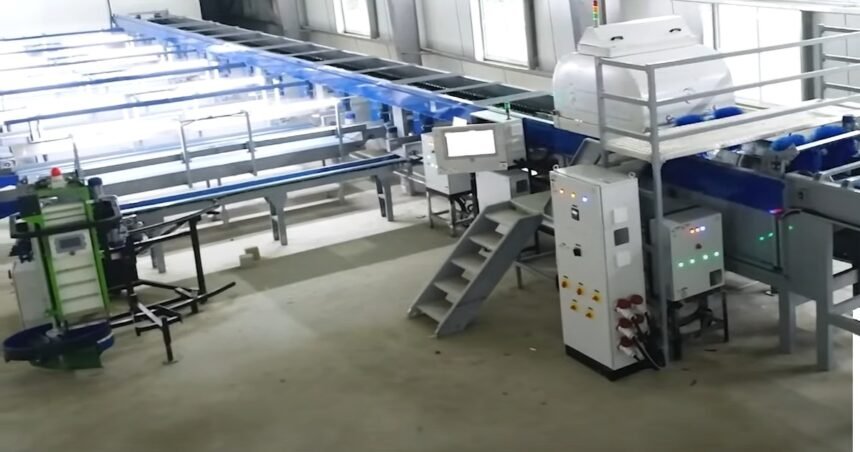
An apple rolls down a conveyor belt in a Himachal Pradesh packhouse. In a fraction of a second, cameras photograph it from every angle, an AI model trained on more than a billion fruit images judges its size, colour and blemishes, and a machine drops it into exactly the right grade. No hands touch it. No argument follows about what it is worth. That is the quiet revolution Intello Labs has been building from Gurugram since 2016, and it is now running in packhouses across India, Europe and South Africa.
Intello Labs calls what it builds Physical AI: machine vision, robotics and data intelligence working together on the physical world, in real time, at industrial scale. The company says its systems have already processed more than 100,000 metric tonnes of fresh produce, grading with over 95% accuracy and lifting the price farmers realise by more than 20%.
See, know, act
The Intello system runs on a simple loop. First it sees: multi-camera computer vision captures a 360-degree view of every fruit as it moves through the line. Then it knows: AI models trained on more than a billion images classify size, colour, defects and weight in milliseconds. Then it acts: automated sorting and packing systems place each fruit in exactly the right grade and pack. And finally it earns: graded lots enter the company’s Digital Mandi, where verified quality data drives transparent auctions and better prices.
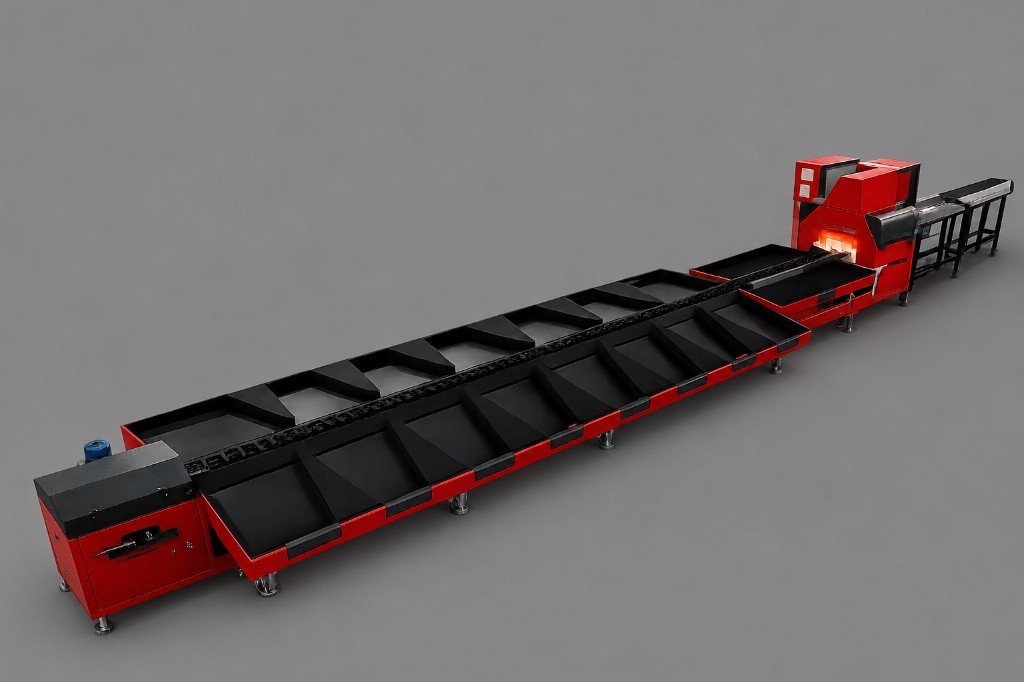
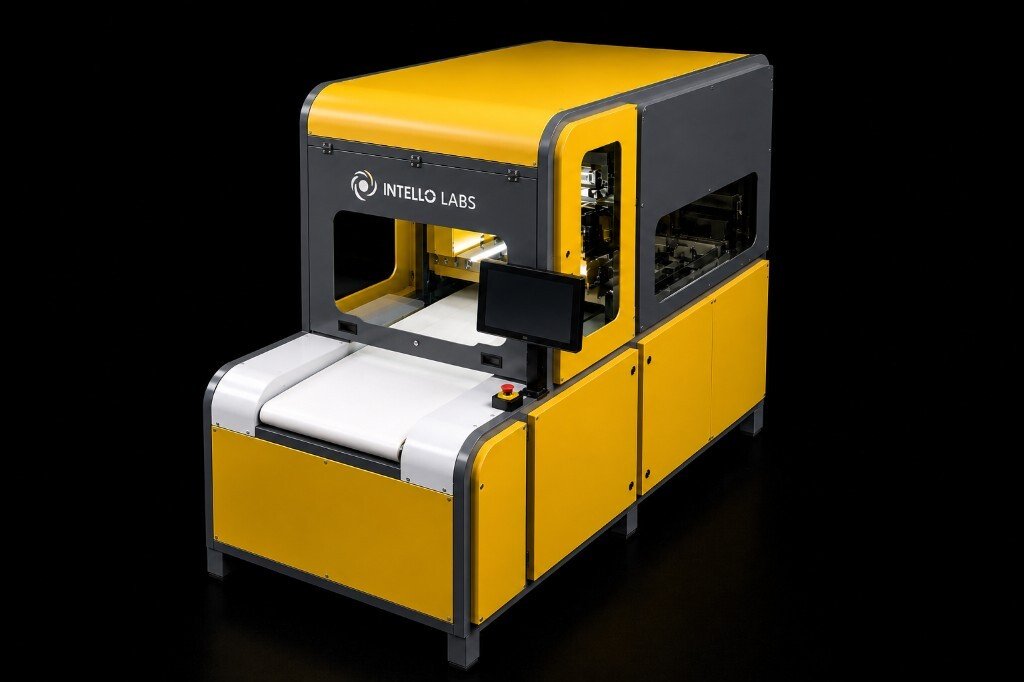
The company’s flagship is the FruitSort sorting and grading machine, a multi-commodity system that handles apples, citrus, pomegranates, mangoes, onions, tomatoes and more. Around it sit the Tray Packer robot, which packs fruit into trays with zero touch at 4,500 to 7,000 fruits an hour while cutting packing labour by more than half, and FlowStar, a weighing and packing system that delivers consistent weights in retail-ready packs. All of it runs on edge computing at the machine, so the line keeps working with no cloud lag and no downtime dependency.
From a phone camera to a packing line
Intello Labs was founded in 2016 by Milan Sharma and Nishant Mishra, with a simple observation: the way India grades its fruit was slow, subjective and inconsistent, and the farmer paid for every disagreement. The team started with image-based inspection that could run on a smartphone, and in 2017 joined the JioGenNext accelerator. A pilot at Reliance Fresh procurement centres in Mumbai showed what the technology could do: supervisors photographed incoming crates, the software generated quality metrics, and inspection turnaround fell from around 20 minutes to roughly two.
“Intelligence is only valuable when it acts on the physical world. We are that bridge, between the fruit on the vine and the price on the screen,” the company says of its approach.
More Read

Investors followed the results. The company raised a $2 million seed round in 2019 from Nexus Venture Partners and Omnivore, a $5.9 million Series A in 2020 led by Saama Capital, and a further round of around $5 million in 2021 led by Avaana Capital. The funding turned a software idea into hardware: full sorting lines, packing robots and the data platform that ties them together.
From grading to trade
The most ambitious part of the Intello story is not the machine but the market it feeds. Digital Mandi is the company’s quality-driven digital marketplace for fresh produce, where AI-graded lots are auctioned to remote buyers who bid on data rather than on sight. The company says the platform consistently delivers 6 to 10% higher realisations than traditional mandi trade, with lot-level traceability from grading through auction to delivery.
Every scan, grade and auction also feeds a data intelligence layer that tracks grade distribution, defect patterns and price-quality correlations, giving packhouse managers and exporters a picture of their supply chain that simply did not exist before.
India built, world buying
From packhouses in Himachal Pradesh, Intello Labs has carried its machines into export markets in Europe, active deployments in South Africa, and the RISE accelerator in Australia, with Latin America and the United States next in its expansion pipeline. In August 2026, the company was named to the Nasscom Emerge 50 League of 10, selected from 750 applicants as one of India’s most promising deep-tech startups. A month later, it was the only agritech startup among 37 Indian deep-tech companies chosen to showcase at the BRICS Bharat Innovates Exposition in New Delhi.
Why it matters
India grows staggering quantities of fruit and vegetables, and the journey from farm to buyer has always been where value leaks away: inconsistent grading, disputed quality, rejected consignments and prices set by haggling rather than evidence. Intello Labs is rebuilding that journey around a simple idea, that quality should be measured, not argued about. When a machine can grade every apple the same way, in milliseconds, the farmer gets a fairer price, the buyer gets exactly what was promised, and less good food goes to waste. It is Indian engineering applied to one of the oldest problems in Indian agriculture, and it is already working at scale, in India and far beyond it.
Keep reading: The Device That Smells Rot Before It Spreads: Inside Godaam Innovations, the Maharashtra Startup Saving India’s Onions · The Tractor That Plugs In: Inside Cellestial, the Startup That Built India’s First Electric Tractor · More Food Processing & Agri-Tech stories
Like stories like this? Add Exceptional Technology as a preferred source on Google to see more of our reporting in your search results and Discover feed.