


A diesel tractor is a wonderful machine and a terrible bill. It drinks fuel by the hour, needs oil and filters and servicing, and it shakes and roars while it works. For a small farmer, the purchase price is only the beginning — the running cost is what decides whether the machine earns its keep. A Hyderabad startup looked at that maths and asked a simple question: what if the tractor just plugged in?
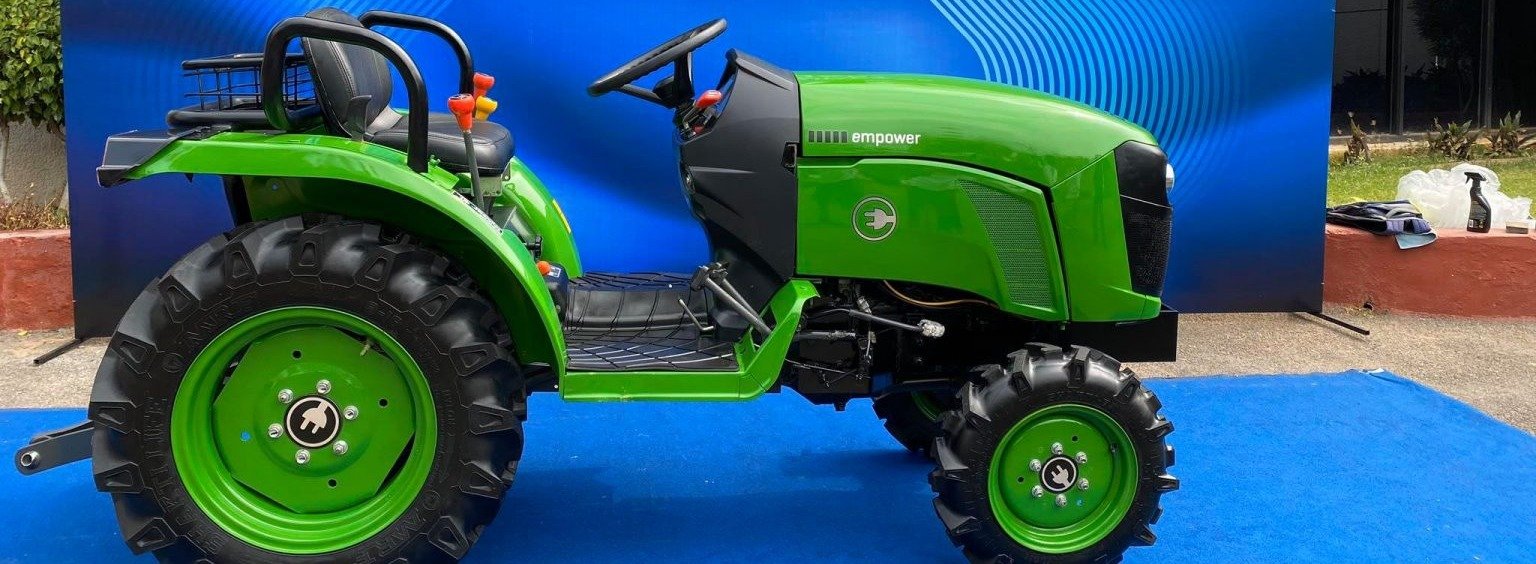
Cellestial E-Mobility was founded in May 2019 by Siddhartha Durairajan and Syed Mubasheer Ali, two former colleagues with more than 40 years of engineering experience between them. In March 2020, the company unveiled what it calls India’s first electric tractor — a compact green machine built from the ground up to do a diesel tractor’s work on electricity alone.

A tractor with a hundred-odd parts
The cleverness of the Empower, as the tractor was called, is in what it leaves out. A diesel tractor is a maze of engine, gearbox, clutch, fuel system and exhaust; Cellestial designed its machine around what it calls the EPEA framework — Elimination of Physical Elements in Automotives — and built the tractor with just 100 to 150 parts. The motors, controllers and battery packs were all developed in-house and tightly integrated, so there is almost nothing to service: no engine oil, no filters, no clutch to wear out. The company says maintenance costs fall by about 80% and operating costs by about 90% against a comparable diesel tractor.
The numbers on the original machine are modest and honest. It weighs 600 to 800 kilograms, hauls up to 1.2 tonnes, covers about 75 kilometres on a charge and tops out at 20 kilometres an hour — plenty for work in fields, orchards, greenhouses and factory yards. The battery swaps out, charges from an ordinary 15-amp household socket in six to eight hours (about two hours on fast charge), and the tractor brakes regeneratively, feeding energy back into the pack. It can even run in reverse as a power source: the company says the tractor’s power-inversion feature can run a UPS, so the machine doubles as backup power for a home or a shed. At launch it was priced at about ₹5 lakh.
Three tractors, one platform
More Read

Cellestial built the idea out into a family: 27 HP, 35 HP and 55 HP models for different sizes of farm. The 27 HP machine runs a 13.5 kW motor on a 150 Ah battery, with four-wheel drive, a 540–900 rpm power take-off for rotavators, cultivators, ploughs and trailers, and the same 75-kilometre range. The 55 HP flagship steps up to a 36–40 kW motor and a 400 Ah battery, lifts 4,000 kilograms and reaches 30 kilometres an hour. The company says it took more than 1,700 orders in the first two months after the tractors went on sale — farmers, it seems, had been waiting for exactly this machine.
From startup to Murugappa
The idea was strong enough to catch the eye of one of India’s oldest industrial houses. Tube Investments of India, the Murugappa Group’s engineering flagship, bought a 70% stake in Cellestial in January 2022 for about ₹161 crore, and then acquired the remaining shares for ₹50.90 crore, making the startup a wholly owned subsidiary of its clean-mobility arm, TI Clean Mobility. The group committed ₹350 crore to the clean-mobility business, and tractor production was set up at Apex Park in Chennai. A two-person startup’s tractor had become a Murugappa product line.
The tractor today: Montra Electric’s E-27
That lineage is now on sale as the Montra Electric E-27. Launched at EIMA Agrimach India 2025, it is India’s first ARAI-certified electric tractor — the first e-tractor to carry the Automotive Research Association of India’s certification for safety and performance. It delivers 27 HP equivalent and 90 Nm of torque through a permanent magnet synchronous motor, runs a 22.37 kWh LFP battery for around four and a half hours of work, and recharges fully in about two hours and nine minutes. An 8-forward, 2-reverse side-shift transmission, dual-speed PTO and a 720 kg hydraulic lift let it plough, till, spray and haul, in two- or four-wheel drive. It is priced from ₹10.75 lakh ex-showroom and sold through 17 dealerships across 10 states, and the company says operating costs run up to 70% lower than a diesel equivalent — lifetime savings of nearly ₹10 lakh.
What comes next
The newest chapter is already working. On 5 November 2026, Montra Electric deployed seven of its bigger E-45 electric tractors at Action TESA’s manufacturing plant in Visakhapatnam, replacing diesel machines for moving material around the factory. The company estimates the seven tractors will save about 50,000 litres of diesel a year, avoid 131 tonnes of tailpipe carbon dioxide and cut operating costs by ₹40 lakh a year. And in March 2026, Carraro India signed on with TI Clean Mobility to industrialise an electric transmission system for a new generation of agricultural tractors. From a two-founder startup in Hyderabad to certified tractors in showrooms and factory yards, Cellestial’s idea has done what good engineering does: it started small, proved itself, and is now quietly replacing diesel, one field at a time.
Keep reading: One Drone, Six Jobs: Inside Marut Drones, the Hyderabad Startup Turning Farm Drones Into Aerial Tractors · From Smoke to Soil: Inside Takachar, the Startup Turning India’s Stubble Into Biochar · More Food Processing & Agri-Tech stories
Like stories like this? Add Exceptional Technology as a preferred source on Google to see more of our reporting in your search results and Discover feed.









