
When a patient arrives with a bacterial infection, the doctor has a problem time cannot wait for. A sensitivity test — the lab procedure that determines which antibiotic will actually kill the bacteria in a patient’s sample — takes 24 to 48 hours with conventional culturing. So the first prescription, including the dose, is chosen on assumption. That guesswork has consequences that outlast the patient in the bed: antibiotics taken when they are not needed, or in excess, feed antimicrobial resistance, steadily blunting the drugs themselves.
Attox Research Laboratories, a Chennai healthtech startup founded in 2023, is building its way out of that wait. Its flagship product, the Bactolizer, is a rapid antibiotic sensitivity analysis device designed to identify the effective antibiotic — and the correct dose — from a list of 15 antibiotics in about 30 minutes to two hours. No culturing plates, no two-day delay.
Why it matters: the superbug crisis is not a future problem. The Institute for Health Metrics and Evaluation estimated that around 1.5 million people died in 2021 alone as a direct or indirect result of antimicrobial resistance. Every empirical prescription written while a culture incubates is a small bet against those odds. A device that gets doctors the right answer inside two hours turns the first antibiotic into the right antibiotic — the company’s own stated goal.
A cartridge, a reader, and an algorithm
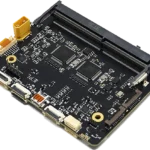
The Bactolizer’s hardware is deliberately simple: two units, a signal processing device and a disposable electrochemical cartridge. The patient’s sample goes into the cartridge; the cartridge loads into the device. The specialised algorithm compares the electrical responses recorded at the beginning and end of the test to determine which antibiotic is effective and at what dosage — the company likens the simplicity of the process to a sugar test, with initial results in about 30 minutes and final results in roughly 120 minutes.
The numbers, as the company reports them: 94% accuracy against conventional methods, a device priced around Rs 40,000, and test cartridges costing Rs 500 to Rs 600 each — paid for by hospitals, not patients. Attox says the Bactolizer meets CDSCO standards and is working to push accuracy past 97%. It competes with giants like Switzerland-based Roche Diagnostics and Indian company Ourlife Biolytic Solutions — but the founders say their closest competition is still the traditional lab itself.
Trials, patents, and the road to market
This is not a finished commercial story yet, and Attox is upfront about that. The startup is pre-revenue and needs CDSCO approval before it can sell the Bactolizer — which it is working toward through clinical trials. It holds a provisional patent, and the trial data is expected to help it secure the final grant. The company is starting trials involving about 10,000 patients and plans to complete them by next year, and is simultaneously trying to cut the testing time further, potentially to around an hour, with fabrication and mentorship support from TIH-IIT Bombay.
More Read
The money so far is modest and public-sector flavoured: about Rs 7 lakh as a Department of Science and Technology grant through Kongu TBI around two years ago, then a Rs 1 crore pre-seed round in March 2026 led by TIH-IIT Bombay with angel participation. A Rs 5 crore seed round is planned over the next six months to fund the go-to-market push. The startup made YourStory’s Tech30 2026 cohort — the annual selection of 30 startups building India’s next generation of technology.
The company behind the device
Attox Research Laboratories Pvt. Ltd. (CIN U72100TN2023PTC162773) was founded in 2023 by three people with complementary pedigrees: Kuppandampalayam Kumarasamy Senthil Kumar — KK Senthil Kumar — a research scientist and professor with a PhD in analytical chemistry and over 20 years in teaching and research; Suganth Murugaraj, his former undergraduate researcher, a Bachelor of Pharmacy graduate; and Clement D, an MBA with more than 18 years of startup-building and organisational management experience.
The founding story is personal: a few years ago, Senthil Kumar’s daughter was hospitalised in critical condition, and the family waited over 24 hours for her antibiotic sensitivity test to determine the right course of treatment. He started asking why something so critical still took days — and that question became the company. The 10-member team works out of Chennai with a laboratory in Erode, and Attox is incubated at Kongu TBI, the Karpagam Innovation & Incubation Council and NSRCEL-IIM Bangalore, and has completed IIT Bombay’s ATMAN 3.0 accelerator programme.
A plug-and-play box that answers the hardest question in infectious medicine — which drug, at what dose, for this patient — inside two hours, at Rs 500 a test, is the kind of device that rewrites hospital protocols rather than just speeding them up. If the trials confirm the numbers, the Bactolizer will have earned its place on the list of Indian hardware that genuinely moved a global problem.