In modern warfare, the cheapest way to kill a drone is not a missile — it is a jammer. A radio box worth a few lakh rupees can flood the GPS band and leave a million-dollar autonomous system blind. VECROS, a Bengaluru deep-tech company, has built its entire product line around that reality. Its Jetcore platform, announced commercially available on July 30, 2026, fuses AI compute, flight control and GPS-denied navigation onto a single India-designed board — the kind of machine that keeps flying where the satellites no longer cooperate.
Why it matters: almost every “autonomous” drone on the market today is really a remote pilot’s assistant, leashed to satellite fixes and a datalink. An aircraft that can see where it is from its own cameras, LiDAR and inertial sensors — and decide what to do next without phoning home — unlocks warehouses that satellites can’t reach, tunnels, jammed border corridors, and contested airspace. Jetcore is India’s most concrete attempt to sell that capability as off-the-shelf hardware.
Flight control and the AI brain, on one board
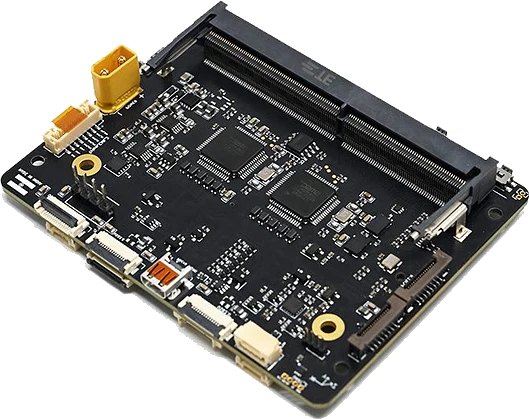
Traditionally, an autonomous drone carries two separate computers: a flight controller running the real-time control loop, and a companion computer running the perception AI. Jetcore collapses both into one board. It integrates high-performance AI compute, real-time flight and motion control, multi-sensor connectivity, power architecture and embedded firmware with VECROS’ proprietary Jetpix autonomy software — an operating system in which GPS-denied navigation is built in, not bolted on.
The published hardware numbers are striking for the weight class: 21 TOPS of AI compute under 18 watts, a 40-gram board rated from −40°C to +85°C. LiDAR, cameras and IMU are fused on board at frame rate, so the aircraft localises itself from what it can see — and because autonomy and flight control share one hardware-timestamped bus, a decision reaches the motors in milliseconds with no vendor boundary in the middle of the control loop. Seven USB ports, Gigabit Ethernet, dual CSI camera lanes, CAN, PWM and GPIO mean a payload plugs straight into the same board that flies the aircraft.
With its cameras, Jetcore runs visual-inertial odometry, GPS-denied localisation, SLAM, obstacle avoidance, multi-camera perception, sensor fusion, 3D mapping and fully autonomous mission execution — no continuous cloud link, no pilot in the loop. A “flight controller only” variant, Jetcore FC, and a pre-flashed Autonomy Kit serve developers who want just the control stack or a bench-to-flight dev kit.
Proven in warehouses before it ever sold a board
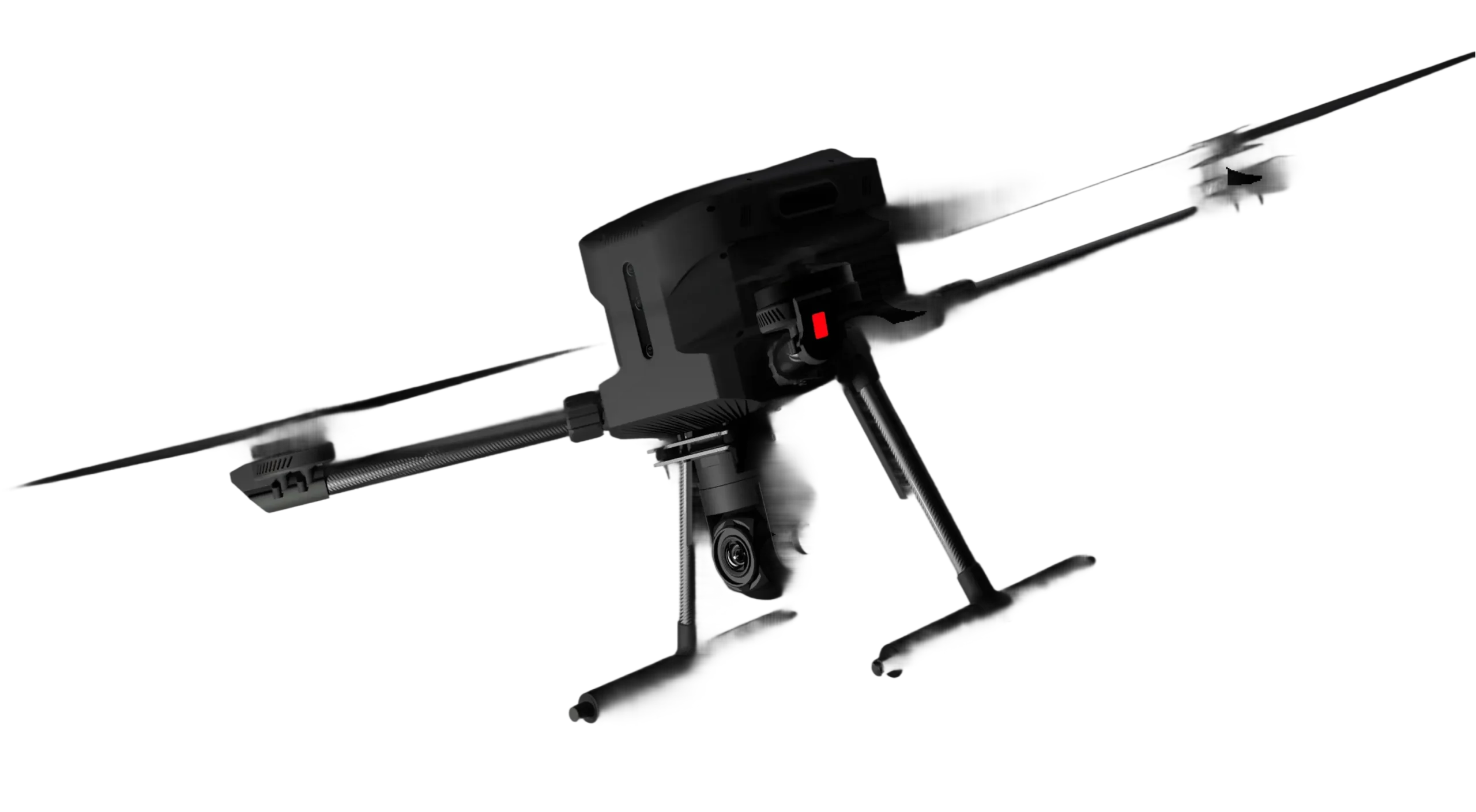
Jetcore’s credibility comes from field time. The company says the platform was validated across more than 5,000 autonomous flight hours before commercial launch. Its warehouse inventory and inspection drone, JASPER — an indoor autonomy platform that flies itself through GPS-denied, cluttered warehouse aisles — has logged over 2,000 autonomous flight hours on its own, generating the real-world autonomy data VECROS says will feed its next generation of “Physical AI”. The outdoor sibling, ATHERA, is engineered for long-duration, wide-area work: ports, construction zones and perimeters too big to watch manually.
More Read

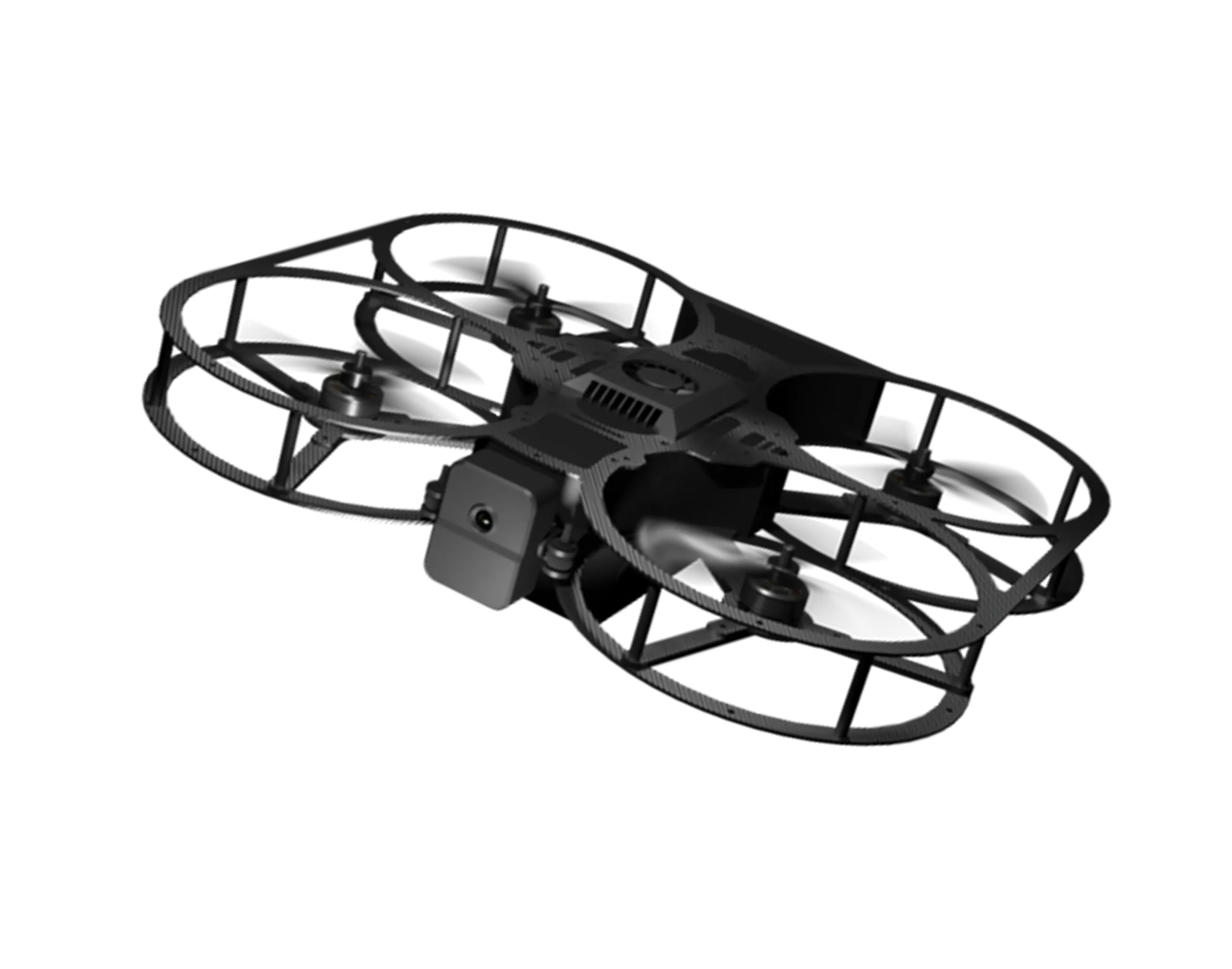
The target customers are telling: defence, warehousing, industrial inspection, infrastructure monitoring, mining, utilities, public safety and agriculture. Electronics For You reported the company designs and builds its own drones in Bengaluru — including its custom electronics — with PCB boards and assembly localised in India (chips and passive components are imported), producing roughly ten aircraft a month with a lean 20-person team. The Jetcore carrier board is sold on the company’s own store starting at around Rs 30,000.
The company behind the board
VECROS (Vecros Technologies Pvt. Ltd.) grew out of an IIT Delhi student group into a Bengaluru-based robotics company led by founder and CEO Prem Sai Besta. The company’s journey runs backwards from most autonomy startups: instead of building a drone and licensing the software, VECROS built the autonomy stack to make its own drones fly without GPS, then productised the stack itself. The commercial pitch is blunt — buy the board and skip the years of integration work.
The roadmap is ambitious: Jetcore is described as a step toward proprietary autonomy acceleration and, eventually, purpose-built silicon for intelligent autonomous systems. One honest footnote: the carrier board mates with NVIDIA Jetson modules — the Indian-designed part is the carrier, flight controller and software stack, not the underlying GPU silicon. It is a reminder that in edge AI, “indigenous” usually means designing the architecture and owning the integration, not owning the fab. For the defence and industrial customers who are the actual buyers, that distinction matters far less than the hours already flown.
A board that flies GPS-denied out of the box, with the flight logs to prove it, is a product class India has historically imported. VECROS’ bet is that the next million drones will need brains that work where the signal does not — and that those brains can be designed in Bengaluru.