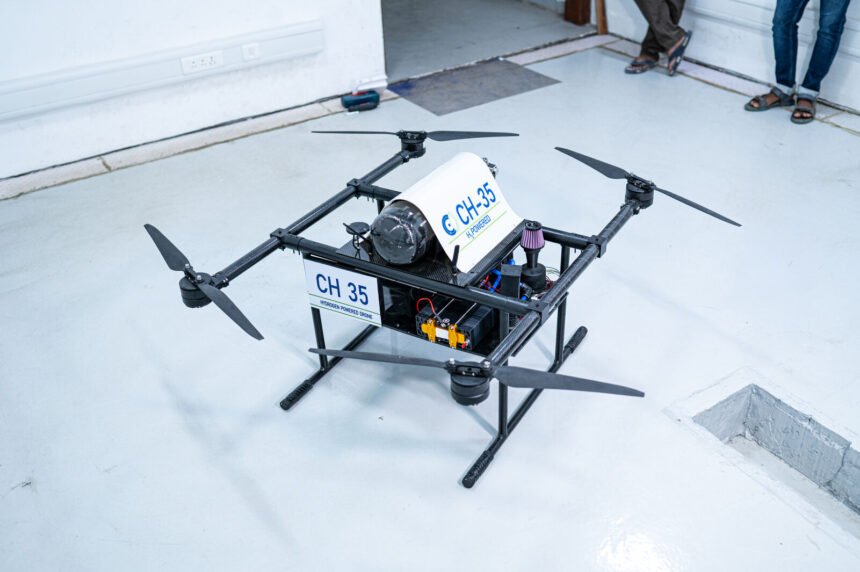
Most drones today fly for half an hour and then come home to recharge. Cellegant Energy Systems, a startup incubated at IIT Gandhinagar, is building a different kind of powertrain for the skies: hydrogen fuel-cell drivetrains that could keep a drone flying for hours at a time, with water vapour as the only exhaust. Its immediate goal is to demonstrate a 35-kg hydrogen-powered drone, and to take that programme from technology readiness level 3 to level 6 within the next six to twelve months.
A fuel cell is not a battery. A battery stores energy inside itself; a fuel cell only converts it. Hydrogen is stored separately and fed to the cell as needed, where it combines with oxygen from the air to produce electricity and water. That single difference is what breaks the battery trade-off: a drone keeps flying for as long as it has fuel, not as long as its battery holds charge, and refuelling takes minutes instead of a recharge cycle.
From diesel generators to the drone bay
Cellegant grew out of the Energy Systems Research Laboratory at IIT Gandhinagar, led by Professor Atul Bhargav, who studied at IIT Madras, earned his PhD at the University of Maryland and built fuel-cell products at Ballard Power Systems in Canada before returning to India. The lab first aimed its fuel-cell systems at stationary power, as a cleaner alternative to diesel generator sets. But as grid reliability improved, the hours those generators actually ran fell away, and the economics shifted. At the same time, drone users began demanding far longer flight durations. Since 2023, Cellegant has focused heavily on unmanned aerial vehicles.
The logic is straightforward. Battery drones suit smaller machines but run out of endurance quickly; engine-powered drones fly longer but bring noise, thermal signatures and regular maintenance. Hydrogen fuel-cell drones, the company says, can fly significantly longer than battery systems, and over their working life can also prove more economical, because they need less maintenance and fewer battery replacements.
Powder, not just cylinders
More Read

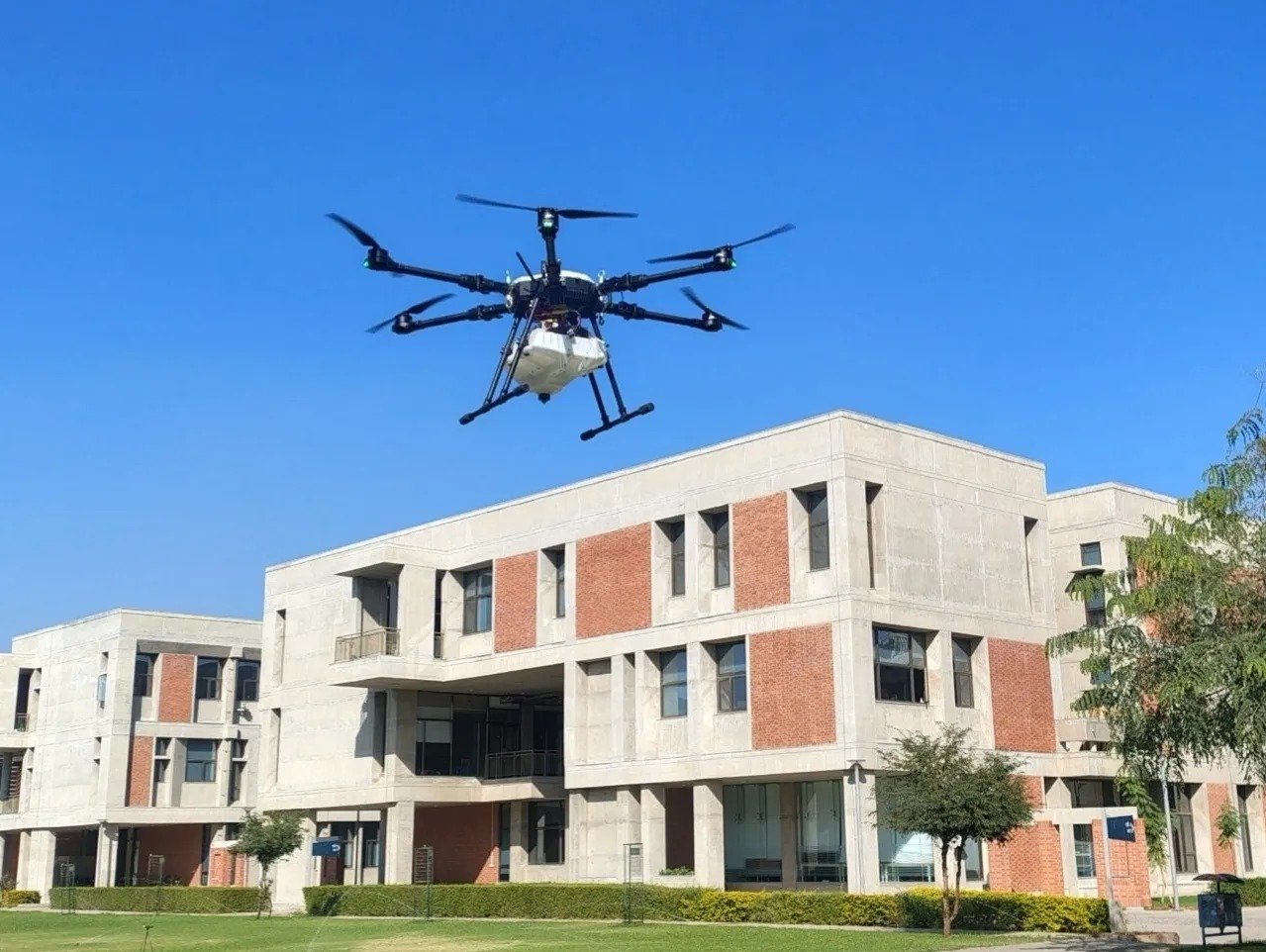
The hardest part of a hydrogen drone is not the fuel cell itself but carrying the hydrogen. In a conventional high-pressure cylinder, only a small fraction of the total weight is actually hydrogen — most of it is the tank. Cellegant is attacking that problem from three directions at once.
With compressed hydrogen, the company says its systems can already reach around two-and-a-half times the endurance of battery-powered drones. A second route, methanol reforming, converts liquid methanol — storable and transportable at room temperature and atmospheric pressure — into pure hydrogen when needed. And the most ambitious route is a solid chemical powder that releases hydrogen when mixed with water. With that powder-based system, the company says endurance could reach five to six times that of battery-powered drones. Compact on-board hydrogen generators, Professor Bhargav says, can cut the weight of hydrogen carriage by half relative to compressed storage, and the powder cartridges work at atmospheric pressure, which opens up hydrogen use in remote places where compressed gas is simply not available.
Behind those storage ideas sits the unglamorous engineering that makes a fuel cell fly: fuel and oxidant supply, thermal management and humidity management, all tested to work across climates and temperatures, including high-altitude drone applications. Fuel-cell systems run as hybrids, pairing the cell with a small battery, and managing power between the two needs sophisticated electronics — so the team built much of that itself, drawing on researchers across mechanical, chemical and electrical engineering at IIT Gandhinagar.
Defence work, and a vote of confidence
Cellegant is already working with the Defence Research and Development Organisation on multiple projects, including fuel-cell power systems for quadruped robots and other strategic applications. Early support came from NIDHI PRAYAS and the Government of Gujarat, the latter for its methanol reforming work, and the startup reached the final stages of the Bharat Innovates programme. In November 2026 it raised Rs 2.61 crore from GVFL Prarambh Fund Trust, CoCreate Aarambh and IIEC, IIT Gandhinagar’s incubator, to fund technology development, intellectual property protection and team expansion.
The same engineering is also headed beyond drones. Cellegant is developing energy solutions for autonomous robots and marine vehicles alongside its UAV work, and its founder’s stated ambition is for the company to become India’s go-to fuel-cell engineering house — the place organisations turn to when they need a fuel-cell system designed, optimised or customised — with its products in regular use by the Indian Armed Forces and commercial customers alike.
If that happens, the quietest revolution in Indian skies may not be a new airframe at all, but a new way of carrying energy: a drone that lands only when its work is done, leaving nothing behind but a little water.
Keep reading: The Brains Behind the Panels: Inside Gronsol’s 12,000-a-Month Solar Inverter Plant in Surat · The Coils Behind the Green Grid: Inside Quality Power’s Global Coil Factory in Sangli · More Energy & Power stories
Like stories like this? Add Exceptional Technology as a preferred source on Google to see more of our reporting in your search results and Discover feed.