A Su-30MKI slicing through contested skies can outrun and out-turn almost anything — but speed and agility mean little against a radar that has already found it. A Chennai company has spent years building the answer: a pod that hangs from the fighter’s wingtip and fills the air with precisely aimed electronic noise, so enemy radars lose their target altogether. Data Patterns calls it TALON SHIELD, and the company says the design is now complete — with flight trials aboard an Indian Air Force Su-30MKI coming in the next few months.
A bodyguard that fights with radio waves
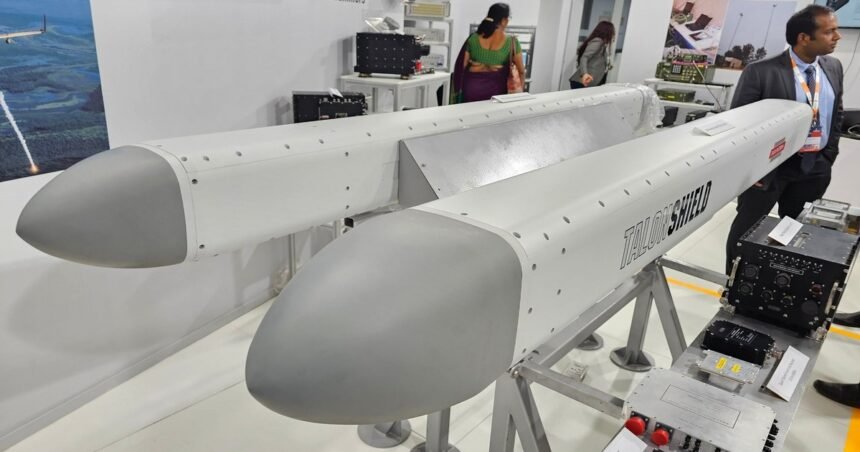
TALON SHIELD is an aircraft self-protection jammer — an ASPJ pod. When a hostile radar paints the aircraft, the pod answers back, flooding the radar with jamming signals that hide the fighter or feed it false returns. The company says the pod is built around an active electronically scanned array — an AESA — powered by gallium nitride, which steers its jamming energy electronically, with no moving parts to wear out. A digital radio frequency memory system shapes the response to the threat in front of it, and the pod covers the X, Ku and Ka bands that modern surface-to-air missiles and airborne intercept radars use to hunt.
Two pods fly together, one on each wingtip, giving the aircraft protection in every direction. Each pod weighs under 500 kg, and the system plugs straight into the Su-30MKI’s existing electronic warfare suite — including the indigenous Dhruti radar warning receiver — over the aircraft’s standard MIL-STD-1553 data bus. It is designed to replace the heavier Russian SAP-518 jammer pods the fleet flies with today.
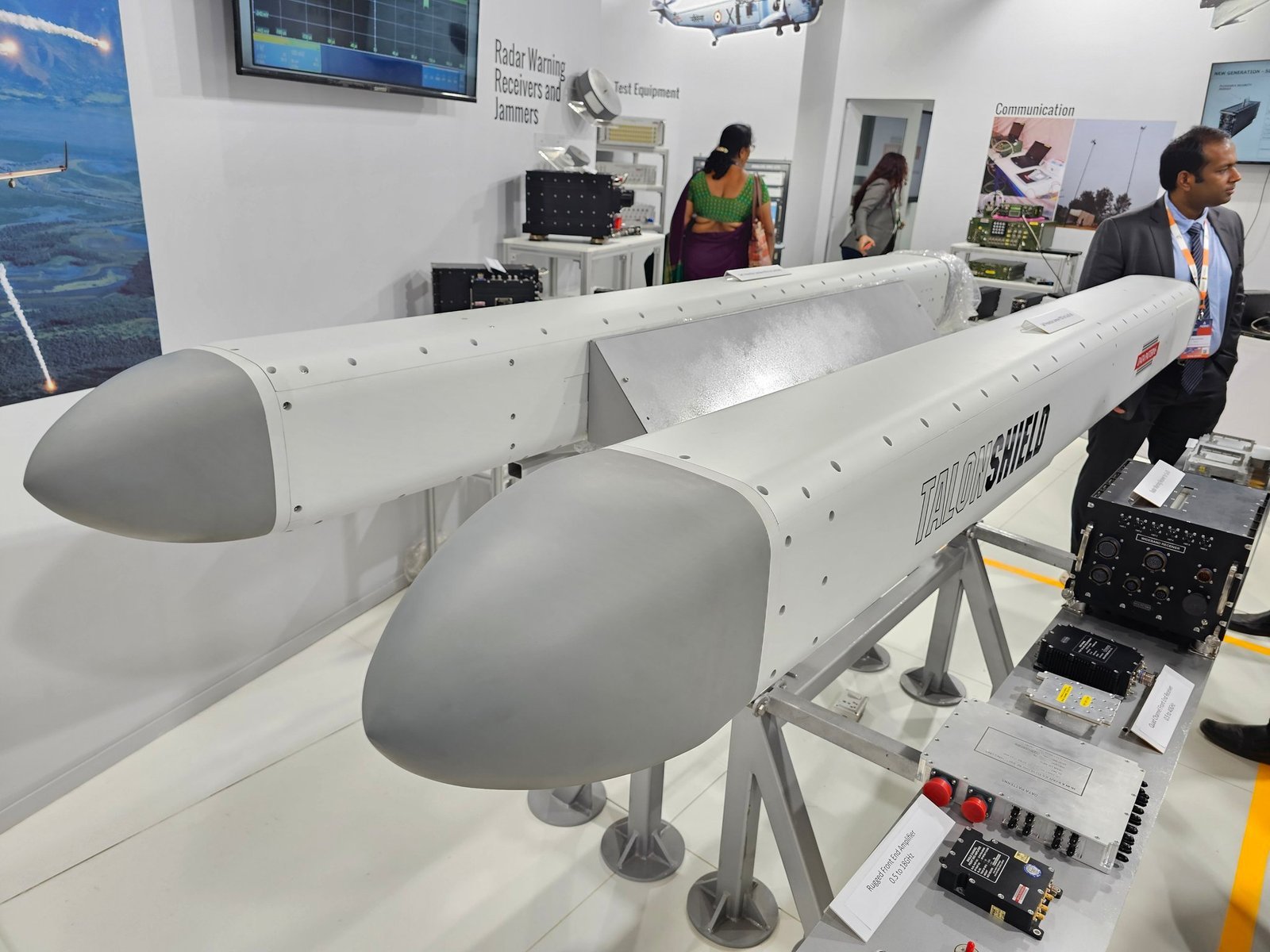
The TALON SHIELD pods on display — each one weighs under 500 kg. (Image: Data Patterns)
Designed, built and qualified in Chennai
Data Patterns has been building defence electronics since 1985, starting as a radar and avionics specialist. Today the company works from its campus at Siruseri in Chennai, with more than 1,000 engineers designing, prototyping, testing and manufacturing high-reliability electronics under one roof — a vertical integration the company says lets it take a system from drawing board to qualified hardware without depending on outside suppliers. The company listed on India’s stock exchanges in 2021, and its order book stood at more than ₹700 crore as of March 2025. Its systems span radars, electronic warfare, avionics, space electronics and rugged test equipment, serving platforms across space, air, land and sea.
More Read

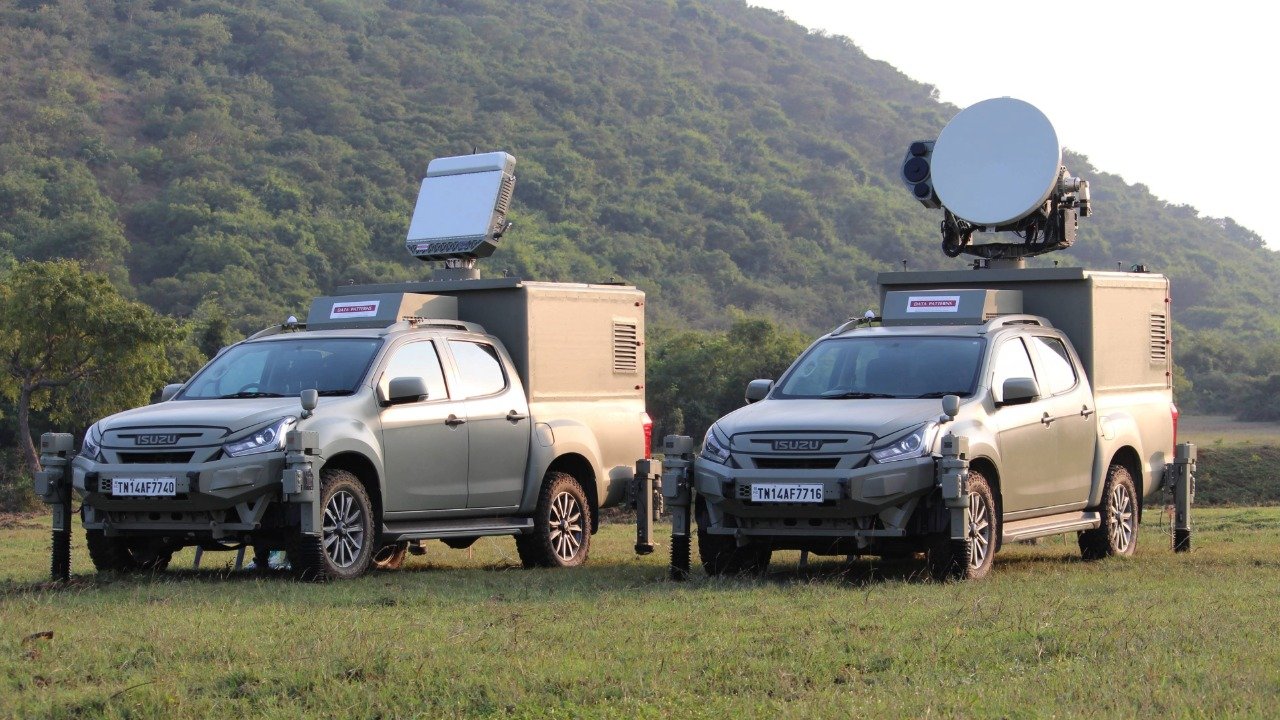
Data Patterns’ radar and electronic warfare systems deployed in the field. (Image: Data Patterns)
From the drawing board to the flight line
The road to the flight line has been deliberately public. Data Patterns offered the pod to the Air Force for flight trials at no cost and no commitment, and the customer has reviewed the system and expressed satisfaction with its progress. On 9 November 2026, chairman and managing director S. Rangarajan told investors that every part of the system — hardware, software and mechanical design — is complete, built entirely in-house. “We expect to fly it in the next few months to showcase its capability,” he said. The Air Force has agreed to loan a Su-30MKI for the test campaign, and the company says the airborne evaluation will take 18 months to two years.
The stakes are large: the Defence Ministry has sought information on 100 self-protection jammer pod sets for the Su-30MKI fleet, and the pod is part of the wider Super Sukhoi upgrade of the Air Force’s 260-strong fleet. When the trials begin, India will be testing something it has never fielded before — a fighter’s electronic shield designed and built entirely at home.
Keep reading: Listening to the Invisible: Inside ULOOK, the Bengaluru Startup Reading Radio Signals From Orbit · The Box That Knows Where It Is When GPS Goes Dark: Inside Aeron Systems · More Aerospace & Defense stories
Like stories like this? Add Exceptional Technology as a preferred source on Google to see more of our reporting in your search results and Discover feed.