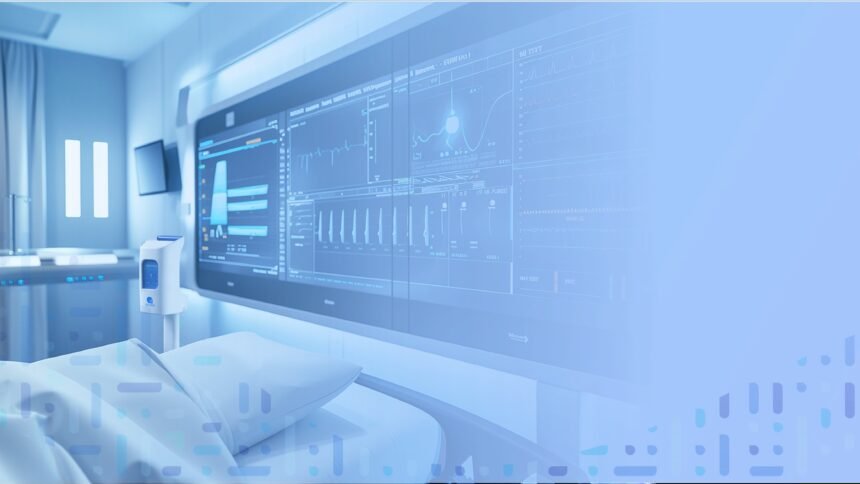
In a hospital ward at three in the morning, the most important moments are the quiet ones. A patient’s breathing shallows, a heart rate drifts, a fever creeps up — and nobody is standing at the bedside to notice. In more than 200 hospitals across India, something else is watching: a paper-thin sensor sheet tucked under the mattress, listening to every heartbeat, every breath, every tiny movement, and turning them into a live stream of vital signs that nurses can see from a screen down the corridor.
That sheet is Dozee, the flagship technology of Bengaluru-based Turtle Shell Technologies. Founded in 2015 by IIT graduates Mudit Dandwate and Gaurav Parchani, Dozee set out to solve a deceptively simple problem: patients in general wards are checked only a few times a day, so deterioration is often caught late. The company’s answer was to make the bed itself the monitor.
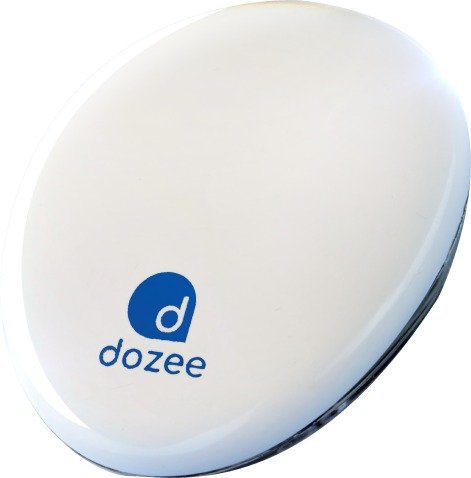
Dozee’s Pod, the heart of its contactless monitoring system (official company imagery).
A sensor sheet that listens to the body
Dozee works on a principle called ballistocardiography. Its sensor sheet, placed under the patient’s mattress, captures the micro-vibrations produced by every heartbeat, respiration cycle and body movement. AI algorithms then convert those vibrations into clinical biomarkers — heart rate, respiration rate, blood pressure, blood oxygen saturation, temperature and ECG — continuously, without a single wire touching the patient and without anything worn on the body.
The company says the system is clinically proven to be 98.4% accurate, and it also tracks sleep quality while flagging indicators of sleep apnoea. Because nothing is attached to the patient, monitoring continues undisturbed through the night, and the risk of skin irritation, tangled leads and cross-infection that comes with wired monitors simply falls away.
More Read

An early warning system that never blinks
Raw vitals are only half the story. Dozee’s AI-powered Early Warning System tracks the trends in each patient’s parameters and alerts healthcare providers the moment those trends point towards clinical deterioration, so intervention can begin hours earlier than a routine ward round would allow. Nurses monitor whole wards from a central dashboard, and doctors can follow their patients remotely through secure applications.
The company says the impact shows up in hard numbers. Research by independent consulting firm Sattva found that for every 100 Dozee-connected beds, around 144 lives can be saved, about 80% of the time nurses spend taking vitals is freed up, and ICU stays shorten by around 1.3 days on average. The company also reports saving around 2.5 hours of nursing time per patient per day — time that goes back to actual care.
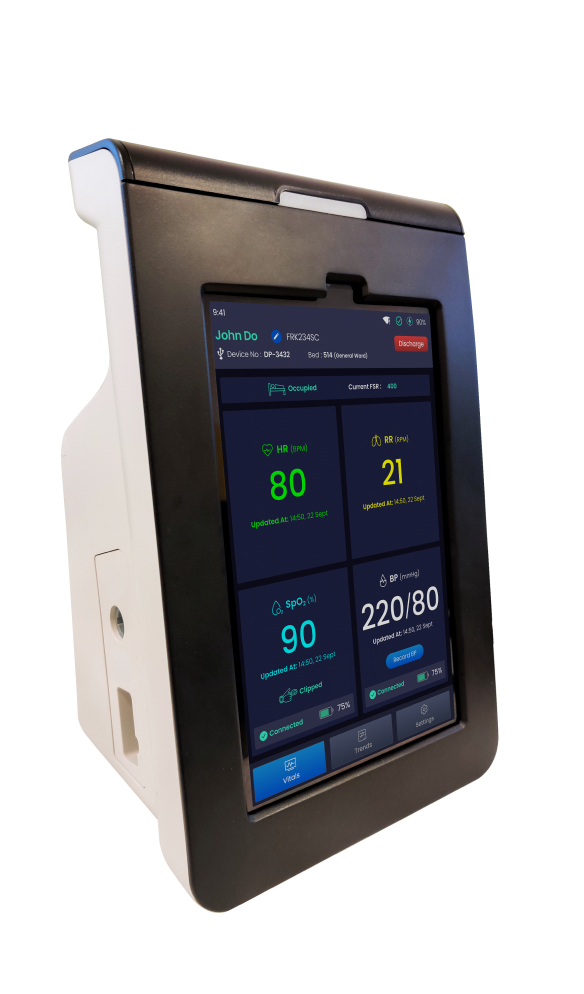
Dozee’s bedside display turns a regular ward bed into a continuously monitored one (official company imagery, demo screen).
Made in India, cleared in America
Dozee’s story is a deliberate exercise in import substitution. When the founders started, the company says, India imported 85–90% of its medical devices. Their response was a patented, made-in-India system built to global standards: ISO 13485 certified, CDSCO registered, and — in December 2022 — cleared by the US Food and Drug Administration under its 510(k) pathway, a milestone the company describes as its flagship technology meeting the gold standard for medical devices and algorithms.
The company is also a Department of Biotechnology and BIRAC-supported startup, and its work has been recognised with the FICCI Healthcare Excellence Award for Digital Innovation in Healthcare.
From hundreds of hospitals to a million-bed ambition
Today, the company says, Dozee monitors more than 15,500 beds in over 200 hospitals, has raised more than 16,000 life-saving alerts, and has saved over 14 million nursing hours. Its MillionICU initiative, launched in 2021, aims to upgrade one million regular hospital beds into step-down ICUs — and in partnership with British International Investment, the UK’s development finance institution, it is upgrading 6,000 beds across 140 public hospitals to bring continuous monitoring to patients who would otherwise never see an ICU.
Hospitals from SRM Global Hospital in Tamil Nadu to the Central Referral Hospital of Sikkim Manipal Institute of Medical Sciences have adopted the system, and Dozee has extended the same idea beyond the bed: its Dozee Pro Ex ambulatory system, launched in 2023 with wireless wearable sensors and an FDA-cleared ECG patch from Samsung SDS spin-off Wellysis, follows patients as they move around the hospital or recover at home, while its partnership with Midmark has produced India’s first intelligent connected bed.
From a sheet under a mattress to a command centre watching over thousands of beds, Dozee is quietly turning the ordinary hospital bed into one of the most watchful places in medicine — and giving every patient, in every ward, a guardian that never sleeps.
Dozee explains the science behind its contactless monitoring system.
Keep reading: Sugarcane In, Bioplastic Out: Inside Balrampur Bioyug, India’s First Integrated PLA Plant · The Mine Above Ground: Inside MiniMines, the Bengaluru Startup Turning Dead Batteries Into Critical Minerals · More Chemicals, Materials & Life Sciences stories
Like stories like this? Add Exceptional Technology as a preferred source on Google to see more of our reporting in your search results and Discover feed.