


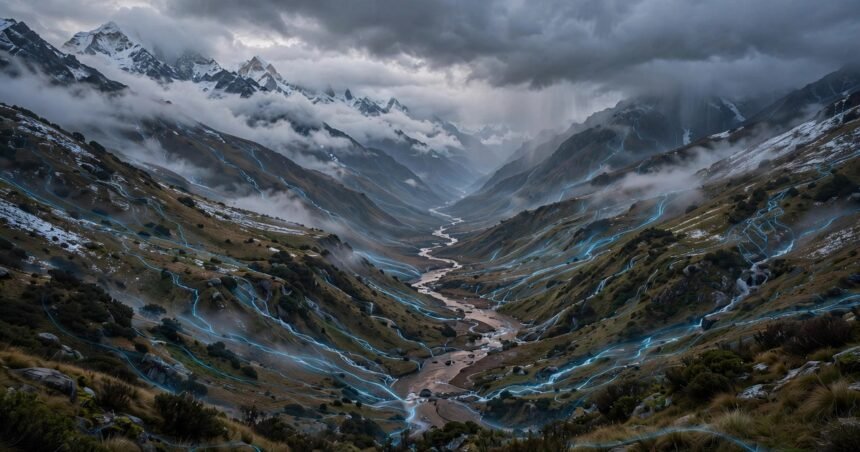
In a Himalayan village, a flash flood gives people minutes. A cloudburst upstream turns a quiet stream violent before anyone downstream knows the water is coming. That is the problem a Noida startup called JSPARK AI has set out to solve — with a model it calls OpsUnity Hydra, which the company says can name the exact place a flood will strike, up to 12 hours before it arrives.
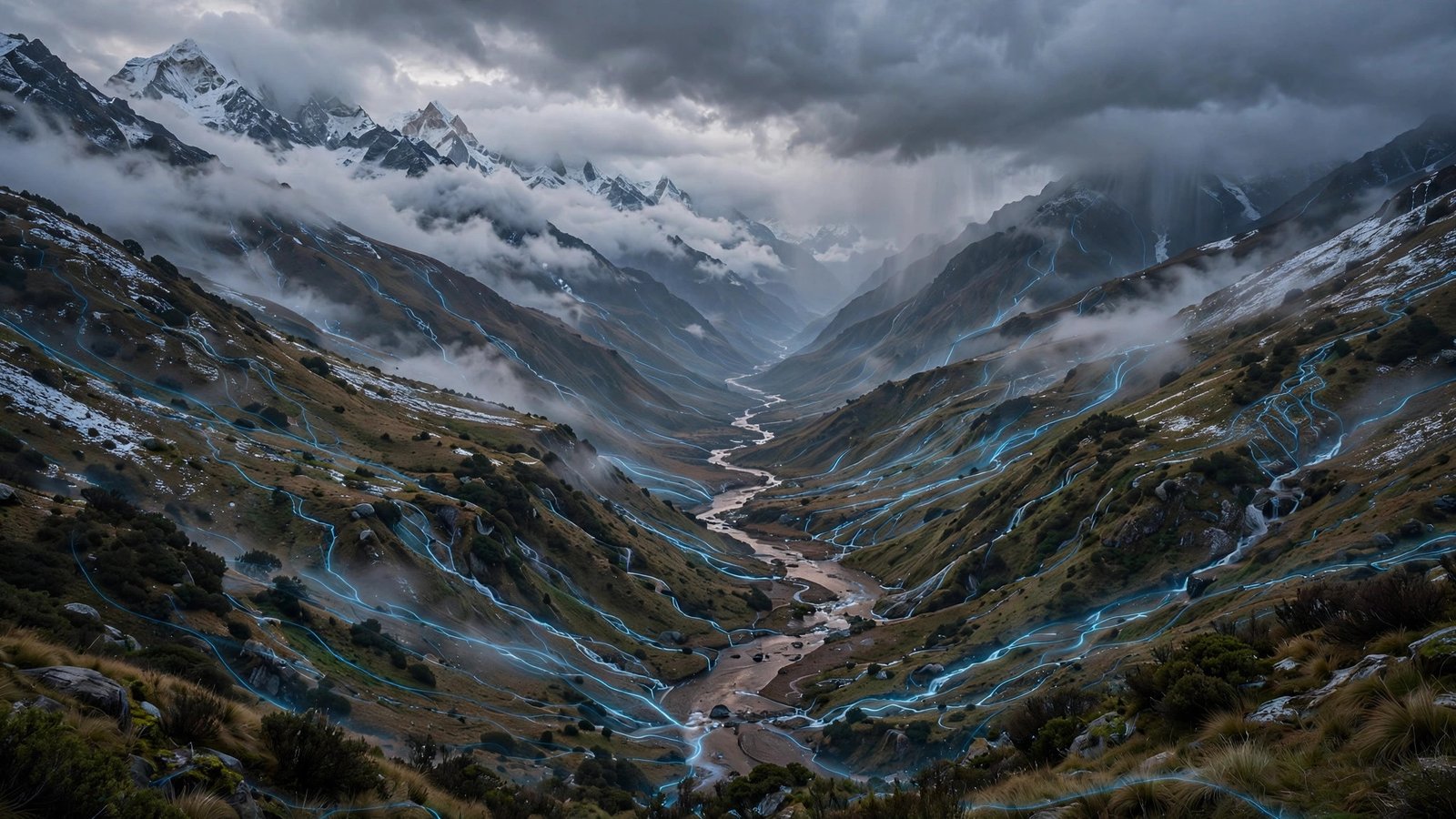 (AI-generated illustration of the Hydra concept)
The problem with a district-wide alert
Today’s flood warnings mostly work at the scale of a district or a state. They tell responders that a flood is coming — not where. Hydra works the other way round. The company says it has mapped millions of water streams across India’s Himalayan basins, and each alert names one exact location: the river stretch, the village, the road and the bridge the water is forecast to reach, and the hour it arrives. With that, NDRF and SDRF teams, district officials, dam operators and hydropower utilities can pre-position people and evacuate one village before the water, instead of searching a whole district after it.
Hydra in numbers
The company puts Hydra’s headline figures like this: up to 12 hours of warning before impact; terrain resolution finer than eight metres; rainfall error under 10%, against 40% to 50% in raw satellite estimates; more than 4,000 live rain gauges and ground Doppler radar stations integrated, recalibrated every single day; millions of water streams mapped — and zero new sensors required from the state, because Hydra works with the gauges and radars that already exist.
A physics model, not just a black box
Underneath the AI sits a physics model that converts rainfall, soil moisture and terrain into runoff, flow energy and inundation maps for each basin. The hard problem, the company says, was trust in the rainfall number itself: satellites can misread mountain rain by up to half, so Hydra corrects every estimate against ground gauges and radar each day before it forecasts a single basin. And the whole system runs entirely inside the customer’s own infrastructure — no forecast, map or alert ever leaves government control.
Tested against Dharali
The company says the India Meteorological Department issued a Technical Assessment Certificate for Hydra in April 2026, after a proof of concept that tested the model against the August 2025 Dharali flash flood in Uttarkashi — one of the most destructive Himalayan flood events of recent years. JSPARK AI began building Hydra in October 2025 and launched it on 23 November 2026, aimed at state disaster management authorities, NDRF and SDRF units, dam operators and hydropower utilities across the Himalayan states.
More Read

Built by people from the hills
Hydra’s founders come from the mountains it is built to protect. CEO and co-founder Harish Goswami grew up in Ranikhet. “In the hills, a warning that arrives 30 minutes before the water is no warning,” he says. “A district-wide alert tells everyone to worry. Hydra tells the right village to move, 12 hours early. We built it in India, it runs within the government’s own walls, and we dedicate it to the nation.” CTO and co-founder Ashutosh Kukreti is from Pauri Garhwal, where, he says, a quiet stream turns violent within minutes of a cloudburst upstream. Goswami is a serial entrepreneur with two exits and more than 15 years building deep-tech ventures; Kukreti brings 18 years of carrier-grade engineering leadership across Airtel, COLT, Telstra, Wipro and Optus.
Already inside India’s critical infrastructure
Hydra is the newest product of a company that is already working deep inside national infrastructure. JSPARK AI Private Limited, founded in December 2024 and based in Noida, builds what it calls a sovereign AI operating system for defence, homeland security, disaster management and government operations. Its OpsVision platform runs in the world’s largest emergency response system — Uttar Pradesh’s 112 service, serving more than 240 million citizens across all 75 districts — and in the world’s largest crime records database, while its OpsVision Ontology model is live in NAFIS, the National Automated Fingerprint Identification System, and in the power grid. The company holds ISO/IEC 42001:2023, ISO 27001:2022 and ISO 9001:2015 certifications, along with CMMI Level 3. With Hydra, that same sovereign, air-gapped engineering is now pointed at the oldest Himalayan problem of all: knowing where the water will go, in time to get out of its way.
Keep reading: The Machines Behind India’s EVs: Inside Jendamark India, the Pune Automation House That Built the Country’s First Battery-Pack Lines · One Robot, Every Job: Inside ACE Robotics, the Chennai Company Building India’s Own Industrial Robots · More Industrial Automation & Technology stories
Like stories like this? Add Exceptional Technology as a preferred source on Google to see more of our reporting in your search results and Discover feed.







