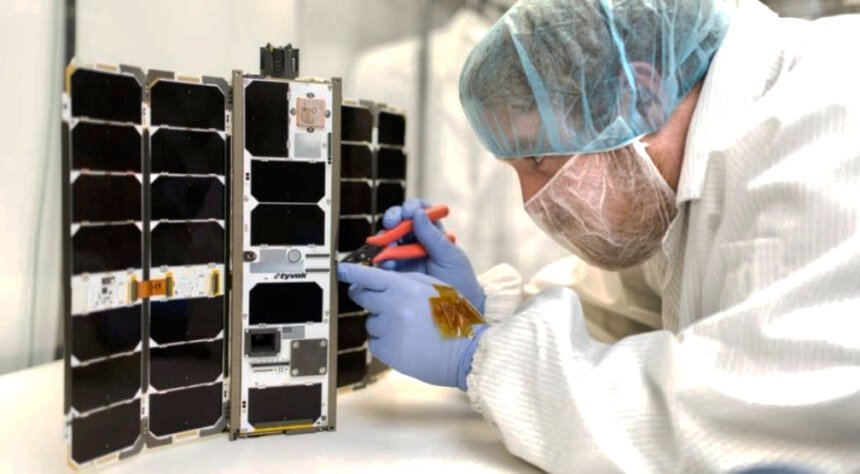
Some of the world’s most important drugs can’t be given as a simple injection. Monoclonal antibodies like Keytruda (pembrolizumab) — a cornerstone of modern cancer immunotherapy — must be administered as long intravenous infusions, partly because at high concentrations the formulations turn too viscous to push through a syringe. The reason is manufacturing: the way drug crystals form on Earth, under gravity, limits how concentrated and stable the final product can be. A eight-person startup in Bhubaneswar thinks the answer is to make the crystals where there is no gravity at all.
The company and the idea
Serendipity Space was founded in 2024 in Bhubaneswar, Odisha, by Antariksh Parichha (CEO), Jivitesh Debata and Dr Monica Ekal. The team is eight people; a pre-seed round closed in July 2025, according to YourStory and odisha.plus. Their product is “Alchemy” — an autonomous pharmaceutical manufacturing module designed to crystallise drugs in microgravity with no human operator aboard. The business model, per CEO Parichha’s interview with Analytics India Magazine, is formulation CRO/CDMO work for global pharma.
The science premise is straightforward. In microgravity, reduced sedimentation and convection can yield more uniform drug crystals — potentially with better solubility, stability and bioavailability. The company’s “mother batch” concept: grow perfect seed crystals in orbit, then use them to seed larger batches back on Earth. Parichha’s motivation is personal — his own experience with cancer led him to study immunotherapies like Keytruda and their manufacturing limits, per odisha.plus.
What the balloon test proved — and what it didn’t
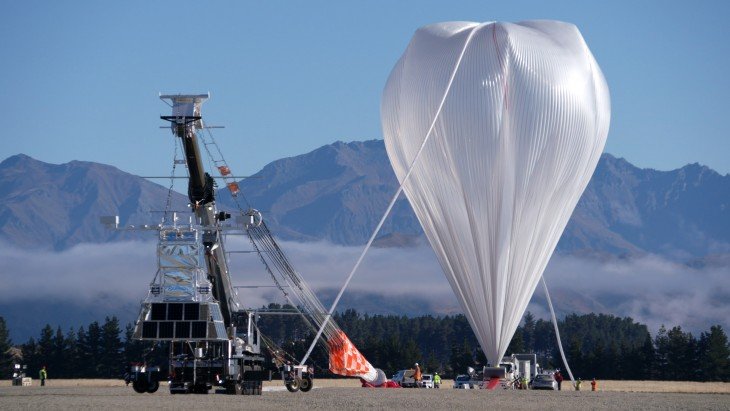
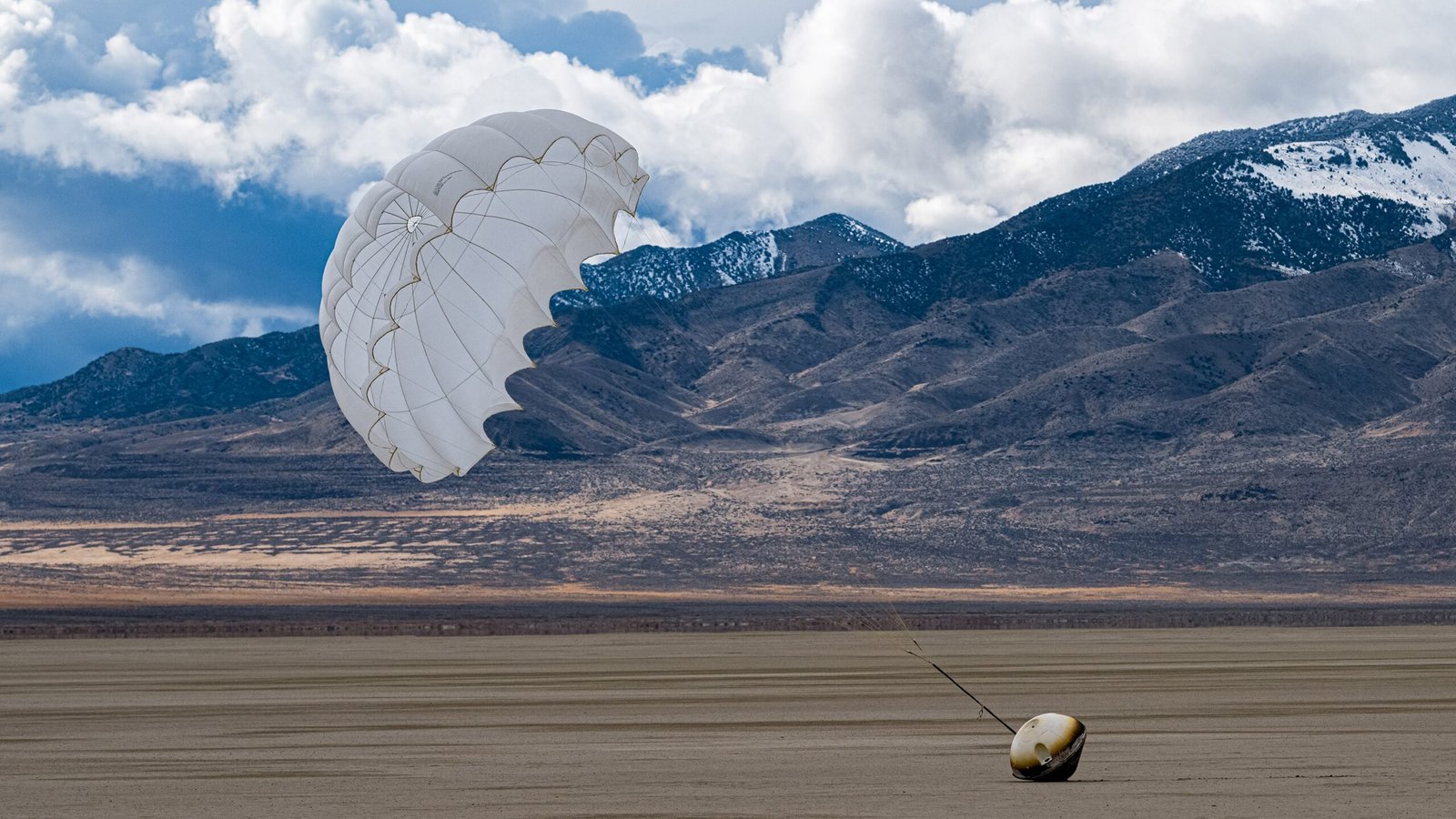
In March 2026, the team flew an orbital-class satellite prototype on a stratospheric balloon from TIFR’s Balloon Facility in Hyderabad. The test validated the heat shield, avionics, the autonomous crystallization sequence, and crystal preservation through descent, touchdown and recovery. The payload included monoclonal antibodies, small-molecule drugs and discovery proteins — and the whole prototype was built in under four months after the team assembled.
Now the critical distinction, stated plainly because it is the easiest thing to get wrong about this story. A stratospheric balloon floats at roughly 1g — normal Earth gravity. The March 2026 test proved the hardware works: the module can run its sequence, survive re-entry heating, and be recovered with its crystals intact. What it could not and did not demonstrate is microgravity crystallization itself. The core benefit — better crystals because of weightlessness — remains theoretical until an actual orbital flight. Any coverage implying the balloon test proved the microgravity advantage is wrong, and this post won’t make that claim.
Roadmap versus reality
Keep the company’s stage explicit, because the vision is grand. The plan: reusable, re-entry-capable satellites operating in low Earth orbit at 400–500 km, with the company talking about 100-kg production batches. None of that exists yet. The company is pre-revenue and pre-orbital — one balloon test, eight people. The 100-kg batches, the reusable satellite constellation, commercial manufacturing: all roadmap. The space-biotech intersection is wider than one startup — Astrobase is building the software layer for the same new space economy.
Descriptions like “India’s first space pharma startup” and “breakthrough” are press and company framings — attribute them as such. No peer-reviewed results have been published, and no pharma partnership has been announced.
The balloon proved the hardware survives. It could not prove the microgravity benefit — that waits for orbit.
Not alone in orbit
Context helps calibrate the ambition — from Manastu’s green thrusters to Avay’s bioprinters, Indian entrants are lining up at every layer of the orbital economy.
Merck has run protein-crystallization experiments aboard the International Space Station, and the US startup Varda Space Industries has flown orbital drug-manufacturing missions with capsule return, per civilsdaily. Serendipity is attempting to join a very small club — and doing it from Bhubaneswar with eight people and pre-seed funding is audacious by any measure. Audacity isn’t evidence, though. The honest version of this story is exciting enough: a tiny team that designed, built and flew a re-entry-capable pharma prototype in under four months. What happens in actual microgravity is still an open question — and the company will need an orbital flight to answer it.
Key takeaway
Serendipity’s balloon test validated hardware, not microgravity science. The company is eight people, pre-revenue, pre-orbital — judge the engineering demonstrated, not the roadmap promised.
More Read
What does Serendipity Space do?
The Bhubaneswar startup is building “Alchemy,” an autonomous module designed to crystallise pharmaceutical drugs in microgravity, operating as a formulation CRO/CDMO for global pharma.
Did their balloon test prove drugs crystallise better in space?
No. The March 2026 stratospheric balloon flight validated the hardware — heat shield, avionics, autonomous sequence, recovery — but balloons float at ~1g, so it could not demonstrate any microgravity benefit. That remains theoretical until an orbital flight.
Who founded Serendipity Space?
Antariksh Parichha (CEO), Jivitesh Debata and Dr Monica Ekal founded the company in Bhubaneswar in 2024. The team is eight people; a pre-seed round closed in July 2025.
What is the “mother batch” concept?
The company’s idea of growing perfect seed crystals in microgravity, then using those seeds to grow larger production batches back on Earth.
Has Serendipity flown anything to orbit?
No. The company is pre-orbital — its only flight test so far is the March 2026 stratospheric balloon mission. Reusable orbital satellites and 100-kg batches are roadmap, not reality.
Sources & further reading
- YourStory — Serendipity Space drug manufacturing satellites — Company background, Alchemy module, funding and roadmap
- Odisha Plus — Odisha startup Serendipity Space space medicine breakthrough — Balloon test details, founder motivation, microgravity science
- Analytics India Magazine — Front Page CEO interview — Business model and technical detail from CEO Antariksh Parichha