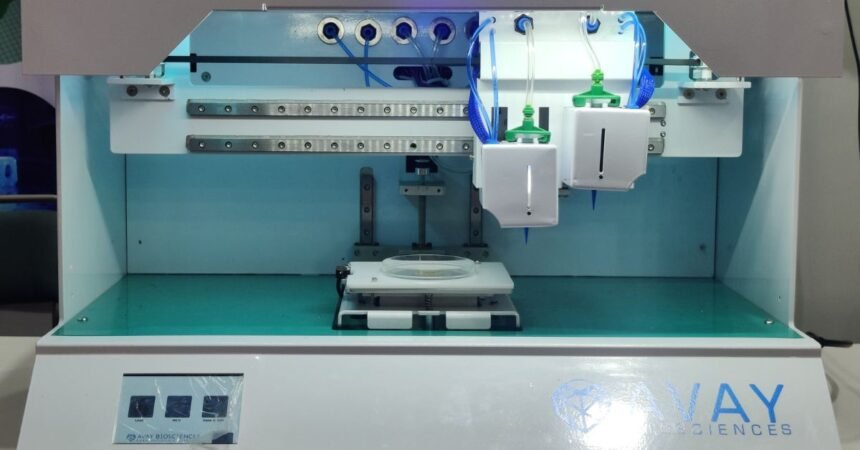
The most misleading sentence in bioprinting is “printing organs.” It conjures a machine that prints a working liver on demand. The reality — and the genuinely interesting business — is less cinematic and more valuable: printing small pieces of living human tissue so that drugs can be tested on something that behaves like the real thing. That is what Avay Biosciences of Bengaluru does. Its MITO platform prints bioink — living human cells suspended in biomaterials — into 3D tissue models used for drug discovery and toxicity screening. Transplantable organs are the company’s stated long-term goal. They are not the product. Keeping that line sharp is the whole job of this post.
How bioprinting actually works
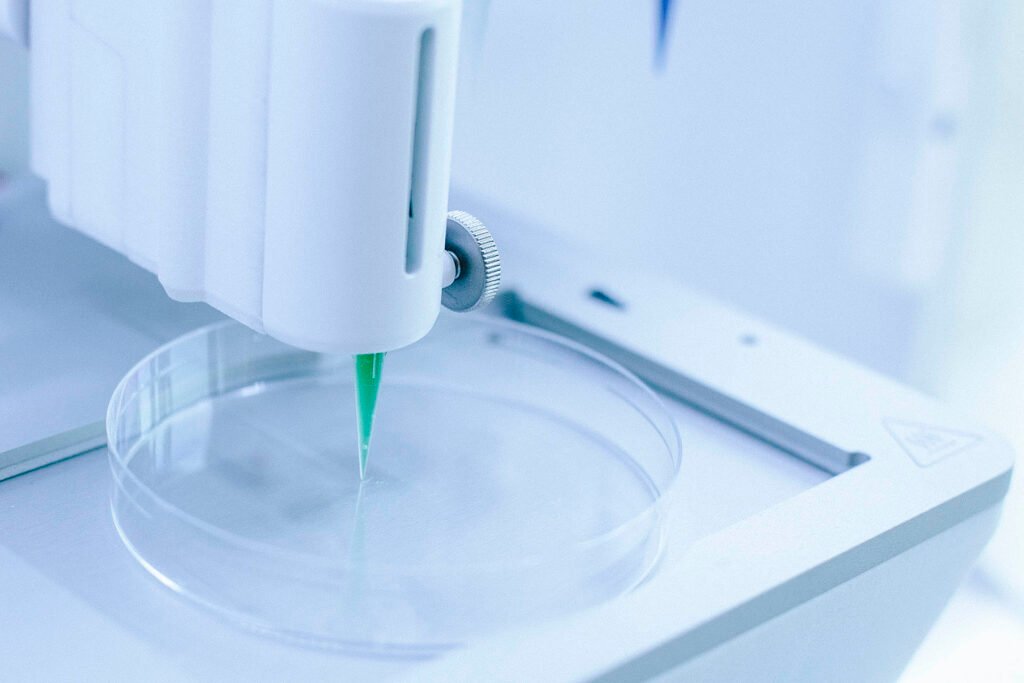
A bioprinter is a 3D printer whose “ink” is alive. Avay’s bioink mixes living human cells with biomaterials like collagen and gelatin, which give the printed structure temporary scaffolding while the cells organise themselves. The printer deposits this mixture layer by layer through fine nozzles, and on-bed UV photocrosslinking firms up soft hydrogels as they print, according to the company’s official MITO walkthrough. The result is a small 3D tissue construct — millimetres to centimetres — with architecture that flat Petri-dish cell cultures cannot reproduce.
Why does that matter? Drugs fail in humans after passing animal tests with depressing regularity, and a 3D human-tissue model predicts human responses better than flat cultures or mice.
The MITO platform, from Plus to Ultra
Avay’s first machine, Mito Plus, launched at the Bengaluru Tech Summit in November 2022, with its first prototype installed at IISc — developed with inputs from Dr Bikramjit Basu’s biomaterials lab there. The company has since iterated to the Mito Pro and now the MITO Ultra, which the founder called their “most advanced 3D bioprinter” in October 2026, designed, machined and hand-assembled in the company’s Bengaluru workshop. When in doubt, “the MITO platform” covers the line without conflating generations.
The company was co-founded by Suhridh Sundaram (COO, an IIT Madras aerospace engineering alumnus) with Manish Amin as CEO, per 2022 coverage. Its customer list from the launch era includes IIT Madras, ICT Mumbai, NIPER Hyderabad, and BITS Pilani’s Goa campus — academic and pharma-research users, which is exactly who buys bioprinters today.
What it is not — yet
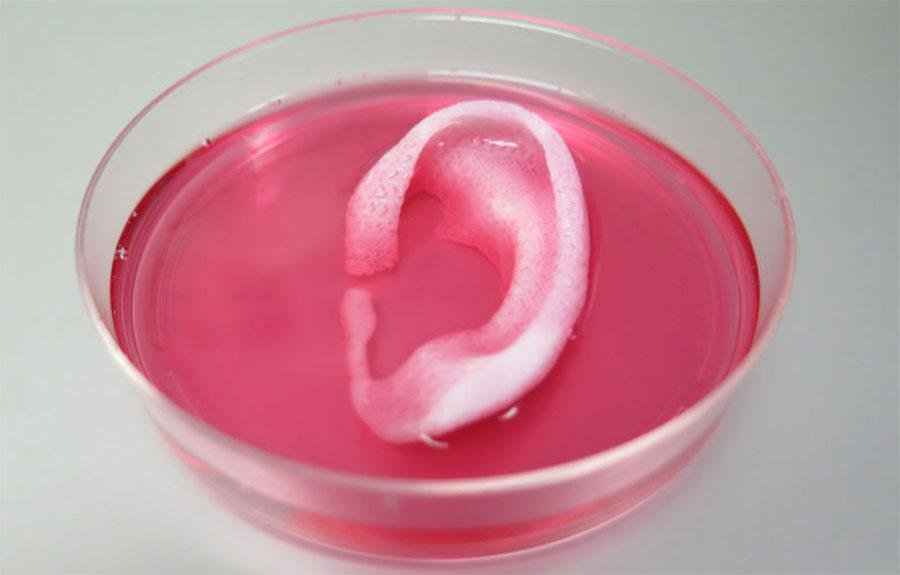
Here is the distinction, stated plainly: today, Avay prints small tissue models for testing drugs. It does not print transplantable livers, hearts, or kidneys. The “artificial organs” vision is an explicitly long-term goal — the company’s own video materials make this distinction, and so must we. The gap between a centimetre-scale tissue model and a vascularised, transplantable organ is one of the hardest problems in bioengineering: blood vessels at every scale, immune compatibility, and function over years, not days. Anyone presenting today’s bioprinters as organ factories is selling science fiction.
That honesty does not diminish the business. Pharma’s shift away from animal models — regulatory as well as ethical — is a structural tailwind. A machine that lets a drug company test toxicity on printed human tissue instead of a mouse has a clear buyer and a clear ROI. That is a real market, today — the same screening-at-scale logic NIRAMAI’s Thermalytix brings to breast cancer.
Avay prints living tissue models for drug testing today; transplantable organs are the long-term goal — the sharpest line in Indian bioprinting.
The Indian context
Avay is not India’s only bioprinting bet. Pandorum Technologies, also Bengaluru-based, works on 3D-printed liver tissue and a bioprinted cornea programme. Cellsion Technologies, incubated at IISc, builds bioprinted skin models for pharma testing. Separate companies, separate milestones.
That indigenous-manufacturing angle is arguably Avay’s most defensible moat. Research instruments are a quiet import dependency — labs across India buy foreign bioprinters at steep markups with slow service. A Bengaluru-built bioprinter, serviced from down the road, is the same import-substitution playbook that has worked in ventilators.
Key takeaway
The takeaway: Avay’s MITO platform is a real, shipping instrument for drug discovery — living cells printed into testable tissue, built indigenously. The organ-printing future is genuine long-term ambition, not current capability. Judge the company on the instrument business it has, not the headlines it could inspire. Platform biotech with honest timelines is also PopVax’s story — safety first, efficacy later.
What to watch
The milestones that matter: placements into pharma R&D labs beyond the initial academic collaborators, and throughput data from real drug-screening programmes. The scientific milestone to watch industry-wide is vascularisation — printing tissue with working blood vessels.
More Read

What does Avay Biosciences do?
Avay Biosciences, a Bengaluru startup co-founded by Suhridh Sundaram (IIT Madras) with Manish Amin as CEO, builds the MITO platform of 3D bioprinters that print living human cells into tissue models for drug discovery and toxicity testing.
Can Avay print transplantable organs?
No — not today. Current products print small tissue models for pharmaceutical testing. Transplantable organs are the company’s stated long-term goal, and the blog keeps that distinction explicit.
How does bioprinting work?
Living human cells are mixed with biomaterials (collagen, gelatin) into “bioink,” deposited layer by layer through fine nozzles, with UV photocrosslinking to firm up soft hydrogels — producing 3D tissue constructs far more lifelike than flat cell cultures.
Who uses Avay’s bioprinters?
Academic and pharma-research users including IIT Madras, ICT Mumbai, NIPER Hyderabad and BITS Pilani (Goa), per launch-era coverage. Applications span drug discovery, toxicity screening, cancer biology and cosmetology.
Is Avay the only bioprinting company in India?
No. Pandorum Technologies (Bengaluru; liver tissue, cornea programme with L.V. Prasad Eye Institute) and Cellsion Technologies (IISc-incubated; bioprinted skin models) are separate players with their own milestones.
Sources & further reading
- Avay Biosciences official site — MITO bioprinter line, company profile and product generations
- The Hindu on Avay’s launch — November 2022 coverage of the Mito Plus launch and IISc installation
- BioSpectrum India on indigenous manufacturing — Reporting on Avay’s ~70% indigenous hardware and software stack