


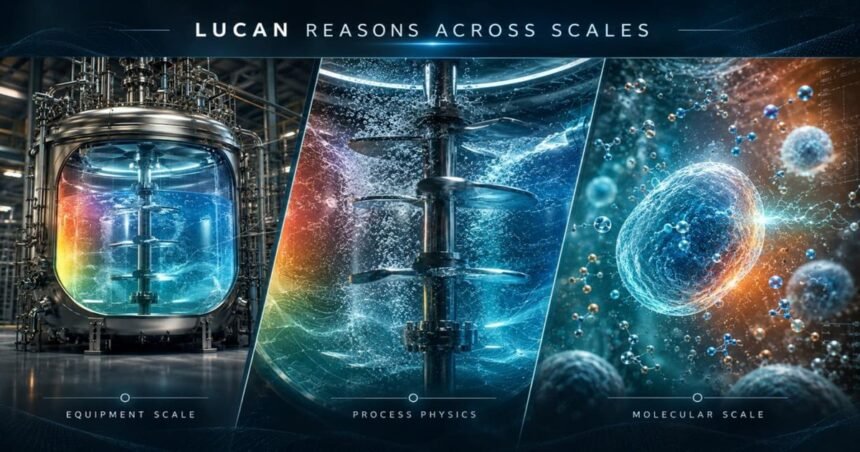
Every new material India needs — a safer battery, a better catalyst, a cheaper drug ingredient — begins the same way: years of experiments, millions of dollars, and a long, uncertain road from a molecule in a laboratory to a product rolling off a factory line. In Delhi, a team of scientists and engineers is building an intelligence that shortens that road dramatically. Its name is LUCAN, and it is designed to think the way a factory actually works — from the molecule all the way up to the machine.
Shodh AI was founded by Dr Arastu Sharma, whose research took him through the University of Cambridge and Microsoft Research before work with India’s DRDO defence-AI ecosystem. The company was selected as one of twelve foundation-model companies under the Government of India’s IndiaAI Mission, and leads the mission’s ‘AI for Science’ work. Its goal is a new kind of AI: not a chatbot, but a scientific brain that designs physical things.
The first proof came in February 2026, at the India AI Impact Summit in New Delhi, where Shodh AI unveiled Project Skanda — described as India’s first sovereign generative AI model for material science. Built with NVIDIA, on Hopper GPUs and the PhysicsNeMo framework, Skanda’s first model, SkandaMeso-1, works at the mesoscale — the internal 3D architecture inside a battery cell that decides its life, safety and charging speed. The company says it simulated more than a million unique electrochemical scenarios to build the dataset behind it, and the model was showcased to Prime Minister Narendra Modi at the summit. The ambition the company states is striking: compress the development of a new material from nearly ten years and millions of dollars to six months, for under a million dollars.
In September 2026, Shodh AI went further with LUCAN, a foundation world model for physical intelligence. Most engineering software predicts what happens if you change one thing. LUCAN is built to answer the opposite question: given the outcome you want, what should you change? It connects molecular graphs, three-dimensional flow and heat fields, and deforming geometries — molecules, cells, reactors — inside one shared Sparse Mixture-of-Experts architecture, so a change at one scale can be traced through every other scale before anything is built.
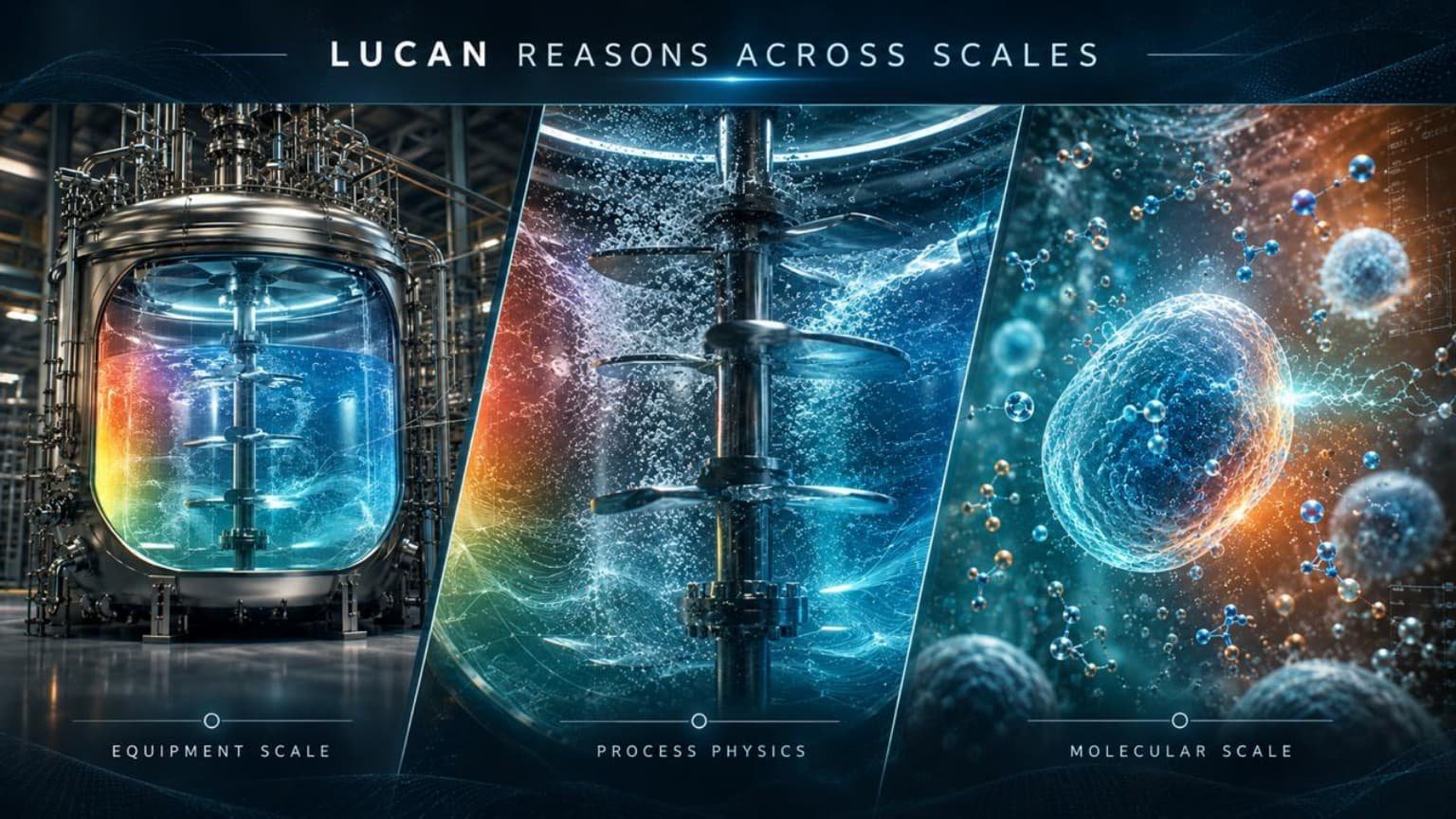
The company put that idea through five controlled cross-scale tests, published in its technical whitepaper in August 2026. A frozen-checkpoint audit found 52% shared computation between molecular and reactor representations; eight out of eight directional tests showed a molecular change propagating correctly to reactor temperature on held-out 250-litre geometries; and a full-chain composition test linking molecule to reactor to cell reported a 91.3% pass rate.
The result that matters most is what the model does with that understanding. The company says 88% of LUCAN’s proposed directions improved the objective when checked by a separate, high-fidelity classical solver; 55 of 60 feasible targets reached solver-verified solutions, and 38 of 40 intentionally infeasible targets were correctly rejected. By letting the model do the searching and the classical solver do the verifying, the company says a median optimisation that once took more than 500 hours now takes 5.6 hours.
More Read
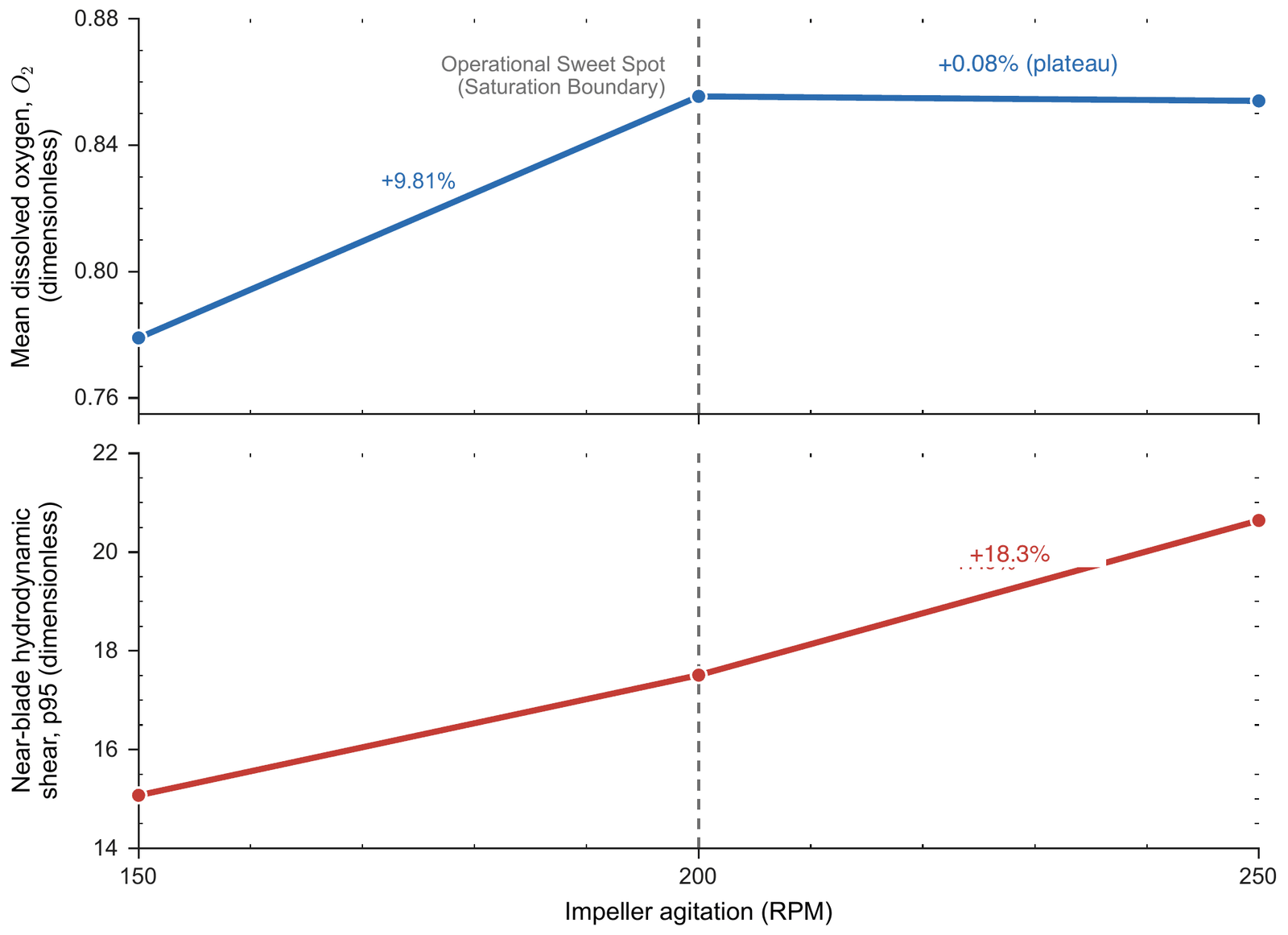
And the interventions survived contact with real processes. In a specialty-chemicals scale-up from batch to continuous flow, the company reports isolated yield rising from 82.4% to 96.7% while a temperature-sensitive impurity fell from 12.3% to 3.1%. In a biomanufacturing scale-up from 5 litres to 500 litres, the reported pilot run reached a harvest titer of 6.63 g/L with 78.2% cell viability, 94.5% product recovery, and high-molecular-weight aggregates of just 1.2% — comfortably inside the strict 2.0% safety threshold. In one specialty-chemicals application, the company says its modelling identified process changes associated with 17% more product from the same raw material.
The work continues. The Government of India is now supporting Shodh AI as it scales LUCAN to substantially larger training and scientific-computing capacity, with GPU compute support from the IndiaAI Mission; the next steps are Skanda Large, a seven-billion-parameter diffusion transformer, and an autonomous robotic material foundry where the model’s predictions are tested and refined against real experiments. From a Delhi laboratory to the factory floor, Shodh AI is building the intelligence that lets India invent the materials of its own future — and make them real.
Keep reading: Pumps That Think: Inside Pump Academy’s iPUMPNET, the AI Saving Bengaluru ₹40 Crore a Year · Decisions in a Blink: Inside Sthānika, the Hyderabad Lab Whose AI Out-Decides the World’s Best · More Industrial Automation & Technology stories
Like stories like this? Add Exceptional Technology as a preferred source on Google to see more of our reporting in your search results and Discover feed.







