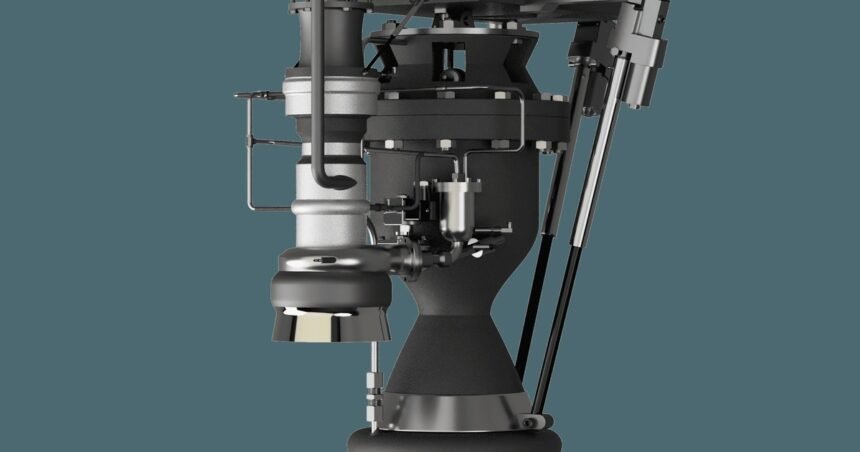
On a test stand in Pune, a rocket engine coughs, catches, and roars to life — and there is no spark plug in sight, no single-use igniter to throw away after the firing. The flame starts itself, lit by sound alone. The engine is ANYA, and the trick that lit it is called resonance ignition — a way of starting a rocket that only a handful of teams on Earth have ever made work, now demonstrated for the first time in India by a three-year-old Pune startup called Thrustworks Dynetics.
Resonance ignition does away with the conventional starter entirely. Instead of a high-voltage spark or a one-shot pyrotechnic igniter, the geometry of the combustion chamber itself is shaped so precisely that it generates controlled acoustic shockwaves — sound waves powerful enough to set the propellants alight, the company says. The design was worked out with Thrustworks’ own in-house combustion software, and it can turn a wide range of propellants into hypergolic combinations — fuels that ignite on contact, with no spark required. In February 2026 the team test-fired the system successfully, and the company says it is now one of only three organisations in the world to have demonstrated resonance-based ignition for liquid rocket engines.

Meet ANYA
ANYA is the engine the ignition system was built for: a semi-cryogenic platform engine that burns kerosene and liquid oxygen, manufactured as a single-metal, 3D-printed unit. It is designed to deliver 20 to 30 kilonewtons of thrust with a thrust-to-weight ratio above 100, the company says, and it carries thrust vectoring — the ability to steer by swivelling the engine — along with subsystems that have passed rapid start-stop testing, the kind of quick-fire reliability that tactical missions demand.
The idea is modularity. Rather than building a bespoke engine for every rocket, Thrustworks is building ANYA as a platform: a launch company picks the configuration that fits its vehicle, and the engine is customised from there. It is a buy-don’t-build pitch aimed at India’s growing flock of launch startups — and the company says the engines will be priced at roughly &rupee;1–2 crore each. The platform is designed for orbital and suborbital launch vehicles, and for the hypersonic speeds where its high thermal resilience matters most.
Three friends and a test bed
Thrustworks Dynetics was founded in 2023 by Manan Joshi, Kalyani Shinde and Vinith Shenoy, three engineers who had led a rocket-engine project together at Bharat Forge Aerospace and decided to build the propulsion company they wished existed. The startup is incubated at SINE, IIT Bombay, and works out of Pune.
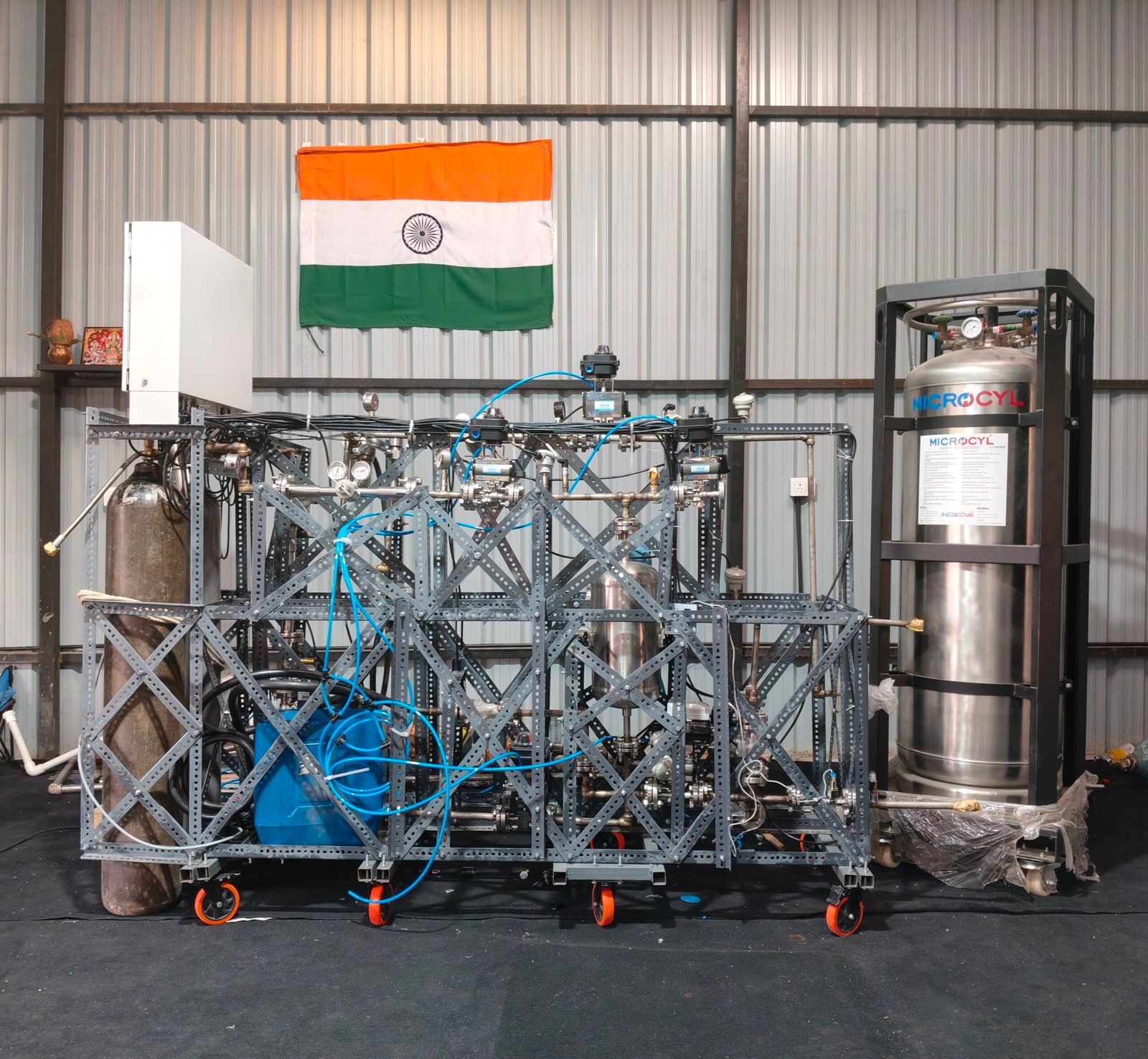
Testing is the bottleneck that slows every rocket programme in India, so the team built its own way around it: India’s first mobile rocket engine test bed, a rig that can be taken to wherever a hot-fire test needs to happen instead of waiting for a slot at a government stand. In January 2026 the company went further, inaugurating its Integrated Rocket Facility in Pune — design, manufacturing and hot-fire testing under one roof, with the first test runs at the facility already complete. The company has signed an agreement with IN-SPACe for access to ISRO facilities and technical reviews, and it works alongside ISRO, Bharat Forge, Godrej Aerospace and INOXCVA.
More Read
The money followed the hardware. In October 2025 Thrustworks raised &rupee;7 crore in a seed round led by Jamwant Ventures, with Piper Serica and SINE-IIT Bombay participating, to scale the facility and expand its testing capacity. The roadmap runs on from ANYA to micro-combustors and high-thrust, high-impulse engines — each one a step toward a full catalogue of Indian-built propulsion that a launch company can simply order.
Why it matters
Every Indian rocket that flies today depends on engines built the slow, bespoke way — or on technology that arrives from abroad. The hardest part of a liquid rocket engine is often not the thrust but the start: lighting it reliably, again and again, in the cold of space and the violence of a launch. A team in Pune has now shown it can be done with nothing more than geometry and sound, on a shoestring budget, in a facility it built itself. If ANYA reaches the launchers it is built for, the next Indian rocket to climb skyward could be lit by an engine India designed, printed and proved at home.
Keep reading: One Launcher, Every Rocket: Inside NIBE’s SuryaAstra, India’s First Universal Rocket Launcher · The Kamikaze Drone That Flies 100 km on Its Own: Inside VU Dynamics’ APJK-6C100 · More Aerospace & Defense stories
Like stories like this? Add Exceptional Technology as a preferred source on Google to see more of our reporting in your search results and Discover feed.