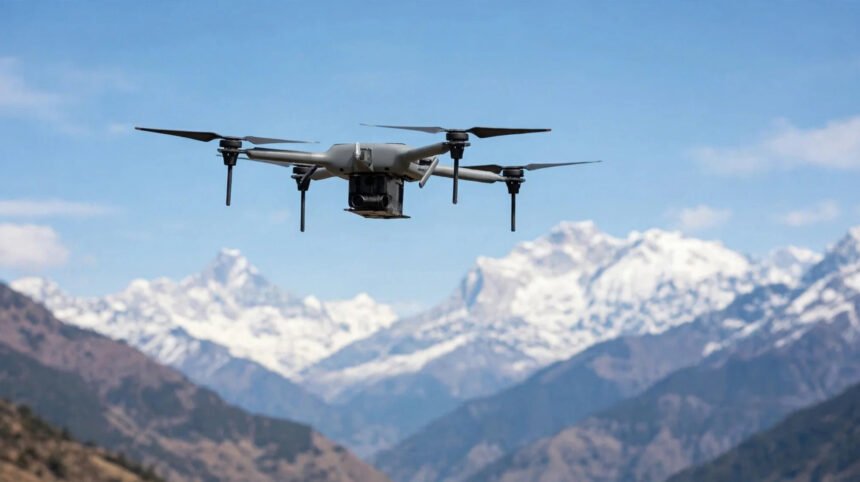
On 3 and 4 August 2026, at a high-altitude base camp and above Sela Top in Arunachal Pradesh, a small quadcopter stayed in the air for 1 hour 18 minutes 26 seconds at 14,000 feet — nearly twice the 45-minute target the Indian Army had set for the trial. The drone was the Vijay Z1, and the team behind it, Zenith Unmanned Systems, had been building towards that flight for barely a year.
Zenith Unmanned Systems Pvt Ltd is a Hyderabad-based startup incorporated in April 2025 and incubated at the Centre of Innovation, Incubation & Entrepreneurship (CIIE) of IIT (ISM) Dhanbad. It was co-founded by Sourav Singh, an IIT (ISM) alumnus from the 2020 batch who completed his MTech in mining engineering in 2022, and it remains a bootstrapped company — a small team building defence-grade unmanned systems from the ground up.
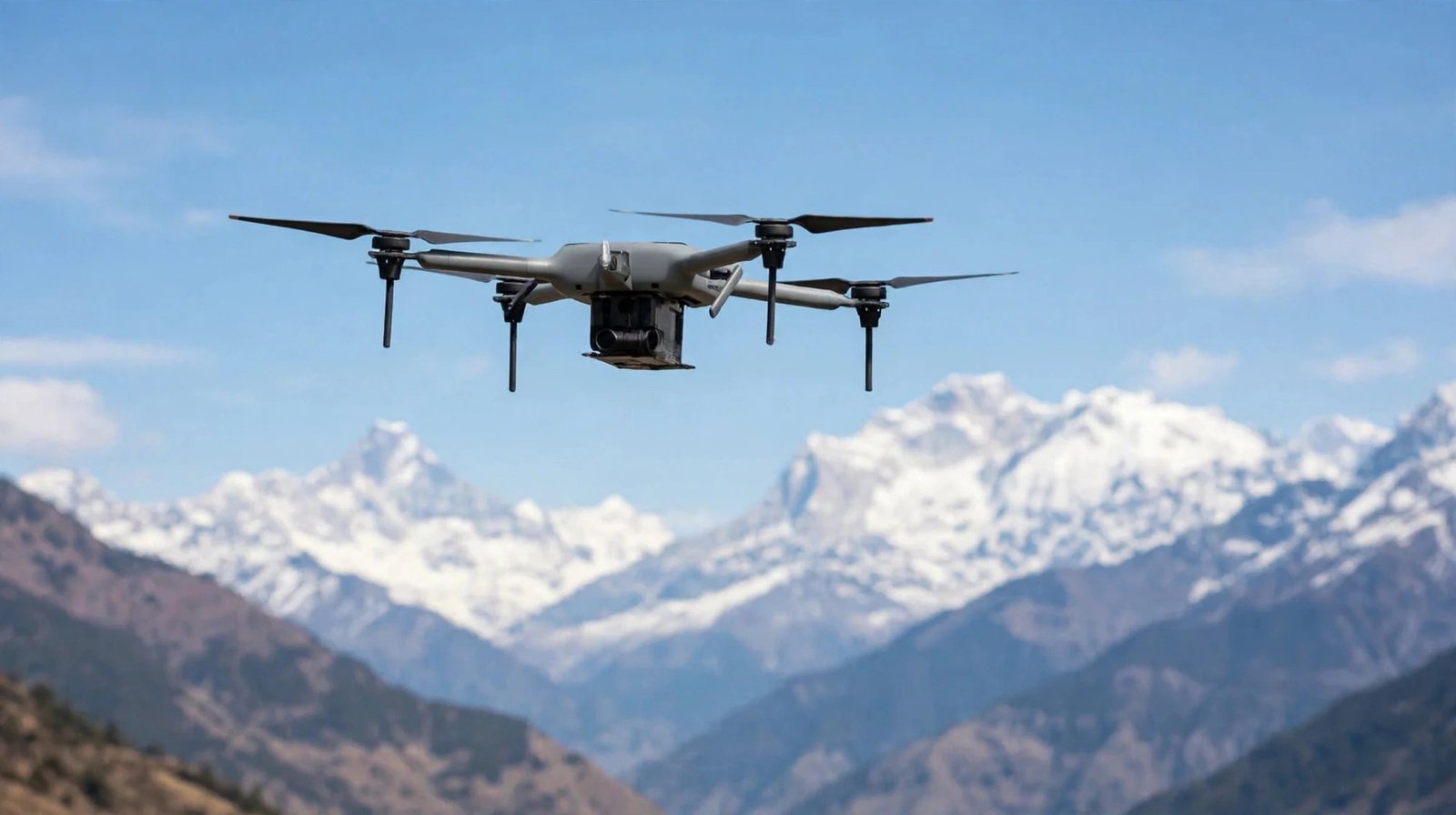
Flying high is brutally hard for a small drone. At 14,000 feet the air is thin, so every rotor must work harder for the same lift, and the cold, wind and rain punish batteries and airframes alike. That is exactly why the Vijay Z1’s trial numbers matter: the company says the drone flew 1 hour 20 minutes 33 seconds at 12,000 feet and 1 hour 18 minutes 26 seconds at 14,000 feet, in rain and fog, and 2 hours 22 minutes at mean sea level. For troops watching over mountain passes and border sectors, that endurance means an unblinking eye that stays up long enough to be genuinely useful — for reconnaissance, surveillance, search and rescue, and continuous monitoring of sensitive ground.
The Vijay Z1 is a compact, all-weather electric quadcopter built for exactly that job. It weighs 2.7 kg, flies up to 40 km, and operates at altitudes up to 4,200 metres. It carries a 500-gram payload, expandable to 1.2 kg, and the company says more than 85 per cent of the aircraft is indigenous — including a carbon-fibre frame designed and developed entirely by its own team. Its body is built to keep flying through rain, dust, snow and extreme heat, the everyday weather of the high Himalayas.
The road to Sela Top was fast and methodical. The Vijay Z1 project began in August 2025; the first prototype flew for more than 100 minutes at a take-off weight of just 2.3 kg, with a thermal imaging payload on board. Five prototypes followed, the sixth and latest completed in June 2026, and the team put the aircraft through more than 1,000 hours of ground and crash testing before it ever faced the Army’s stopwatch.
What comes next is already taking shape. Following the trials, the company received interest in the drone’s early induction, and procurement-level validation testing is underway. Zenith has a manufacturing capacity of 90 drones a month, a compact training drone with more than 50 minutes of flight endurance ready for commercialisation, and further unmanned systems and hybrid-propulsion variants in development. As Singh puts it: “A self-reliant Bharat cannot depend on others for the technologies that safeguard its sovereignty and future.” Prof Alok Das, Dean of Innovation & Corporate Relations at IIT (ISM) Dhanbad, calls the Vijay Z1 “a good example of how ideas developed by our alumni can be turned into useful technology.” A year-old startup, a 2.7-kg aircraft, and a flight that nearly doubled the Army’s target — that is how quickly Indian engineering is learning to own the sky over its own mountains.
More Read

Keep reading: Twenty Metres to Take Off: Inside LAT Aerospace, the Startup Building India’s Bus Network in the Sky · The Eyes That Keep Flying When GPS Goes Dark: Inside Paar Autonomy, the Bengaluru Startup Giving Drones Super-Human Sight · More Aerospace & Defense stories
Like stories like this? Add Exceptional Technology as a preferred source on Google to see more of our reporting in your search results and Discover feed.