The ₹30,000 Crore Ammunition Giant Teaming Up With a Rocket Startup
India’s defence industry has a new kind of partnership. On one side is a state-owned manufacturer with a very large order book and decades of ordnance know-how. On the other is a small, IISc-incubated startup that fires its own rocket motors. In August 2026, Munitions India Limited (MIL) and SpaceFields signed an MoU to work together. This post covers who MIL is, why its scale matters, and what the startup brings to the table.
From Ordnance Factory Board to defence heavyweight
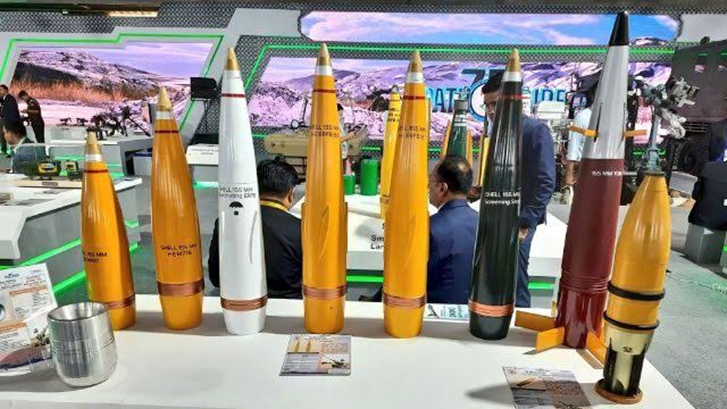
Munitions India Limited, headquartered in Pune, was created in 2021 when the government broke up the Ordnance Factory Board into seven defence public sector undertakings. MIL took over the ammunition and explosives business: bullets, shells, mortars, rockets and bombs for the Indian armed forces, plus exports and some civilian use. It also makes components for the Pinaka multi-barrel rocket system.
Corporatisation seems to have worked. MIL was granted Miniratna Category-I status in May 2025, which gives it more financial autonomy. Industry data cited in recent coverage puts its FY2025-26 revenue at about ₹10,954 crore, roughly 33% up on the year before. In FY2024-25 it reported sales of ₹8,282 crore, of which exports were ₹3,081 crore.
What a ₹30,000 crore order book means
The headline number is the order book. In a September 2025 rating note, CARE Ratings put MIL’s unexecuted orders at around ₹30,000 crore as of August 2025. That included about ₹6,000 crore of export orders, and roughly ₹24,000 crore of Ministry of Defence orders due for execution by FY31, with some running beyond that. CARE put the book at about 3.6 times FY25 operating income.
Your internal figure of about ₹29,000 crore is in the same range. Order books move constantly as work is delivered and new contracts land, so treat any single figure as a snapshot.
Three things follow from a book this size:
More Read

- Revenue visibility. MIL has years of committed work to deliver, which supports investment in capacity and technology.
- Pressure to modernise. Large volumes of conventional ammunition are only part of the picture. The armed forces also want newer, more capable rockets and munitions, and those need newer propulsion know-how.
- Export potential. A sizeable share of the order book comes from overseas customers, so quality and delivery schedules matter commercially as well as strategically.
Meet SpaceFields
SpaceFields is a Bengaluru-based deep-tech startup incubated at the Indian Institute of Science, founded in 2021. It builds solid rocket propulsion and propellant systems for defence, aerospace and commercial users. Its range includes pyro ignitors and cartridges, and rocket-assisted take-off (RATO) boosters for drones.
Its credentials are practical. It has won several iDEX (Innovations for Defence Excellence) challenges, and it runs its own firing facility at Challakere in Karnataka. In 2026 it hot-tested what it describes as India’s first aerospike solid rocket engine. The nozzle design is aimed at keeping efficiency up across changing altitudes. That is a technical edge a startup can pursue more nimbly than a large factory network.
SpaceFields is also scaling up. In June 2026, news agency PTI reported that it had been allotted 121 acres at an industrial park in Thimmasamudram, Anantapur district, Andhra Pradesh, for a solid propellant processing facility. The project needs a large site because energetic materials require wide safety buffers.
What the MoU covers
The MoU pairs MIL’s production capability with SpaceFields’ skills in solid propulsion and advanced manufacturing. Public summaries name three focus areas: rocket boosters, energetics refurbishment and pyrotechnic systems.
It is worth being precise about what this is. It is a memorandum of understanding, which signals intent and a framework for cooperation. It is not a delivered product or a production contract, and the details of work packages and timelines have not been made public.
Why this pairing matters
1. Each side has what the other lacks. MIL has scale, certified processes, established relationships with the armed forces and large quantities of existing stock. SpaceFields has fresh propulsion design, fast iteration and test-fire experience. Larger propulsion programmes in India have traditionally sat with a small number of government agencies, so a private partner widens the base.
2. Refurbishment extends the life of what India already owns. Refurbishing energetics and boosters can stretch the service life of stored assets, which is valuable when demand for rockets and munitions is high. Doing so safely requires deep process knowledge, which is exactly the type of capability this partnership combines.
3. It shows a workable model for public-private collaboration. DPSUs have sometimes struggled with delivery timelines, and startups often lack the capital and production experience to scale. Working together lets each cover the other’s weakness. If it works, expect other DPSU-startup tie-ups to follow.
4. It supports self-reliance. Solid propellants and rocket motors are strategic technologies. Building more of that capability inside India reduces dependence on imports and gives planners more flexibility.
What to watch
- Whether the MoU converts into defined work orders, and on what timeline.
- How MIL’s order book and delivery performance evolve as large contracts are executed.
- Progress on SpaceFields’ Andhra Pradesh propellant facility, and on its partnerships with other defence firms.
- Safety and regulatory milestones, which are a core part of any energetics project.
The bottom line
Munitions India brings scale and a ₹30,000 crore-class order book. SpaceFields brings propulsion innovation and the agility of a startup. Together they are an early example of how India’s defence manufacturing could modernise: large established producers absorbing the strengths of young deep-tech firms. The MoU is an early step, but the direction is clear, and we will keep following how it develops.
Sources
- CARE Ratings press release on Munitions India Limited, September 2025
- Five Years After OFB Restructuring, Seven Defence DPSUs Drive Growth (Indian Defence News, October 2026)
- SpaceFields and Munitions India Ltd Sign MoU (Indian Defence News, August 2026)
- SpaceFields to set up rocket propellant processing facility in Andhra (PTI via ThePrint)
- A spacetech odyssey: SpaceFields (YourStory)
- Munitions India (Wikipedia)