Image credit: Sunfox
Twelve thousand feet above sea level, on the Char Dham pilgrimage route through Uttarakhand, heart attacks do not wait for a hospital. Sudden cardiac events claim pilgrims on that climb every year — people who often had no warning and no way to get a cardiac test in time. This year, a Dehradun company was on the route with a device the size of a matchbox, screening pilgrims with a ten-second ECG test before the trek. The company’s framing is blunt: a ten-second test before the climb is the difference between going home and not.
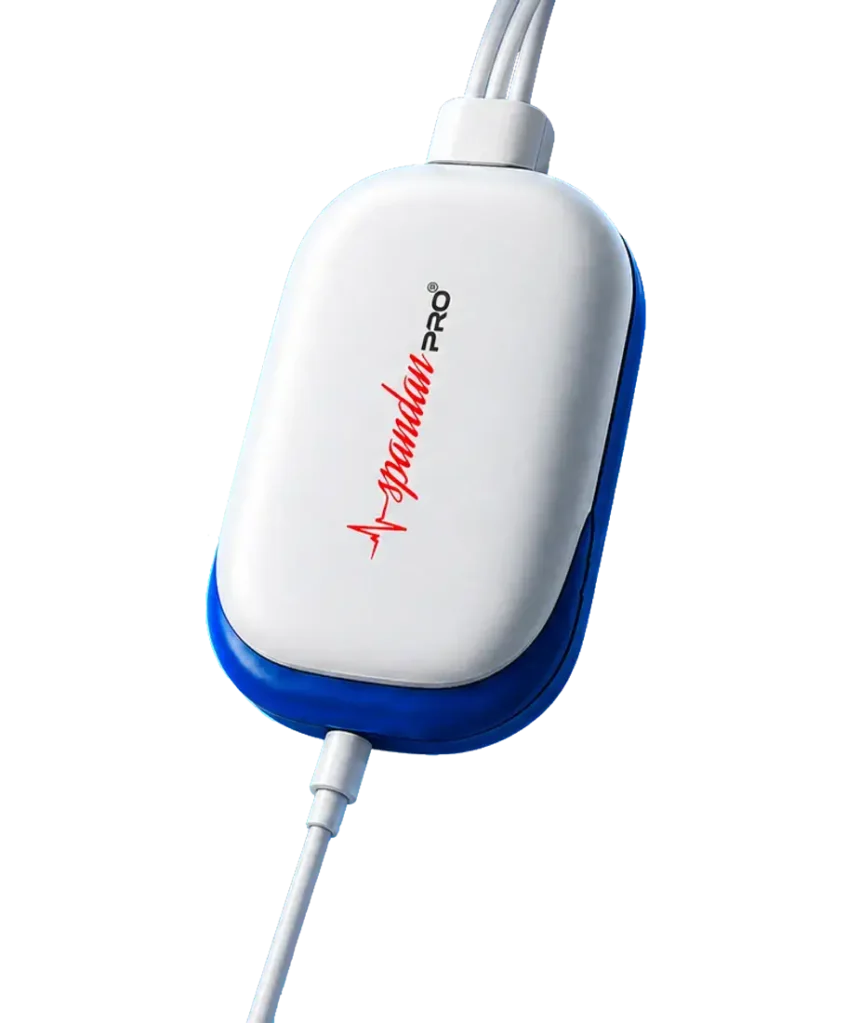
The company is Sunfox Technologies, and the device is Spandan — a portable, smartphone-connected 12-lead ECG platform that has grown, over a decade of work, into one of India’s most deployed pieces of cardiac diagnostic hardware. On 7 October 2026, Sunfox announced a $7 million Series A round — led by investor Ashish Kacholia alongside Lashit Sanghvi, Alchemy Capital and 3one4 Capital, the largest round in its history — to push deeper into India and begin building the regulatory and commercial machinery for the United States, Europe and Africa.
A cable, a phone, and a clinical trace
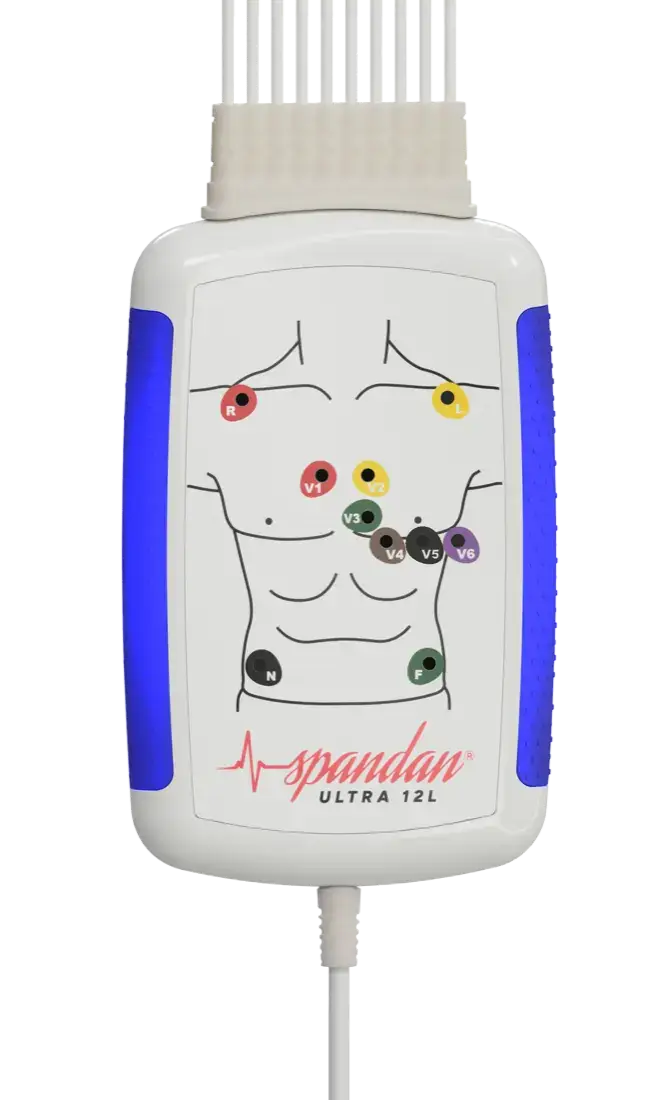
The core idea is disarmingly simple: shrink the bulky ECG machine into a pocketable device that turns an ordinary smartphone into a 12-lead ECG station. The flagship Ultra 12L weighs 230 grams, captures simultaneous multi-channel 12-lead readings, works offline through a mobile app, and — according to the company — detects more than 39 cardiac abnormalities, including myocardial infarction and atrial fibrillation. The lineup spans the Legacy 4.0, the Neo, the Pro and the Ultra 12L, and the company says earlier Spandan variants weighed under 50 grams, with an ultra-portable version at just 15 grams that it calls one of the world’s smallest ECG devices.
The economics are the point. Sunfox’s devices sell for roughly Rs 7,000 to Rs 10,000, against conventional ECG machines that cost Rs 50,000 to Rs 2 lakh, according to figures the company has given to the press. Rajat Jain, Sunfox’s founder and CEO, told YourStory that the device was engineered for frontline health workers with minimal training — an icon-driven, language-agnostic app interface that works fully offline — because the places that need cardiac screening most are the places with the least infrastructure.
The hub-and-spoke that replaces the waiting room
Hardware is only the first of three parts. Spandan One, the company’s cloud platform, links the device to a consumer app, a partner app and a central dashboard — and, crucially, to a network of doctors who review a trace remotely and return a validated report in minutes. In public-health deployments the model is hub-and-spoke: nurses or health workers at primary and community health centres record ECGs and send them to doctors or cardiologists at district hubs for review, flagging critical patterns and escalating urgent cases for treatment.
More Read
This is what makes Spandan more than a gadget. A standard 12-lead ECG machine sits inside an examination room in an urban hospital; in rural India, reaching one can mean a day of travel — and the golden window after a heart attack is precisely what geography consumes. Spandan’s answer is to move the measurement to the patient and the interpretation to the cloud.
20,000 villages, five million screens a year
The scale figures are striking — and they are the company’s, so they deserve the usual attribution. Sunfox says around 60,000 Spandan devices have been deployed across India, reaching more than 20,000 villages, and that the Spandan One platform now supports screening of approximately five million patients annually. Its own site claims more than 5,000 clinics and medical leaders worldwide use the platform, and lists a footprint spanning more than 15 countries — including Canada, the US, the UK, Germany, the UAE, Australia and Nepal.
On regulation, the company says it holds approvals in India, Ghana, Kenya, Tanzania and South Africa, and is pursuing clearances in the United States and the European Union. Sunfox’s site describes the devices as CDSCO-approved, peer-reviewed, and “certified and cleared to international standards”, with a claimed 99.7% accuracy. The recognitions are colourful: an all-five-shark deal on Shark Tank India (Season 1, Episode 32), semifinalist at the PMJAY Ayushman Bharat Grand Challenge, a top-eight finish among Indian hardware startups at the ASME Innovation Showcase — and, the company says, acknowledgements from Prime Minister Narendra Modi, President Droupadi Murmu, French President Emmanuel Macron and Bill Gates.
Money, founders, and the honest fine print
Sunfox began as an R&D venture in Uttarakhand in 2016 — the founders say it was the first startup officially registered in the state — when five friends, led by Rajat Jain, set out to close the gap in timely cardiac assessment after losing a friend in college. The co-founders are Rajat Jain, Arpit Jain, Sabit Rawat, Nitin Chandola and Saurabh Badola. “This round gives us the resources to take what we have built in Dehradun to a much larger stage,” Rajat Jain said of the Series A, which the company says will fund domestic expansion, global go-to-market capabilities and R&D. The round follows a Rs 15-crore raise led by Venture Catalysts in 2024.
The fine print matters. The 60,000 devices, 20,000 villages and five million annual screens are company-reported figures, not independently audited numbers. The 99.7% accuracy claim comes from the company’s own site. US and EU clearances — the ones that would open the world’s two biggest regulated medtech markets — are still being pursued, not held. And the portable ECG space is crowded: Jain has himself said the company’s hardest fight was skepticism about Indian-built medical technology in a market flooded with Chinese imports and rebranded devices.
But the record also says something real. A decade of iteration from a Dehradun lab, a device line that holds up at altitude on a pilgrimage route, clinical deployments in more than 15 countries, and five sharks who all wanted in — Sunfox has done the hardest part of medtech: shipping working hardware where the patients actually are.