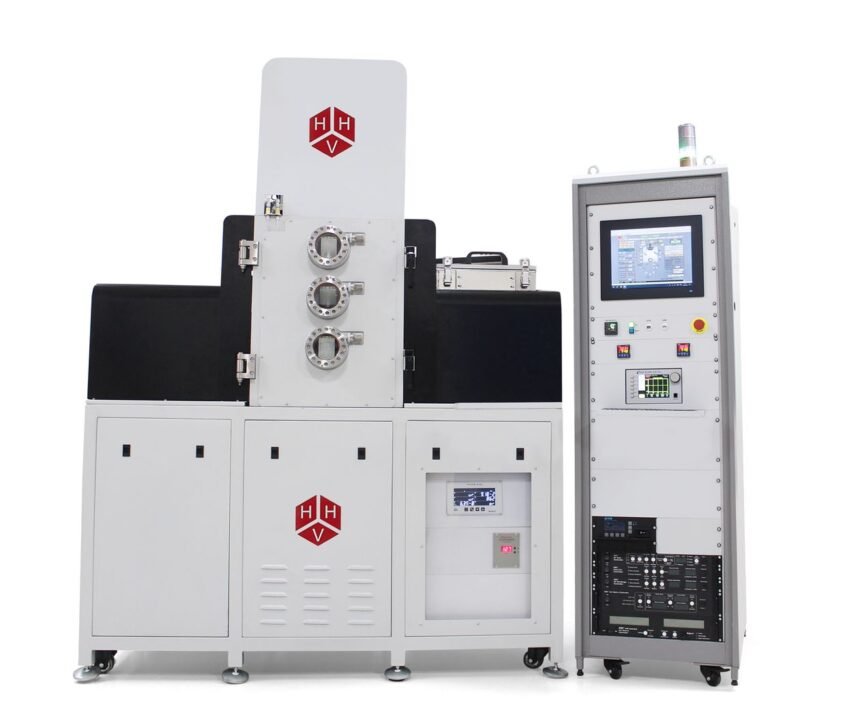
Some of India’s most strategic engineering happens in places you will never see — inside vacuum chambers, where films thinner than a wavelength of light are laid down atom by atom. In Peenya, Bengaluru, a 62-year-old company has just been recognised at the national level for mastering exactly that: HHV Advanced Technologies has won a SIDM Champion Award 2026 for an indigenously developed dual ion beam sputtering system, built for the Department of Atomic Energy’s strategic high-power laser programme.
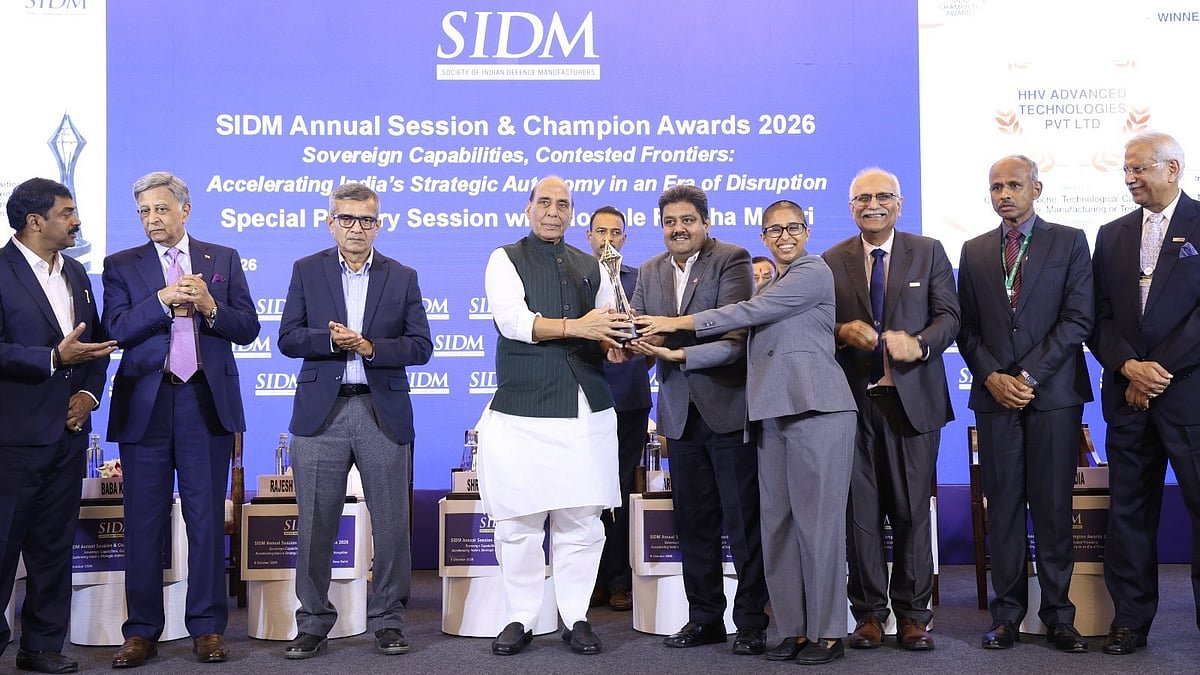
The award, in the category “Creation of Niche Technological Capability for Design, Manufacturing or Testing”, was presented by Defence Minister Rajnath Singh at the 8th Annual Session of the Society of Indian Defence Manufacturers in New Delhi on October 9, 2026. It was received on the company’s behalf by Ms. Smriti Sakhamuri, Executive Director and Board Member, and Mr. Subramanya Sastry, General Manager of the Thin Film Equipment Division. Fifteen Champion Awards were presented this year across categories spanning the defence and aerospace manufacturing ecosystem.
Why ion beams matter
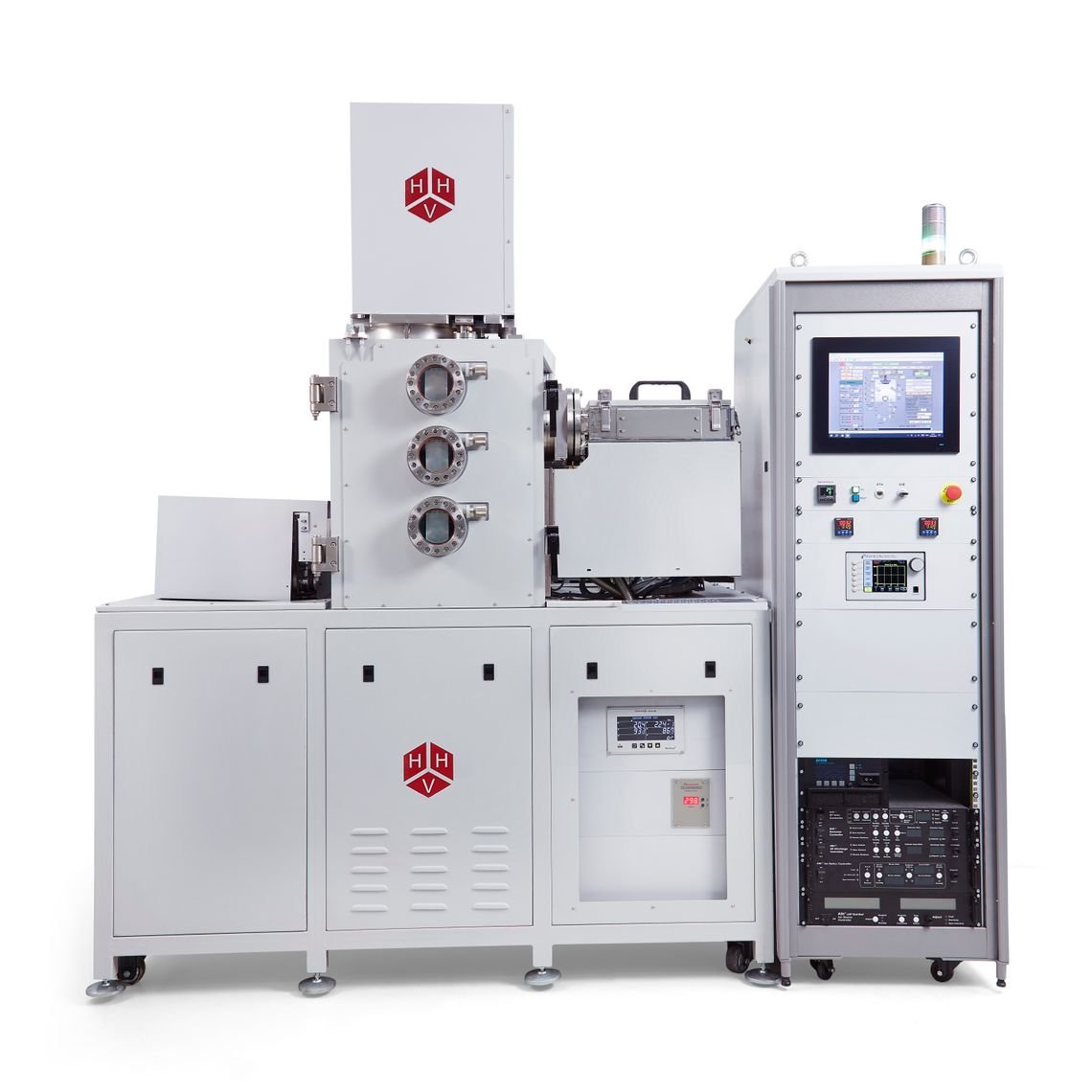
A dual ion beam sputtering (DIBS) system uses two ion beams in concert: one to knock atoms off a target material, and a second to assist the film as it grows on the substrate. Separating the two processes gives engineers independent control over deposition rate, film density, stoichiometry and stress — the difference between a merely good optical coating and one that can survive inside a strategic laser.
HHV’s system was developed over two years for the Department of Atomic Energy, to establish a domestic capability in advanced oxide thin-film deposition for high-power laser applications. The underlying approach was conceptualised by the Raja Ramanna Centre for Advanced Technology (RRCAT) and developed into hardware by HHV, whose researchers tuned ion energy and current density to produce zirconia films with precisely engineered interfaces — work that has since been published in the peer-reviewed literature.
The company says research carried out on the system has demonstrated over 99% optical reflectivity in a specified multilayer coating band, along with high film uniformity and laser-induced damage resistance. The same technology is feeding into semiconductor surface engineering research and advanced optical coatings — the kind of cross-cutting capability that rarely makes headlines but quietly underpins strategic programmes.
Six decades of vacuum and thin films
HHV Advanced Technologies describes itself as India’s premier thin film and optics technology company, with more than 62 years of experience designing and manufacturing high-vacuum equipment for research and industry. The group counts itself among the global leaders in thin film technology, with products serving aerospace, automotive, defence, space and astronomy.
More Read

Its track record in precision optics reads like a tour of India’s astronomy: HHV designed and built telescope mirror coating machines for the Indian Institute of Astrophysics at Hanle in Ladakh (a 2.1-metre mirror at 4,570 metres altitude), for the Inter-University Centre for Astronomy and Astrophysics at Girawali in Maharashtra (2.2 metres), and for the Aryabhatta Research Institute of Observational Sciences at Nainital (a 3.7-metre, 4.5-tonne mirror) — and then won an export order from Russia to coat a 2.55-metre mirror at the Caucasus Mountain Observatory of the Sternberg Astronomical Institute.
Closer to the present, the company built India’s first thermal atomic layer deposition (ALD) system in 2020, and today offers plasma ALD and PECVD systems for electronic applications alongside its PVD equipment line. It invests 5% of revenue in research and is a DSIR-certified industry — the institutional habits that make a two-year, in-house DIBS development programme possible in the first place.
Self-reliance, engineered
“This recognition is a proud milestone for HHV Advanced Technologies and reflects our commitment to developing specialised technological capabilities in India,” said Ms. Smriti Sakhamuri, Executive Director, HHV Advanced Technologies. “As India strengthens its capabilities across strategic and advanced technology sectors, it is important that Indian companies continue to invest in developing solutions that contribute to scientific progress and technological self-reliance.”
The company notes that developing this specialised equipment domestically reduces India’s dependence on imported advanced coating systems — and strengthens the country’s ability to design, manufacture and process-engineer sophisticated scientific equipment on its own. Sixty-two years in, that is a capability India can now point to with hardware to show for it.