The International Space Station weighs 420,000 kg and, by the company’s telling, the programme cost exceeded $155 billion, assembled piece by piece over more than a decade. A Bengaluru startup believes the future of living in orbit looks nothing like that: habitats that launch packed tight like a sleeping bag and inflate to full size once they reach space. Akashlabdhi, a startup incubated at IISc, is building AntarikshHAB — India’s first inflatable space habitat.
The company says AntarikshHAB’s expandable shell is designed for 6 to 16 people, offering what it describes as exceptional protection against orbital debris and radiation, while keeping launch mass — and therefore launch cost — far below a rigid module. The same structure is meant to pull double duty: microgravity research, satellite maintenance, orbital logistics storage, and one day, a base camp on the lunar surface. The company says the habitat will take about seven days to fully inflate once it reaches its destination.
Image: Akashlabdhi (official company image).
Why inflatable changes the equation
Every conventional space station ever flown has fought the same three constraints: cost, mass, and the volume a rocket fairing can swallow. Akashlabdhi’s answer is volume-to-mass efficiency — carry a compact package uphill, then blow it up to living-room scale in orbit. Where metals can shatter into high-speed fragments on debris impact, the company says an inflatable fabric structure produces only polymer-based fragments, a gentler outcome for the crowded orbital environment. It is the kind of asymmetric thinking India has always excelled at: do more with less mass. “India has consistently achieved more with fewer resources,” CEO Siddarth Jena told ETV Bharat, pointing to ISRO’s long record with the PSLV and GSLV.
Jena’s pitch to ETV Bharat is that the hard part was never the idea — inflatable habitats have been on drawing boards since the 1970s — but the materials. Earlier generations lacked fabrics that could shield against radiation and shrug off micrometeoroids. Akashlabdhi says it solved the material challenge first and the structural design second, arriving at a multi-layer flexible shell with a qualified micrometeoroid and orbital debris protection layer, an inflatable re-entry module, and a heat shield.
A Swiss test campaign at TRL-6
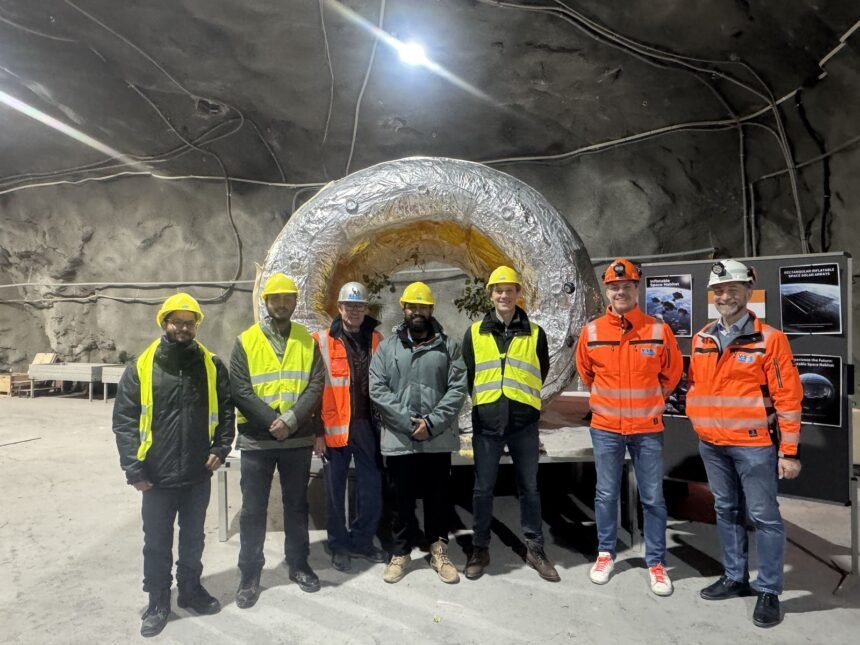
What elevates this from concept art to engineering programme is where — and how thoroughly — it has been tested. Akashlabdhi ran a comprehensive test campaign to reach Technology Readiness Level 6, with much of it conducted in Switzerland through partnerships enabled by the European Space Agency. Key testing happened at Versuchsstollen Hagerbach, an underground laboratory run by the Amberg Group whose natural rock overburden lets engineers study radiation attenuation, structural integrity, and long-duration habitat performance under conditions surface labs cannot easily replicate. ESA grants and institutional participation have funded a dedicated Human Habitat Safety research facility there.
More Read

The test list reads like a gauntlet: pressure and leak-before-burst tests on multi-layer flexible structures, thermal cycling, accelerated ageing of materials, and impact tests simulating micrometeoroid and orbital debris strikes. Repeated deployment trials checked the reliability of the restraint and inflation mechanisms, all watched over by an integrated sensor network feeding a digital twin of the structure.
The programme is genuinely international. On the Indian side, IISc, IIT Roorkee and IIT Delhi contribute expertise in space structures, materials, systems engineering and human-centric design. On the Swiss side, ETH Zurich, EMPA and the Paul Scherrer Institute support materials science, radiation studies and validation methods, with Akashlabdhi leading overall habitat architecture and mission design. Felix Amberg, president of the Amberg Group’s board, described the collaboration as applying proven underground safety engineering to the emerging domain of orbital infrastructure.
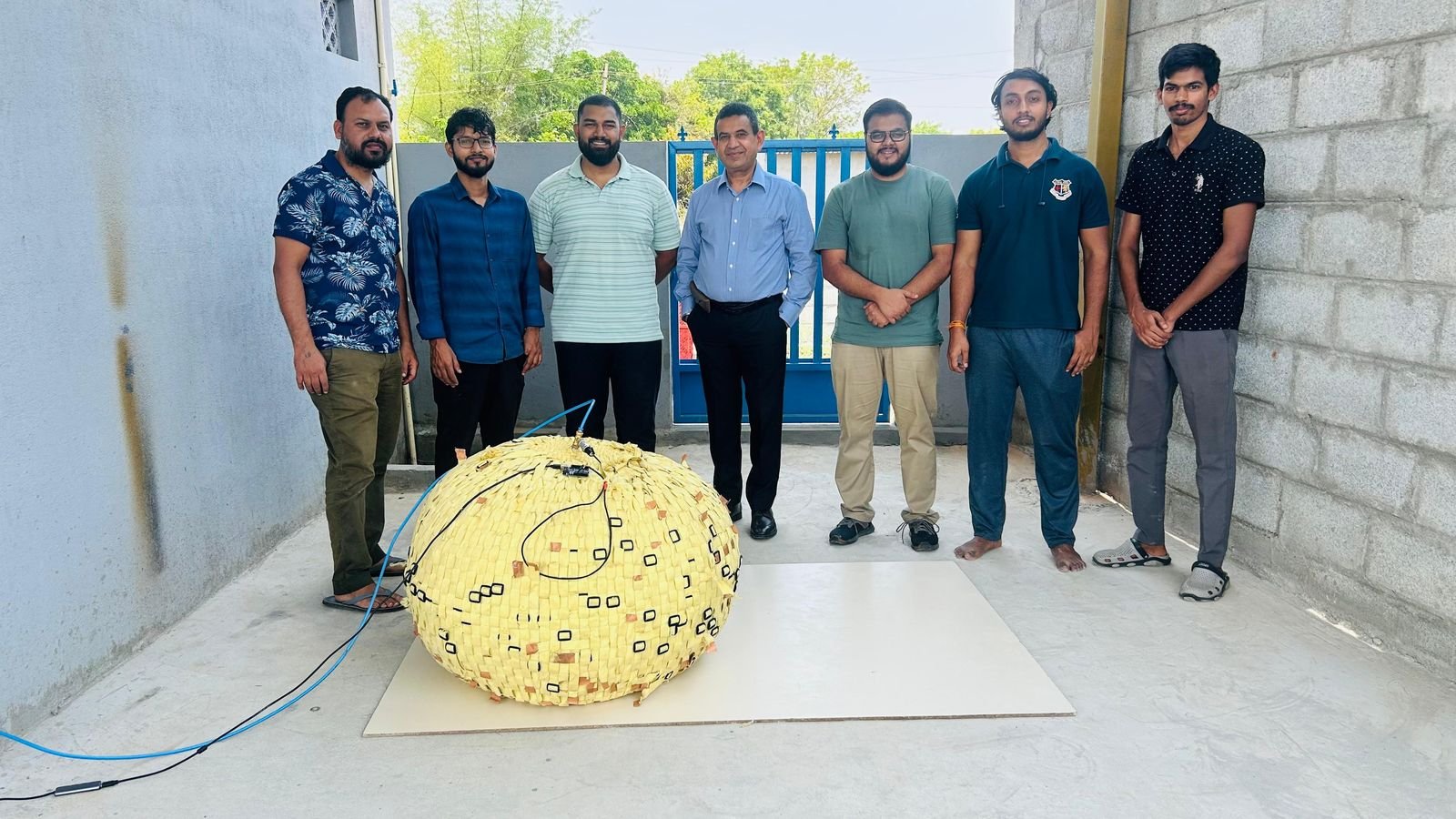
Image: Akashlabdhi (official company image).
The orbital demo flight
The company said it planned to fly a scaled-down 70-cubic-metre version of AntarikshHAB in July 2026 aboard a vehicle provided by Spanish firm PLD Space, carrying six multi-use payloads. This was designed to be far more than a technology demonstration: after deployment and inflation in orbit, the mission plan included a controlled de-orbit and atmospheric re-entry, with the recovered material yielding data on degradation, survivability and end-of-life behaviour — exactly the responsible-operations questions regulators and space agencies now demand answers to.
The full-scale habitat the company is working toward would offer around 300 cubic metres of usable volume — several times the demo module — while ETV Bharat reports the modular architecture could ultimately grow toward 500 cubic metres. Akashlabdhi is also developing gigawatt-scale solar arrays for orbital data centres and inflatable rovers for lunar and Mars exploration, positioning the habitat as the first product in a broader in-space infrastructure play. The company has raised about $1.2 million across two rounds, according to Tracxn.
If AntarikshHAB flies as intended, India will have joined a very small club of nations that can build homes for orbit — and done it the Indian way: lighter, cheaper, and designed to come home safely.