Reusability is what turned spaceflight from a billionaire’s hobby into an industry. A rocket that lands can fly again — and every reuse collapses the price of reaching orbit. The companies that have mastered the trick could fit in a single room. In Pune, a startup founded in 2022 has decided India should take a seat at that table — and it opened its campaign by lighting a semi-cryogenic engine it had designed and built itself, for less than the cost of a compact car.
The six-lakh engine
On 15 August 2023, Astrophel Aerospace became one of the few private companies in India to independently develop and successfully test-fire a semi-cryogenic engine — its Potentia. The remarkable part was the invoice: the company says it pulled it off with about Rs 6 lakh of its own money and zero external funding. “People wanted to validate our engine because they didn’t believe us,” co-founder Suyash Bafna told Down To Earth. “ISRO tested our product and was impressed.” That confidence-building moment unlocked institutional money — a Rs 6.84 crore pre-seed round in 2025 from a consortium of angel investors, followed by Rs 40 lakh under the MeitY Startup Hub’s SAMRIDH scheme.
The engine is a modular, systems-first design the company calls the Potentia C1U, built with 3D printing and wisdom borrowed from automotive manufacturing. Astrophel’s guiding principle, in Bafna’s words, is “to transform aerospace manufacturing the way the assembly line transformed automobiles.” The company says that approach cuts production time and cost by up to 40% compared with conventional aerospace methods.
Cryogenics, commercialised
Image: Astrophel Aerospace (official company image) — the startup’s in-house test and engineering setup at its Pune facility.
What sets Astrophel apart in India’s private space race is that it sells the building blocks, not just the dream. The startup has built an in-house portfolio of cryogenic hardware — throttleable engine valves, regenerative nozzle designs, turbopumps, vacuum-insulated cryogenic storage tanks, high-speed precision linear actuators and real-time avionics software.
The valves are the showpiece. The company says they achieve 0.1 mm precision for exceptionally fine control of propellant mass flow — control that pneumatic systems cannot match — are rated for pressures above 150 bar, and cost about a fifth of their imported equivalents. In November 2025 the startup showcased its indigenous cryogenic pump at the BRICS Startup Summit in Moscow, and it is co-developing cryogenic valves with a listed Indian valve manufacturer for commercial and defence applications. ISRO has shown early interest in buying the valves, the company says.
More Read
A hopper that hops
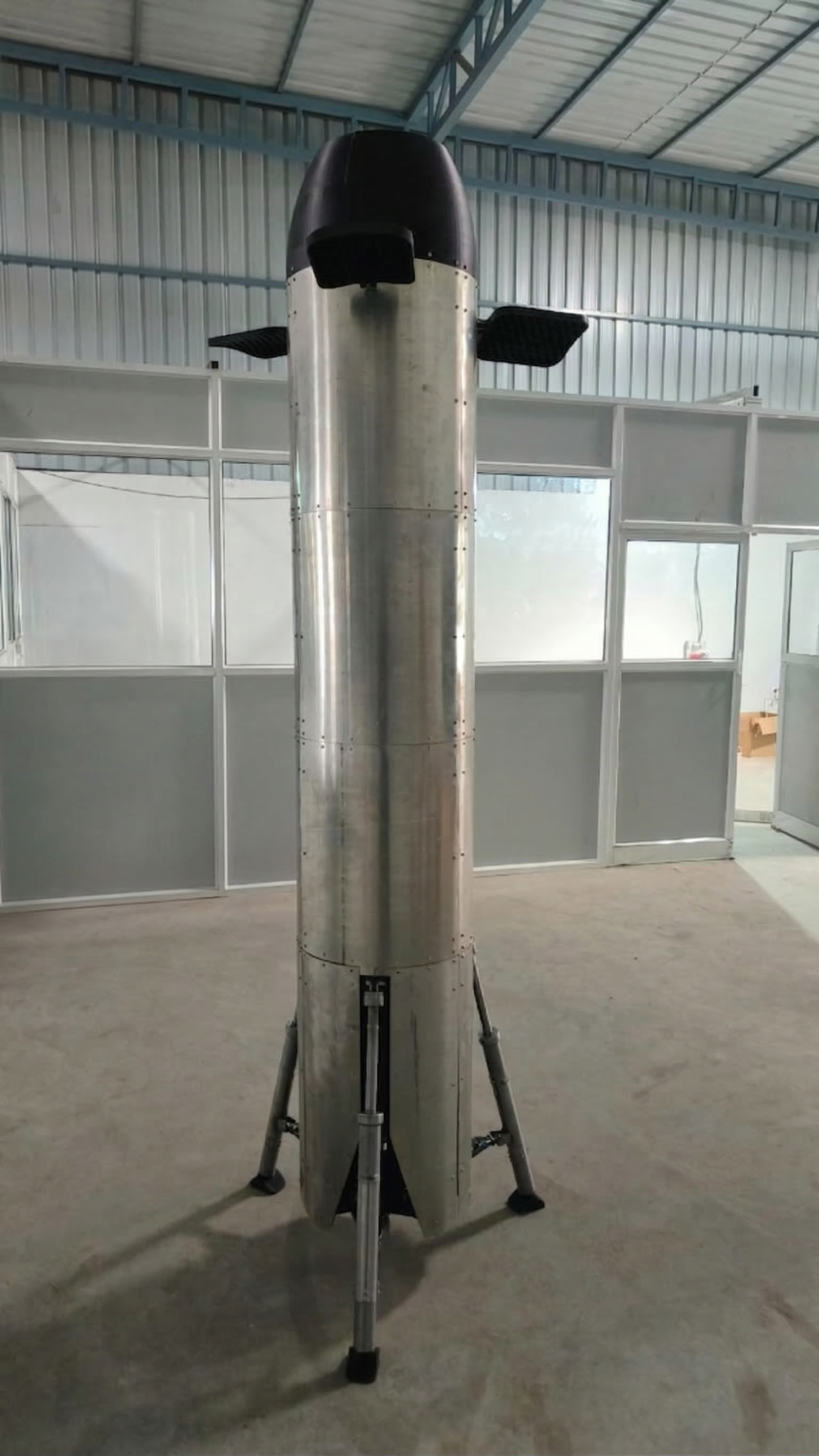
All of this feeds the headline act: the Astra C1 series of affordable, dedicated launch vehicles for small satellites, powered by Potentia engines. In April 2026 the company announced it was targeting 15 August 2026 for the suborbital test flight of a reusable rocket prototype — a three-metre, 200-kg vertical-takeoff-and-landing “hopper” designed, manufactured and assembled at its Pune facility, doubling as a flight-relevant validation platform for its cryogenic subsystems.
The startup is backed by a memorandum of understanding with ISRO for collaborative development and testing, an advisory board of veteran propulsion experts from ISRO, HAL and DRDO, and founders Suyash Bafna, Immanuel Louis and Md Taj Baba. The stated plan is a working reusable prototype within two to three years — with missile-grade guidance systems and turbopump-fed engines, among the toughest engineering challenges in aerospace, firmly in its sights.
Watch: Astrophel’s engine test footage (official company video).
Why it matters
India opened its space sector to private players in 2020, and the space economy is projected to reach $44 billion by 2033. Yet most high-performance space hardware is still imported — and every valve, pump or actuator that gets built in Pune instead is a piece of supply-chain sovereignty earned. Astrophel is also playing the long commercial game: by selling certified cryogenic subsystems first, it funds the rocket programme with revenue rather than promises.
From a Rs 6 lakh hot fire in 2023 to a cryogenic hardware catalogue courted by ISRO, to a hopper built to land rather than litter — the Pune startup’s trajectory reads like a working answer to the question India’s space ecosystem keeps asking: can world-class rocketry be built at Indian costs? If Astrophel’s hopper lands the way its engines lit, the country’s small-satellite boom will have a homegrown ride — designed, built and reused on Indian soil.
Keep reading: Propelling Dreams: Inside Bellatrix Aerospace, the Bengaluru Startup Putting Indian Propulsion in Orbit · The Decoy That Fights Back: Inside JSR Dynamics’ MGLD-N Naval Aerial Decoy · More Aerospace & Defense stories
Like stories like this? Add Exceptional Technology as a preferred source on Google to see more of our reporting in your search results and Discover feed.