


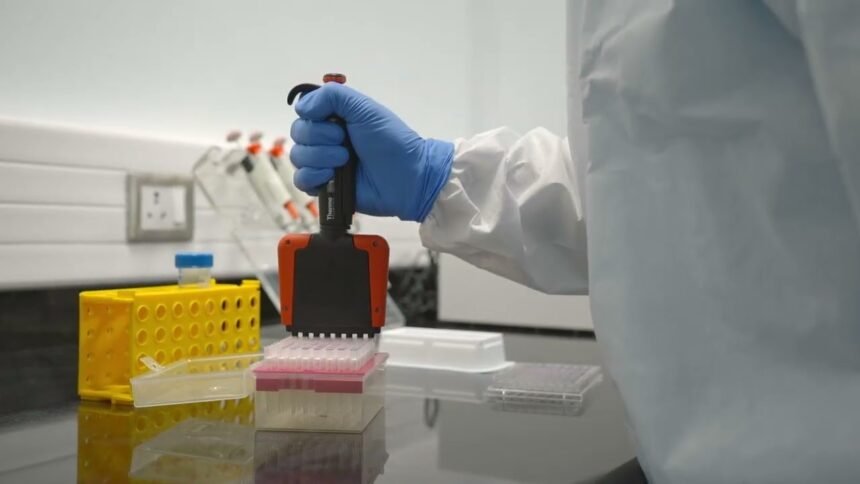
Some of the most powerful cancer treatments ever invented have been priced like private jets — CAR-T cell therapy, the “living drug” that reprograms a patient’s own immune cells to hunt cancer, can cost upwards of ₹3 crore in the United States. For most Indian families, that price simply closes the door. In Mumbai, a spin-off from IIT Bombay spent a decade proving that the door can be opened for one-tenth the cost. ImmunoACT’s NexCAR19 — actalycabtagene autoleucel — is India’s first indigenous CAR-T cell therapy, designed, engineered and manufactured entirely in India, and it is already rewriting what advanced cancer care can look like for the country’s patients.
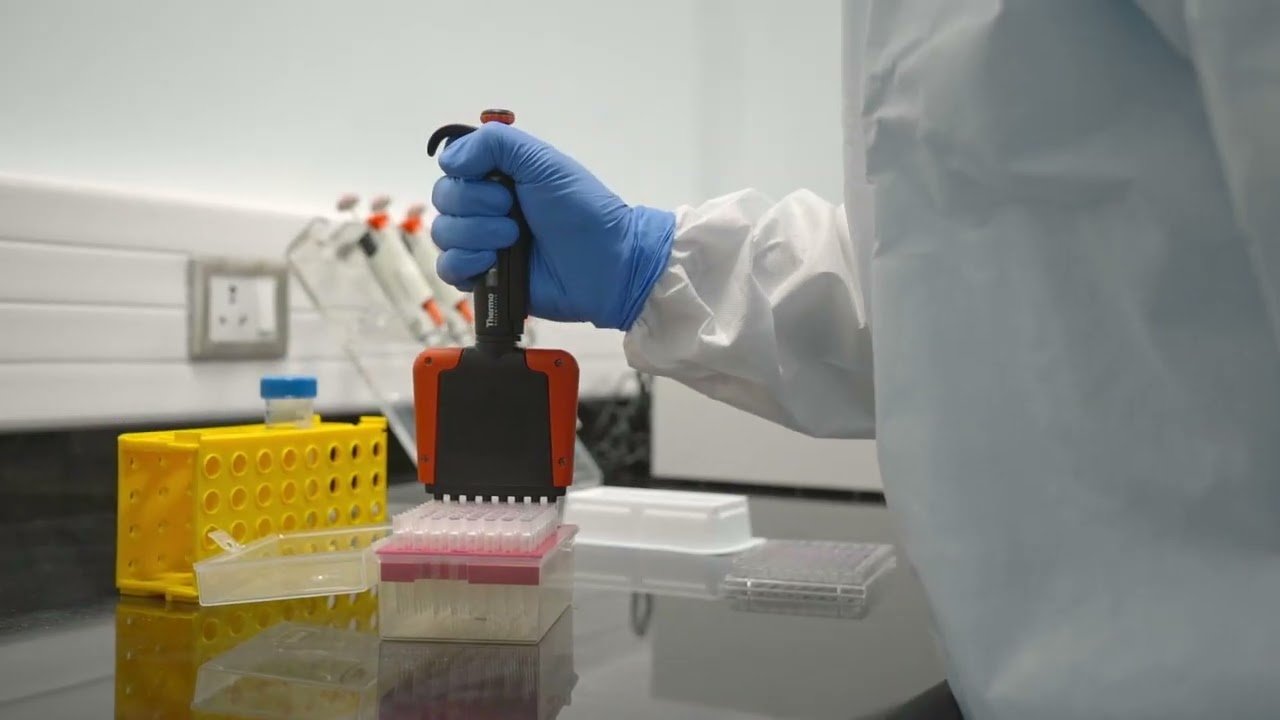
Image: ImmunoACT (official company image) — inside the company’s WHO-certified GMP facility, where every NexCAR19 dose is engineered end-to-end in India.
Born at IIT Bombay
ImmunoACT was established in 2018 as a spin-off from IIT Bombay’s Biosciences and Bioengineering department, building on research that began in 2013. The company says every aspect of its CAR-T platform — from construct design to manufacturing — was developed entirely in India, with no in-licensed technology and no external dependencies. Its intellectual property is fully proprietary, the company says, and is now protected by a granted United States patent, a global validation of Indian-origin science.
The trajectory has been swift. ImmunoACT received market authorisation from the Central Drugs Standard Control Organisation (CDSCO) in October 2023 — India’s first CAR-T approval — and in April 2024 the therapy was formally dedicated to the nation by the President of India, Droupadi Murmu. In 2025, the company’s Phase I/II clinical results were published in The Lancet Haematology, one of the world’s most prestigious journals in the field.
The humanised edge
CAR-T therapy works by extracting a patient’s own T cells, genetically engineering them in the lab to recognise and destroy cancer cells carrying the CD19 protein, and reinfusing them into the body. Where early Western therapies used mouse-derived antibody fragments, NexCAR19 uses a novel humanised antibody construct. The company describes it as the world’s first humanised CAR-T construct — a design choice associated with a lower risk of the severe neurological side effects that have shadowed earlier products.
More Read
The numbers tell a confident story. Published Phase I/II data show a 73% overall response rate in B-cell acute lymphoblastic leukaemia (B-ALL) and 72% in B-cell non-Hodgkin lymphoma (B-NHL). A separate real-world study, published in the journal Blood Cancer Journal in August 2026 and spanning 250 patients across 56 treatment centres, found that 88% of relapsed or refractory B-ALL patients saw their cancer significantly shrink or clear within 28 days of treatment, with 75% maintaining that response at three months — efficacy the company’s co-founder and head of scientific programs, Dr Atharv Karulkar, describes as comparable to globally approved CAR-T therapies.
Manufacturing muscle
Cell therapy is as much a manufacturing achievement as a scientific one, and this is where ImmunoACT’s engineering shines. The company says it has achieved a 98% manufacturing success rate — every patient’s cells must be engineered reliably — at its WHO-certified GMP facility, and it delivers therapies from apheresis to infusion in approximately 20 days, roughly half the 40-plus day timelines typical of global programmes. A second GMP facility is now online, and the company is expanding capacity from 750 to 1,500 patients a year.
The scale is already striking: more than 600 infusions have been delivered across 130+ authorised treatment centres in India. And in October 2026, Command Hospital (Eastern Command) in Kolkata administered NexCAR19 to a serving soldier battling relapsed B-cell ALL — the therapy expanding into the armed forces’ own hospitals, a landmark for indigenous medical technology.
Cancer care, democratised
The economics are what make this an Indian technology story rather than just a medical one. NexCAR19 is priced around ₹30–40 lakh — approximately one-tenth of the ₹3–4 crore that Western CAR-T therapies cost. With over 50,000 new leukaemia cases diagnosed in India every year and oncology care largely paid out of pocket, the company’s affordability mission, backed by outcome-based financing partnerships, is aimed squarely at the access gap.
Founded by IIT Bombay professor Dr Rahul Purwar and incubated through the Society for Innovation and Entrepreneurship (SINE), ImmunoACT is now looking beyond blood cancers. Its pipeline is expanding toward solid tumours and autoimmune disorders, and in 2026 the company signed its first Africa partnership — an Indian cell-therapy platform beginning to reach patients beyond India’s borders. The living drug, it turns out, was always going to be made in India. Now it is made for the world.
Keep reading: The Living Drug, Made in India: Inside ImmunoACT’s CAR-T Revolution at One-Tenth the Global Cost · From Bengaluru to Britain: Inside Renalyx’s AI-Powered Dialysis Revolution · More Chemicals, Materials & Life Sciences stories
Like stories like this? Add Exceptional Technology as a preferred source on Google to see more of our reporting in your search results and Discover feed.







