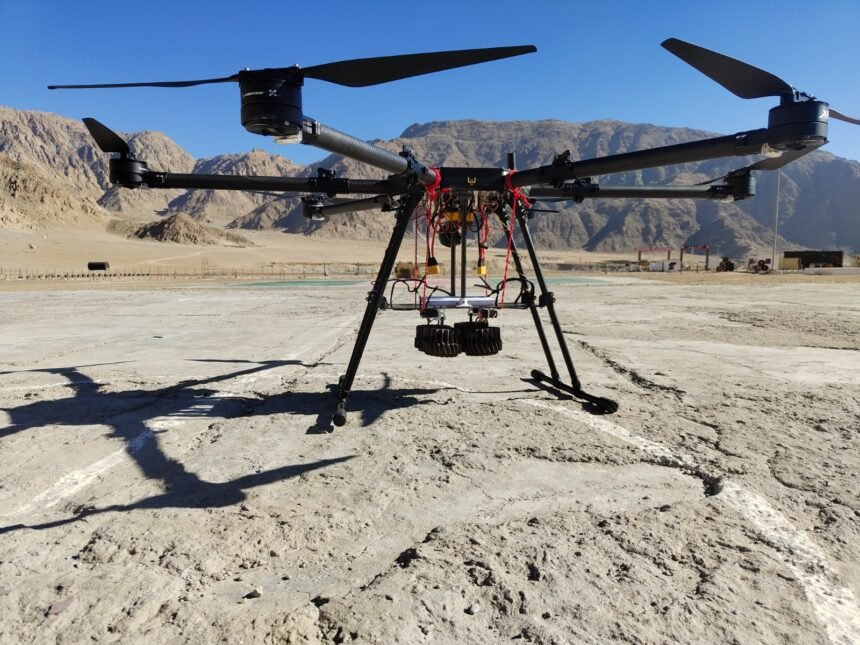
At Shinkula Top in Ladakh, nearly 16,400 feet above sea level, the air is so thin that rotors barely bite it, batteries sag in the cold, and a gust can tumble anything not built for the abuse. For soldiers posted at remote border outposts up there, getting basic supplies — medicines, food, equipment — can take three to four days over terrain that punishes every convoy. An Ahmedabad startup has been flying a different answer over those same ridgelines.
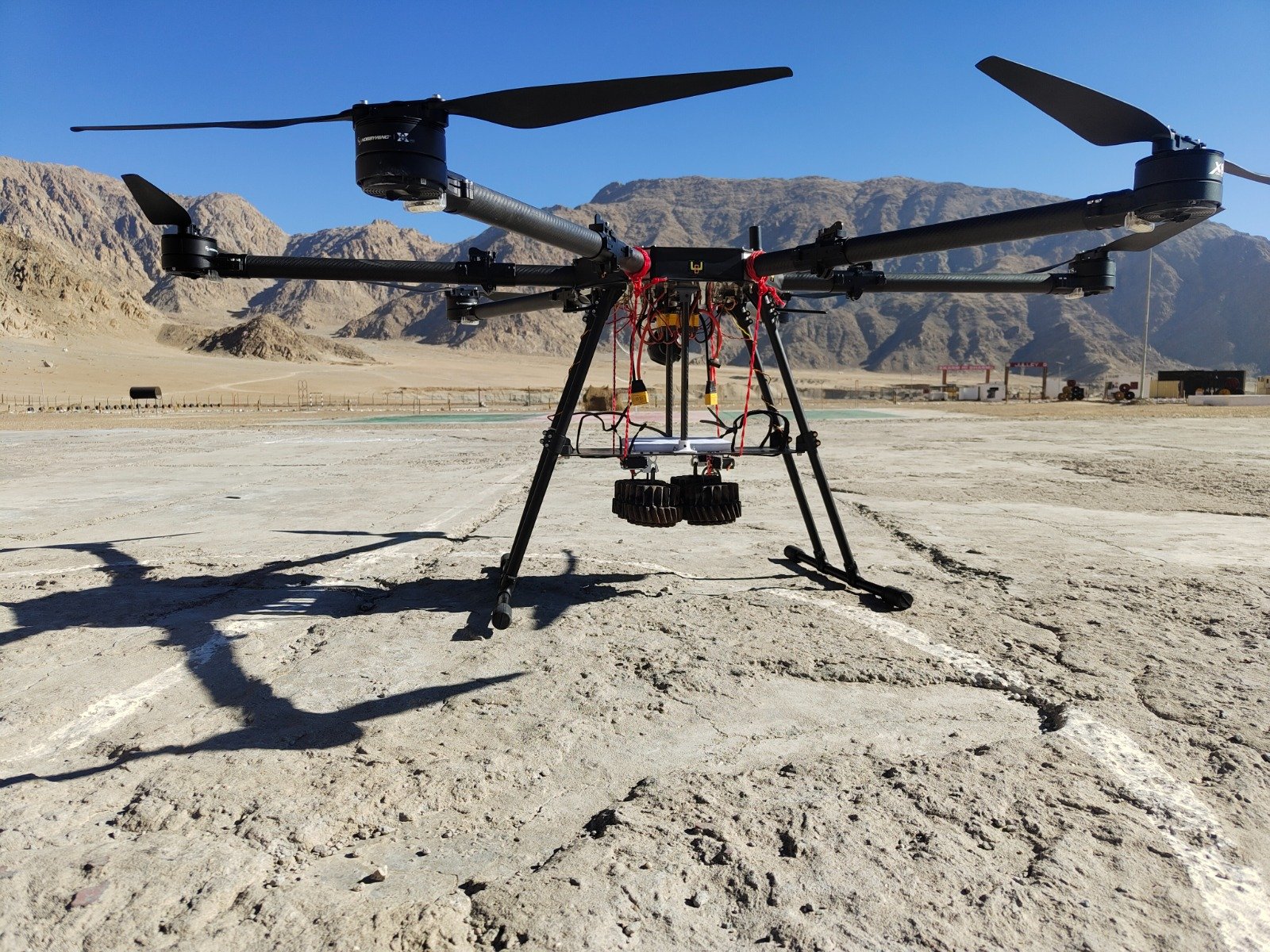
The company is Bajrang UAV Private Limited. Founded by electrical engineer Umang Joshi, it designs and builds its drones in-house at a manufacturing facility in Ahmedabad, and its PX4P2300 heavy-lift cargo drone has now been tested at Shinkula Top carrying a 30-kg payload in extreme Himalayan conditions — a high-altitude logistics demonstration reported across India’s defence press, from IDRW to Indian Defence News.
Built for air that barely lifts
High-altitude flight is an unforgiving engineering exam. Low air density slashes rotor efficiency, sub-zero temperatures degrade batteries, and unpredictable mountain winds punish any weakness in flight control. The company says the PX4P2300’s biggest development battle was tuning its control systems — particularly the PID settings that govern stability — to deliver a stable 30-kg lift and around 20 minutes of endurance at altitude. The engineering work spanned propulsion, power management, flight software and structural design, all re-optimised for low-oxygen conditions.
It is that kind of ground-up optimisation that defence logistics demands. Heavy-lift UAVs like the PX4P2300 are built to move medicines, food packets, communication equipment, ammunition and emergency supplies to remote posts where roads take days and helicopters are expensive and scarce — a capability as relevant to disaster response and humanitarian missions as it is to frontline operations.
A full fleet, from watchers to kamikazes
The Ladakh-tested PX4P2300 is one of ten payload-drone models in a catalogue that spans the defence drone spectrum. Bajrang UAV builds 7 to 8 surveillance drone models — with up to 55 minutes of endurance, 10x and 20x optical zoom cameras, thermal imaging for night operations and laser rangefinders for target coordinates — alongside hybrid surveillance-plus-payload platforms, compact spy drones, and 2 to 3 kamikaze loitering-munition models that navigate autonomously to pre-fed coordinates at up to 130 km/h. Payload capacities across the lineup range from 1–2 kg up to 50 kg, and every platform is built to operate from −20°C to +55°C, with failsafes, geofencing and live telemetry as standard.
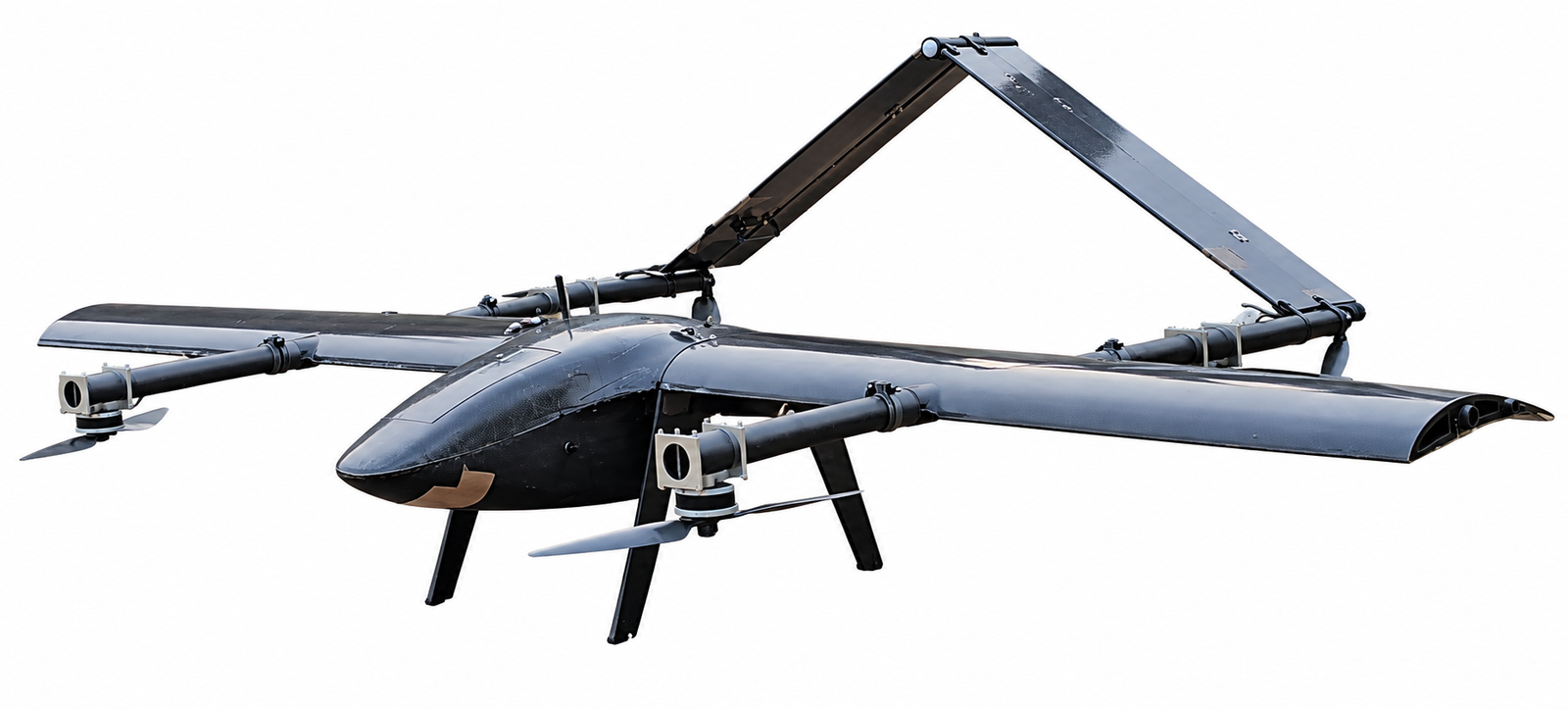
The company is now developing VTOL and swarm drones as its next frontier, extending the same rugged design philosophy to new mission profiles.
More Read

From wedding shoots to the Army’s supply chain
The company's path to Shinkula Top is as remarkable as the hardware. Joshi, a B.Tech in Electrical Engineering from Gujarat Technological University, started with drone services for events and photography in 2017 — when, as he told Startup Pedia in an exclusive interview, a rejected visa for higher education abroad pushed him to build at home instead. A first defence order in 2020 — a custom surveillance drone for an Army unit — opened his eyes to the sector's potential, and in 2023 he invested around Rs 50 lakh in a dedicated manufacturing facility and office in Ahmedabad, deliberately sited in a green zone so the team could test-fly freely while developing new products.
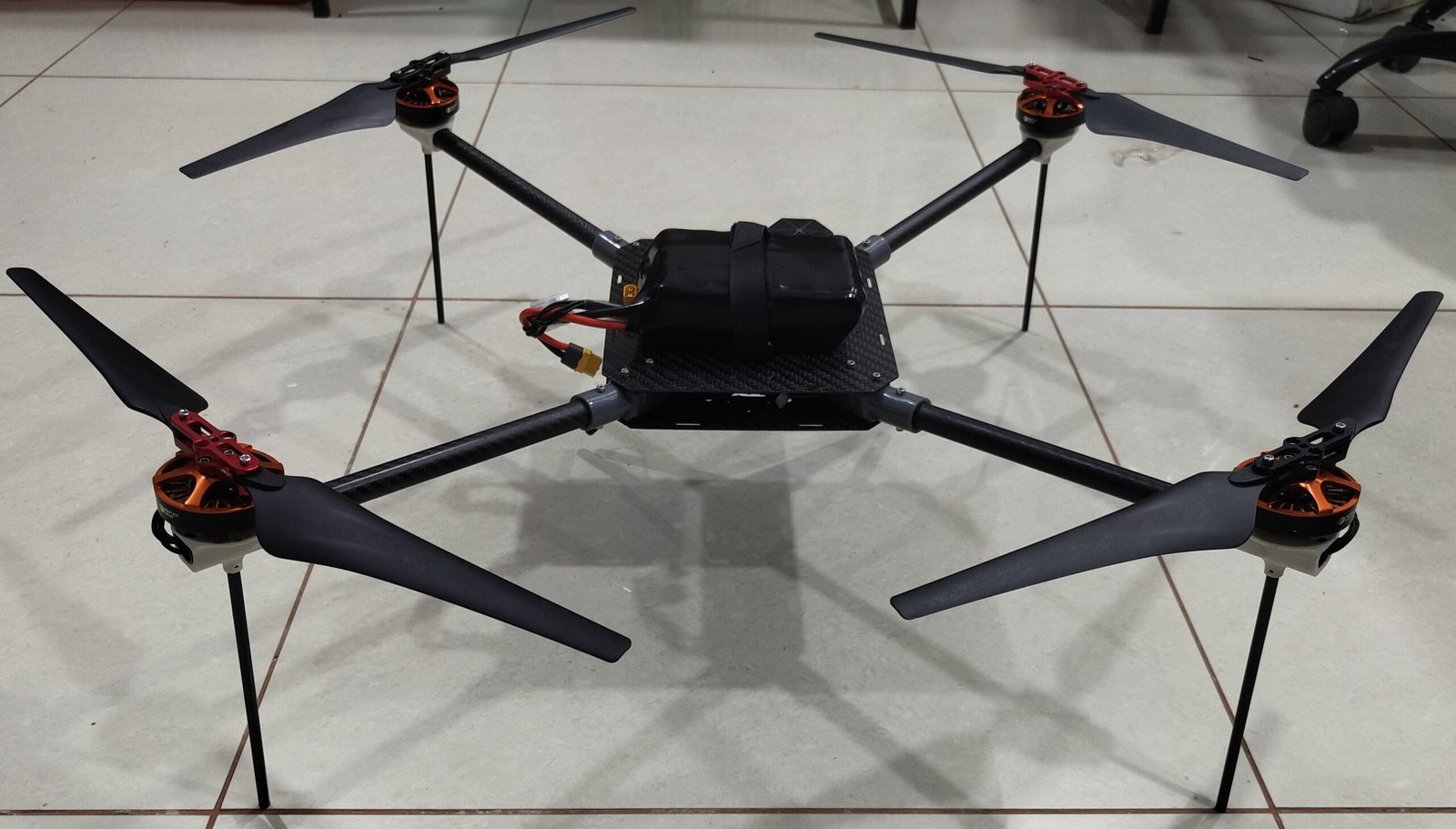
Today, with a team of just 8 to 10 people delivering 5 to 7 drones a month, the Indian Army is the company's largest customer. Bajrang UAV also supports the Border Security Force and Indian Railways, is in active discussions with the Indian Navy, and has conducted demonstrations for ISRO — where, the founder says, the interest centred on high-precision hovering. Revenue has grown from Rs 11 lakh in FY24 to Rs 63 lakh in FY26, and the ambition now is bulk central-government contracts of 1,000 or more units.
A ten-person team in Ahmedabad, flying 30 kilos where the air can barely hold a helicopter: Bajrang UAV is showing what Indian defence engineering looks like when it starts in a garage, earns its wings one trial at a time, and aims straight for the roof of the world.
Keep reading: Built to Hunt, Not Hover: Inside Apollyon's Ahuti Mk II, the 498 km/h Drone Interceptor · Six Lakh and a Hot-Fired Engine: Inside Astrophel Aerospace, the Pune Startup Building India's Reusable-Rocket Hardware · More Aerospace & Defense stories
Like stories like this? Add Exceptional Technology as a preferred source on Google to see more of our reporting in your search results and Discover feed.