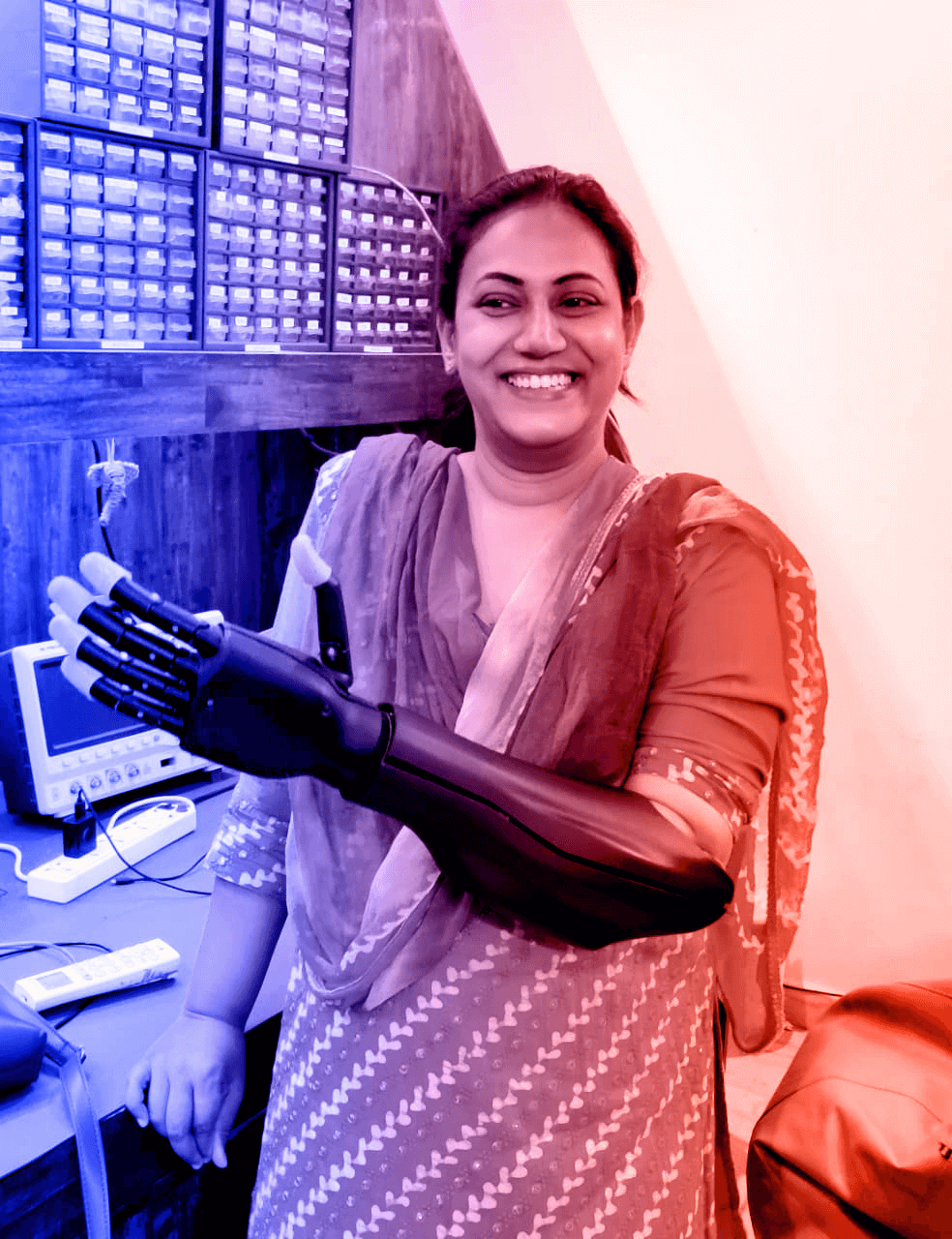
At sixteen, Vamsi Kolapaka lost his lower arm to an electric shock. For years after, he lived on a monthly disability pension of Rs 2,000, barely leaving the house. Today, at 24, he is the brand ambassador of a bionic hand — typing, riding his bike, cutting vegetables, and counselling other amputees on how to live independently with it. The hand he wears is called KalArm, and the company behind it describes it as India’s first fully functional bionic hand.
Behind KalArm stands Makers Hive, a Hyderabad deep-tech startup with an unusual origin story. In 2018, twenty-three social and tech enthusiasts came together with a shared inspiration: Dr A. P. J. Abdul Kalam. Founder and CEO Pranav Vempati says Kalam’s ideals guided their thinking towards cutting-edge assistive technology for the socio-economic realities of the developing world — and the hand itself is named in the former President’s honour.
What KalArm can do
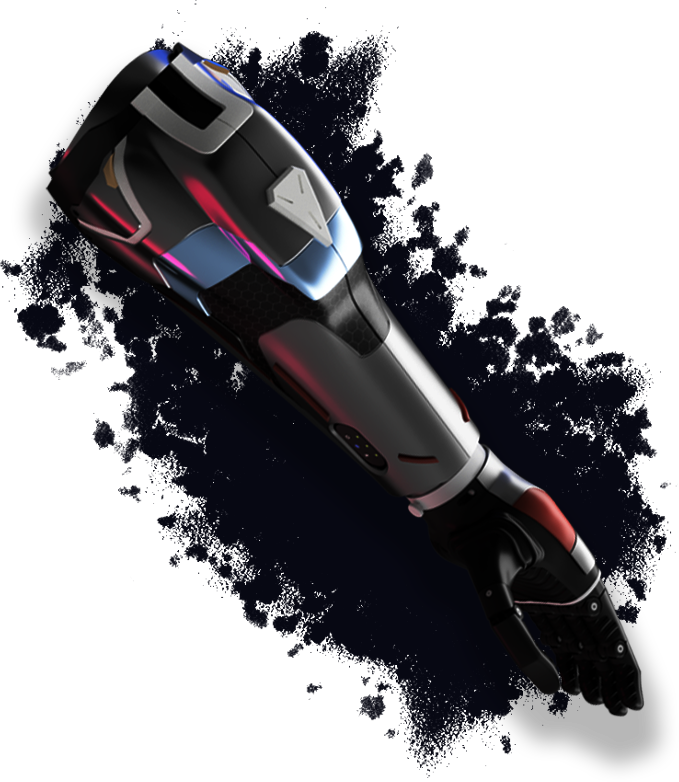
KalArm is a 3D-printed, myoelectric bionic hand built for below-elbow amputations. Embedded EMG sensors read signals from the flexor and extensor muscles in the forearm, so the user controls the hand simply by intending to move it. The hand offers eighteen pre-defined grip patterns — from a pinch to a power grip to a handshake — with six more grips each user can customise to their own routines, and it can lift up to 8 kilograms.
The engineering is deliberately frugal. The hand’s 113 components are sourced from vendors across India, with nearly everything manufactured domestically apart from the microchips. The company even engineered its own EMG sensors in-house: imported sensor pairs cost around Rs 1.4 lakh, while the company’s cost under Rs 20,000. The result is a device priced between Rs 4.5 lakh and Rs 6 lakh — roughly a tenth of the Rs 30-40 lakh that comparable international prosthetics cost.
It is also a connected device. The KalAssist mobile app pairs with the hand over Bluetooth, delivering over-the-air firmware updates, monitoring the health of the battery, sensors and motors, and letting users view their battery level — the hand carries a 2,850 mAh on-fit battery. Users can customise the colours of the outer shells to their own liking, and every unit ships with a forearm socket tailor-made for its user.
At a tenth of the global cost
The company says it took seven years, six product iterations and close to Rs 30 crore in funding to arrive at the current KalArm. The company is an ISO 13485:2016 certified medical-device maker, holds fourteen IPRs, and manufactures at its facility inside the Andhra Pradesh Medtech Zone in Visakhapatnam. It says more than 85 people with upper-limb loss have already been fitted with the hand — several of whom have moved from disability pensions to independent incomes of up to Rs 30,000 a month — and beneficiaries receive five days of activities-of-daily-living training to adapt with confidence.
More Read

What comes next reads like a scale-up story. The company says a lighter KalArm Lite, priced under Rs 3 lakh, is slated for launch, followed by entry into international markets. And the platform is already drawing attention beyond prosthetics: the company says its bionic hand is being tested as an end effector for robotic systems, with interest from ISRO.
From a group of twenty-three enthusiasts inspired by a President who dreamed of technology serving the nation, to a bionic hand that is now helping amputees across India live and earn independently — Makers Hive’s story is a reminder that world-class engineering does not have to be world-priced.
Keep reading: Learning to Walk Again: Inside GenElek, the Delhi Startup Building AI-Powered Exoskeletons · From Broken Cocoons to Bandages: Inside Fibroheal Woundcare, the Bengaluru Startup Healing Wounds With Silk · More Chemicals, Materials & Life Sciences stories
Like stories like this? Add Exceptional Technology as a preferred source on Google to see more of our reporting in your search results and Discover feed.