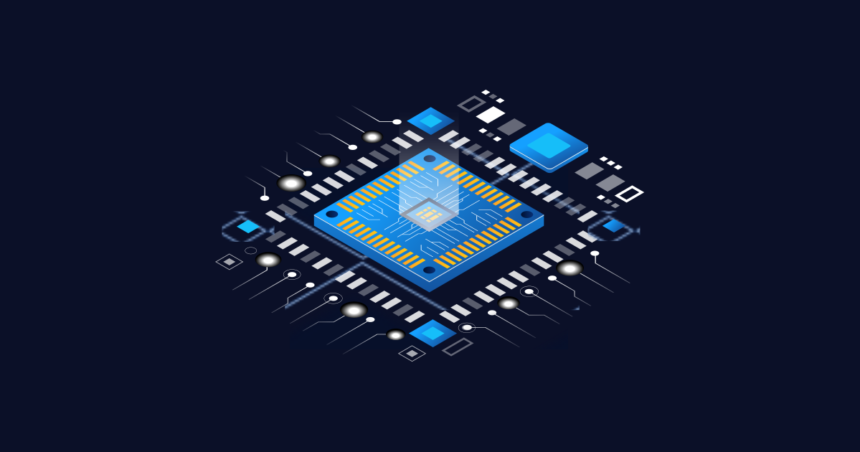
Every BLDC ceiling fan that hums in an Indian home carries a tiny imported secret: the controller chip that spins it is usually designed and fabricated far from India. In Greater Noida, a team of veteran chip designers is working to erase that secret. Vervesemi Microelectronics, a fabless semiconductor startup founded in 2017, has taken five of its own chip designs from schematics to silicon — and become the first company approved under the Government of India’s Design Linked Incentive scheme.
The first name on the DLI list
The Design Linked Incentive (DLI) scheme, part of the Semicon India Programme, has approved 24 semiconductor design projects from Indian startups and MSMEs for financial support. Vervesemi was the first company approved under the scheme, and it is also supported under the Chips to Startup (C2S) programme. Its calling card is the analog signal chain — the circuitry that bridges the physical world and the digital one — where the company says it has built a portfolio of over 140 IP blocks, 25 IC products, 10 patents and 5 trade secrets, as detailed in a Press Information Bureau release.
Founded by industry veterans — Rakesh Malik is Founder and CEO, Pratap Narayan Singh Co-Founder and CTO — Vervesemi builds chips for space, defence, industrial automation and smart energy applications.
Five chips, real silicon
The company’s five strategic chips have been taped out and fabricated across UMC and TSMC foundries:
- Data Acquisition Avionic Chip (55nm, UMC) — a multi-function chip for space systems, fabricated and now under customer evaluation, with production targeted for Q1 2027.
- BLDC Controller Chipset (110nm, UMC) — with a 90% indigenous bill of materials: one chip built around an indigenous RISC-V microprocessor, a quad gate-driver chip with DC-DC, and a power MOSFET. Designed for fans, exhaust systems, solar and power inverters; the gate-driver/MOSFET chips are fabricated and under customer evaluation, with production targeted for Q4 2026. The BLDC motor controller project was handed to Vervesemi by Minister Ashwini Vaishnaw on 20 March 2025, and the ministry later reported first-pass silicon success for the design.
- Precision Motor-Control Chip with RISC-V (55nm, UMC) — for drones, EVs and industrial automation; fabricated and under testing, with production targeted for Q3 2026.
- Energy Metering Chip (180nm, TSMC) — designed for Class 0.2S precision in smart energy meters; fabricated and tested, with production targeted for Q4 2026.
- Bridge Applications Chip (180nm, TSMC) — for weighing scales and force-touch systems; fabricated and tested, with production targeted for Q3 2026.
Analog is the hard part
Vervesemi’s speciality is analog design — the domain where signals are continuous, noise is the enemy, and precision is won at the transistor level. The company’s differentiator, it says, is machine learning woven into its signal-chain design: self-healing and fail-safe mechanisms, adaptive calibration and predictive diagnostics that help chips hold accuracy in harsh environments and compensate for process drift and aging.
From lab to line
In a roughly $10 million (about ₹90 crore) Series A round, Vervesemi raised the capital to do three things: accelerate commercialisation of its machine-learning-enhanced analog signal-chain portfolio, take its existing silicon through production readiness and qualification while growing its engineering and applications teams, and expand its IP portfolio and R&D — with its sights set on markets across Asia and the United States. The company says it is already among the first Indian firms exporting semiconductor IP globally, with its analog IPs in products from global manufacturers.
More Read
If the production schedule holds — two chips this quarter and next, and the avionics chip in Q1 2027 — the ceiling-fan controller spinning in Indian homes, the drone motors and the smart meters on Indian walls may soon carry silicon dreamed up in Greater Noida. That is what the DLI scheme was built for: turning India’s chip designers into chip shippers.
Keep reading: From 5G to 6G: Inside Jio, the Indian Operator Building an Indigenous 6G Stack for the World · From Silicon to Systems: Inside IndieSemiC, the Ahmedabad Startup Building India’s First VEGA-Based LoRa Module · More Industrial Automation & Technology stories
Like stories like this? Add Exceptional Technology as a preferred source on Google to see more of our reporting in your search results and Discover feed.