Every chip and every solar cell starts life as a single crystal — a flawless cylinder of silicon, grown atom by atom from a pool of molten feedstock. The machines that grow these crystals are some of the most demanding pieces of industrial equipment on the planet, and for decades India has bought them from Germany, Korea, the United States and, above all, China. A Chennai deep-tech company has spent more than a decade changing that.
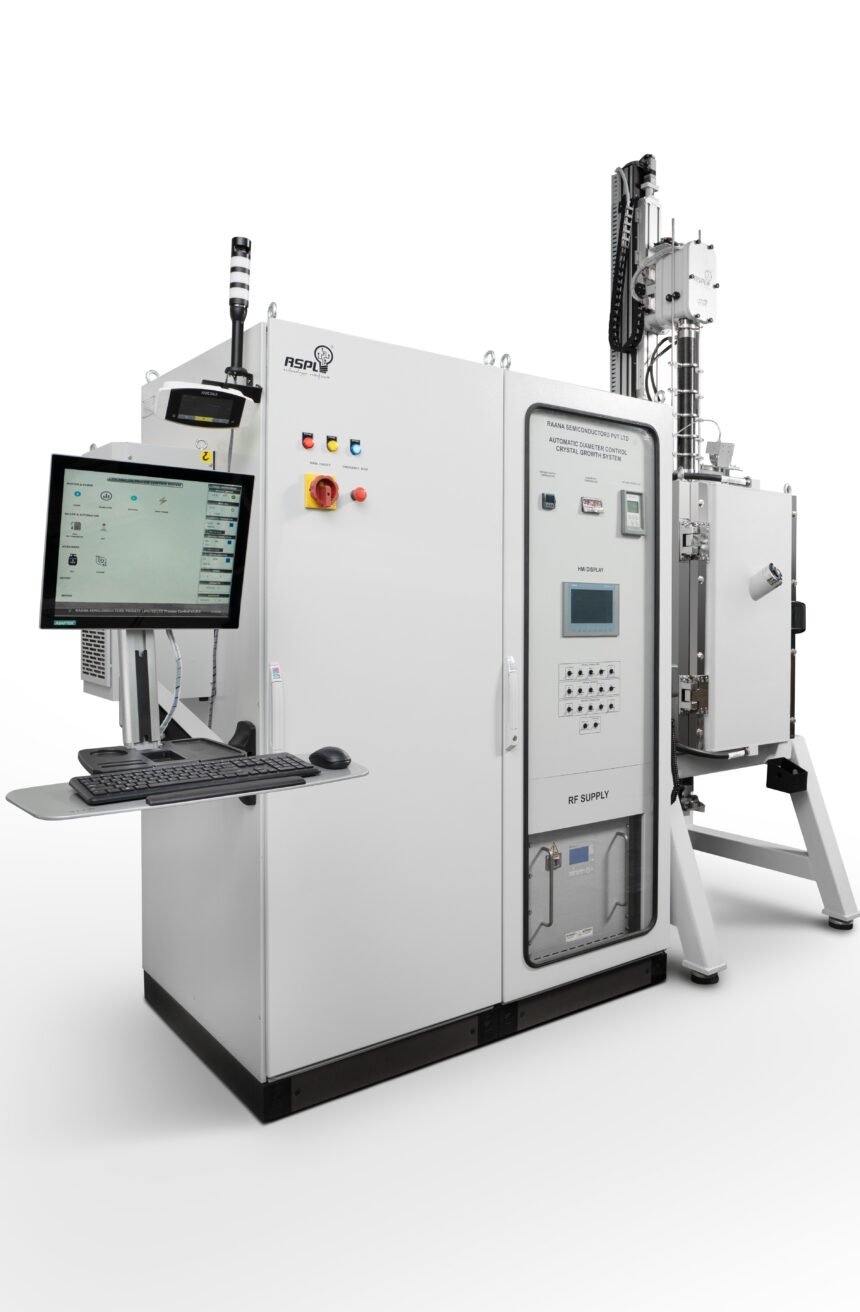
Raana Semiconductors Private Limited (RSPL) describes itself as India’s first and only crystal-growth technology company, and its record backs up the ambition. The company designs and builds Czochralski crystal growers — RF-heated pullers with fully automated diameter control that melt high-purity silicon at 1,420°C and draw out single-crystal ingots with nanometre-precise pull-speed control. A single growth run can take 48 to 72 hours, with the margin for error effectively zero. The company says its machines are about 70% localised, with the localisation level improving with every generation.
The hardware is already working across India’s strategic research establishment. Raana’s site lists 44 deployed systems, and the company’s machines producing 2-, 4- and 6-inch ingots are running at defence, atomic-energy and national laboratories. Beyond silicon, the systems also grow germanium for infrared optics, lithium niobate and Nd:YAG crystals for quantum and photonics applications — materials that sit at the heart of strategic technologies.
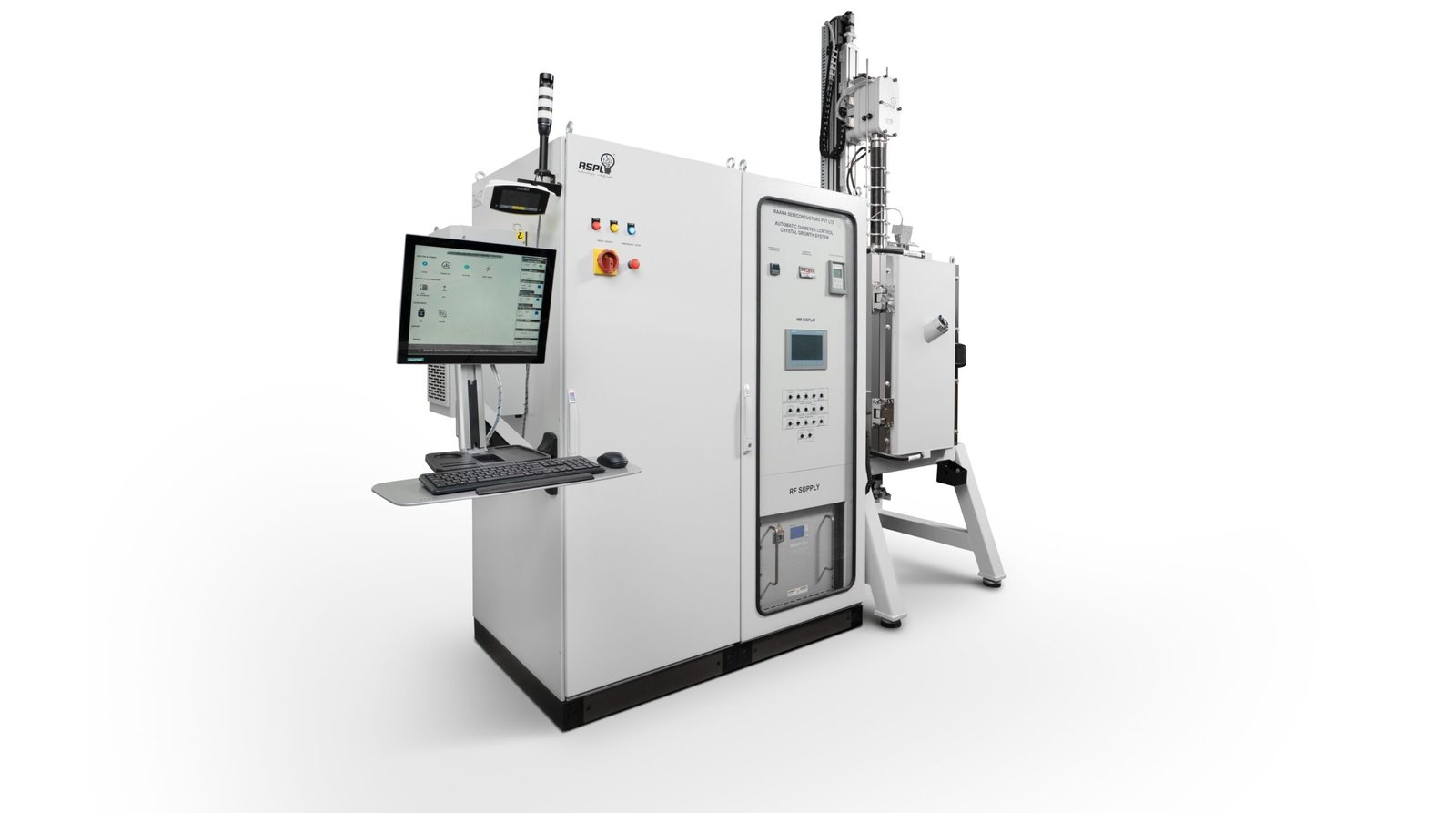
The company’s next leap is the one that could reshape India’s solar supply chain. In September 2026, founder and CEO Rajasekar Elavarasan told The Hindu BusinessLine that Raana is gearing up to launch its first commercial-grade 12-inch CZ single-crystal machine within 10 to 12 months, aimed squarely at India’s solar module manufacturers. A 40,000 sq ft facility is coming up in Hosur to build the new platform, and the company says it hopes to supply enough machine capacity to support roughly 10 GW of cell production over the next three years.
The timing is deliberate. Indian module makers such as Grew Solar, Vikram Solar and Swelect Energy are building ingot and wafer capacity, and the Ministry of New and Renewable Energy has proposed bringing ingots and wafers under local-sourcing rules from June 2028. The company is in talks for an order of about 2 GW of machine capacity from a major domestic solar manufacturer — an order it says could take its topline toward Rs 300 crore by FY28.
On the semiconductor side, Raana is playing a different game: for chips it intends to supply wafers rather than machines, keeping the full ingot-and-wafer manufacturing IP in-house, with a commercial 12-inch platform for chips targeted in about three years. In January 2026 the company raised $3 million in seed funding led by the Equirus Innovatex Fund and Artha Venture Fund, with IvyCap Ventures, PointOne Capital and CIIE Initiatives participating, to accelerate R&D.
More Read

Few companies work in a technology layer this deep, where one machine decides whether a country can make its own chips and solar cells. After more than a decade of building crystal growers for India’s most demanding laboratories, Raana is taking its furnaces to the factory floor — and bringing India’s silicon backbone home.
Keep reading: The Factory That Talks Back: Inside Fynd Forge, Mumbai’s AI-Native Manufacturing OS · The End of Air Cooling: Inside Refroid Technologies, the Hyderabad Startup Plunging India’s AI Data Centres Into Liquid · More Industrial Automation & Technology stories
Like stories like this? Add Exceptional Technology as a preferred source on Google to see more of our reporting in your search results and Discover feed.