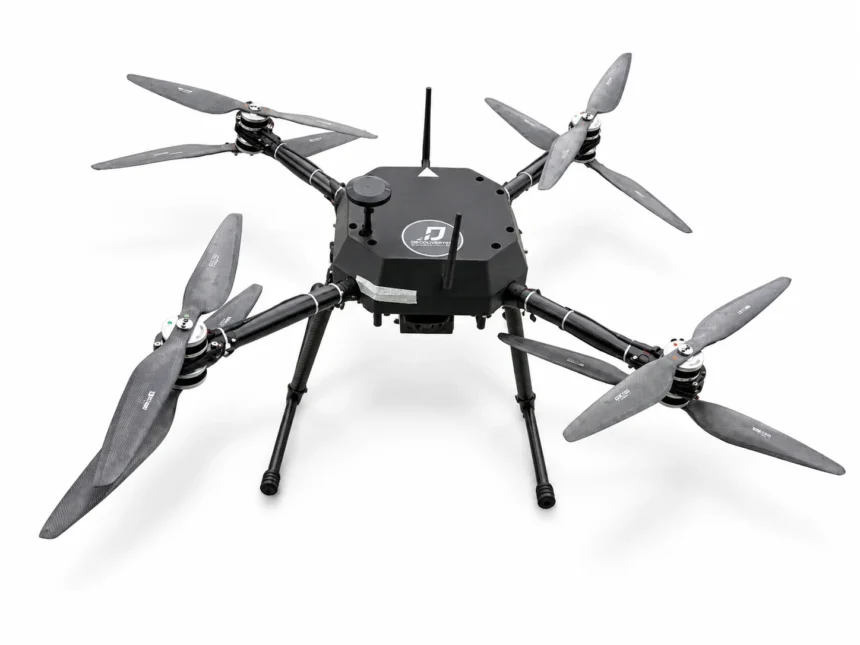
At one end of the runway of Indian drone-making sits the imported airframe, assembled here and flown there. At the other sits Decouvertes Future Tech of Pimpri-Chinchwad, Pune — a startup that designs and builds its own UAV airframes, flight software and ground-control station entirely in-house, down to the autopilot, the data links and the ground software, with locally sourced spares and, as the company puts it, no foreign firmware. From a 250-gram nano drone you can hold in one hand to a 12-kg heavy-lift coaxial workhorse, the company now fields seven products across defence, commercial and communications work.
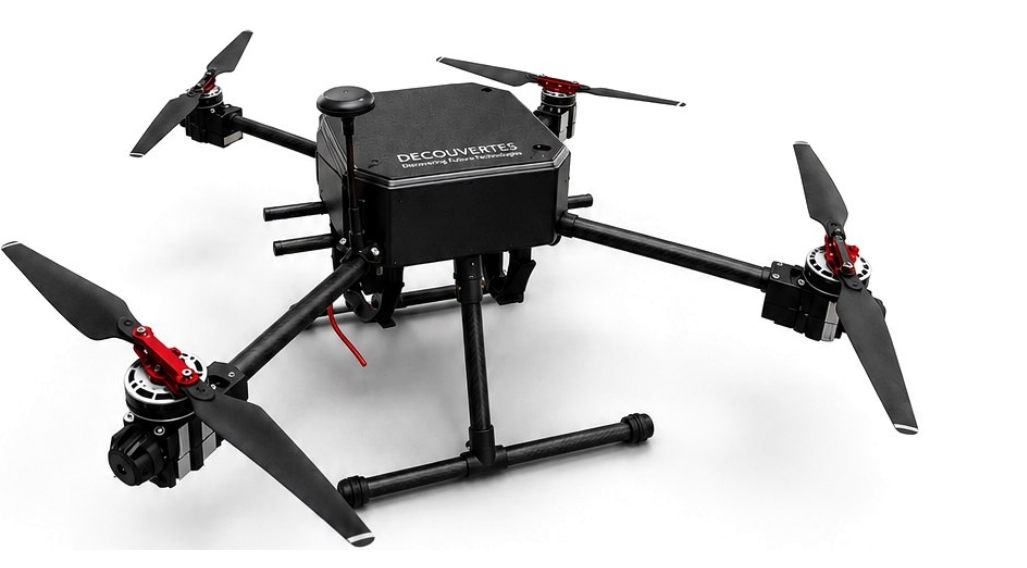
The newest arrival is the Vision Nano, announced in October 2026: a nano-class drone for video, surveillance and training weighing just 250 grams, with a claimed 25 minutes of flight endurance, a 5-kilometre range and a 20-megapixel camera. It is the small, agile end of a portfolio that quickly gets serious. The Vision 1.0 — the company’s first fielded quadcopter, built on a rigid carbon-fibre X frame with a 1.8-kg maximum take-off weight — was designed for defence training and drone-pilot programmes.
The defence-grade platforms are where the engineering ambition shows. The Vision 2.0 is a foldable heavy-lift quadcopter with GPS-denied navigation, AI autonomy and a stabilised PTZ camera: 4 kg maximum take-off weight, 35 minutes of hover endurance, 25 km of range and a 500 g payload, built for artillery spotting and electronic-warfare operations. The Vision 3.0 is a fixed-wing VTOL that takes off vertically and cruises at 70 km/h — 50 km of range, 45 minutes of endurance and a 1.2 kg payload for wide-area surveillance and mapping without a runway. And the Vision 4.0 is an eight-motor coaxial multirotor: 12 kg maximum take-off weight, 5 kg payload, 50 minutes of flight and 35 km of range, with redundant lift for heavy-payload and inspection missions.
Beyond the aircraft, the company builds mission payloads and communications. Its Shell Dropping System is a dual-safety release for 51 mm and 81 mm shells with heat-resistant materials rated beyond 120°C, compatible with the Vision 2.0 and Vision 4.0. The Sandesh Device is an encrypted mesh-communication unit for teams operating where there is no mobile network — no tower or internet connection required.
Founded in 2023, Decouvertes says its platforms have been through field demonstrations and trials with the Indian Army and defence partners. That the same young team ships everything from a 250-gram training drone to artillery-adjacent mission payloads — with its own autopilot and ground software stack — is exactly the kind of deep, in-house engineering India’s drone ecosystem has been waiting for. Pune builds the full fleet now.
More Read

Keep reading: Spinning India’s Electric Skies: Inside Nautical Wings Aerospace, the Bengaluru Startup Building the Motors That Fly India’s Drones · The Rocket That Returns: Inside OmSpace, the Ahmedabad Startup Building a Reusable Launcher on an Electric-Pump Engine · More Aerospace & Defense stories
Like stories like this? Add Exceptional Technology as a preferred source on Google to see more of our reporting in your search results and Discover feed.