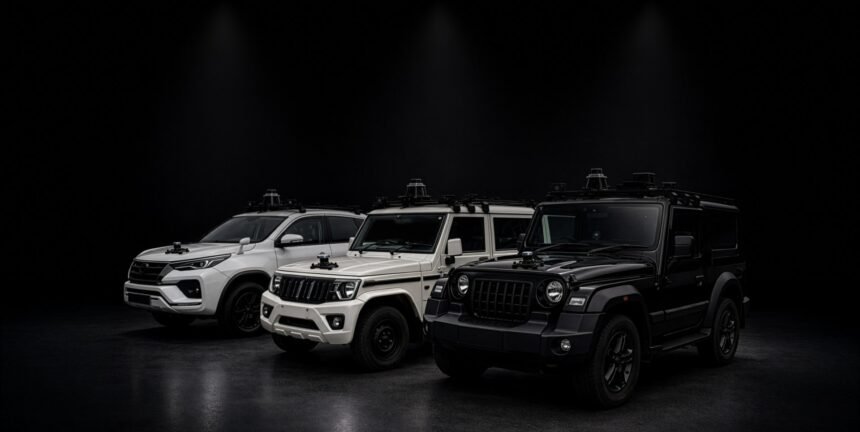
Picture a narrow single-lane road in rural India. A black Mahindra Thar rounds a bend and meets a truck coming the other way. There is no room to pass, no traffic light, no one directing traffic. In most cars, this is where the journey stalls into a long, awkward negotiation. In this Thar, the car simply reverses itself onto the shoulder, lets the truck through, and carries on its way. Then it does it again for a tanker, and again for an oncoming Fortuner and Bolero.
That Thar belongs to Swaayatt Robots, a Bhopal startup building something most self-driving companies never attempt: autonomous driving that fits any vehicle, on any road. The company was founded in 2015 by Sanjeev Sharma, and its goal is a universal autonomous navigation system — not a self-driving car, but the technology that can turn an ordinary car into one.
That universality is the whole point. Most autonomous driving is built for a specific model, on well-marked roads, in orderly traffic. Swaayatt built its system for Indian roads, where lanes are suggestions, cows wander into the carriageway, and oncoming drivers play chicken rather than give way. As Sharma told ANI in October 2026: “Our technology is designed to be installed in any type of vehicle. It is not developed for one particular car. We are building a universal driverless technology that could enable vehicles around the world to operate autonomously.”
The system rests on three pillars, described on the company’s own site. Perception builds a live understanding of the surroundings through cameras. Mapping and localisation pin the vehicle precisely within that picture, even where roads are unmarked and the environment keeps changing. And reinforcement-learning-driven motion planning and decision-making choose what to do next — when to edge forward, when to yield, when to reverse — in traffic the company describes as stochastic and adversarial, meaning unpredictable and uncooperative.
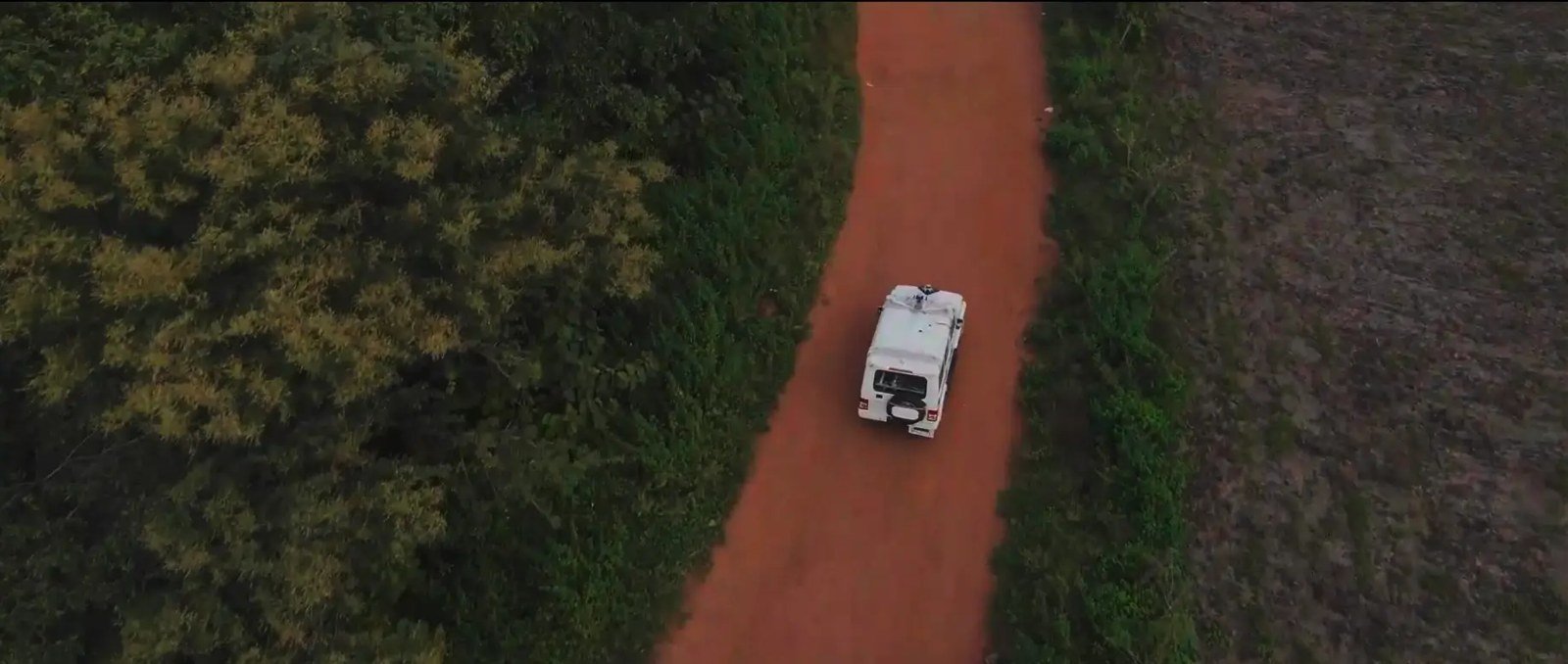
That decision-making is what the company’s demos are designed to show off. Swaayatt says it has run more than 80 demonstrations on Indian roads, and the company says its vehicles have covered over 60,000 km of testing across city streets, highways and off-road terrain. One early Bolero demo — the SUV negotiating two-way traffic on a single-lane road — travelled far beyond the tech world when Mahindra Group chairman Anand Mahindra shared it, praising a breakthrough from a tier-2 city. A later “Deep Xplorer” Thar demo showed the vehicle dodging bikes and cars on an off-road trail in real time. And the company’s toll-plaza demo shows a Bolero picking its way through converging lanes, parked trucks and broken barricades to find its own gate.
Sharma’s road to this point began at IIT Roorkee, where videos of MIT’s DARPA Urban Challenge entries first pulled him into autonomous driving. Research stints in Israel and at the University of Alberta followed, before he returned to India in 2015 to formalise Swaayatt Robots, initially with his own modest funds. More than a decade of demos later, the Bhopal team has grown to over 100 people, and the company raised $4 million from US angel investors in June 2024 to push its research further, with ambitions to take its technology to the Middle East, the UK and North America.
More Read

Here is the company’s own film of its toll-plaza demonstration:
The bet behind Swaayatt is a hopeful one: that the hardest roads make the best classroom. If a car can learn to negotiate a single-lane road in Madhya Pradesh, reverse politely for a truck, and thread a chaotic toll plaza without a fuss, then calmer roads anywhere else should hold few surprises. Bhopal’s little fleet of sensor-topped SUVs is not trying to build India’s fanciest car. It is trying to teach every car already on the road to drive itself — and to prove, on the toughest test track in the world, that it can.
Keep reading: Forged Carbon, Wireless Charging and 170 km/h: Inside Magron Novus, the Bengaluru Startup Building India’s Smartest Electric Motorcycles · Motors Without Magnets: Inside Tsuyo, the Delhi Startup Rewiring India’s EV Powertrains · More Automotive & Mobility stories
Like stories like this? Add Exceptional Technology as a preferred source on Google to see more of our reporting in your search results and Discover feed.