Most of India’s coastline is watched from above — by satellites, patrol boats and aircraft. The harder work happens below the surface, where pipelines, cables, ship hulls and harbour walls need eyes and hands in water too dark and too deep for divers. For years, the machines that did that work in Indian waters were imported, expensive, and serviced from abroad. A Chennai startup decided the whole stack — the robots, the cameras, the lights and the software that runs them — should be built in India.
That startup is Vikra Ocean Tech, founded in 2019 by Rajeuv Govindan and Rajagurunathan Krishnasamy. The company builds a modular ocean-robotics ecosystem designed so its machines work together: deep-water remotely operated vehicles (ROVs) for complex subsea tasks, autonomous surface vessels (ASVs) for offshore exploration, and amphibious crawlers for work along shorelines and in shallow, confined spaces. Tying them together is a single unified control platform, so one operator workflow can run very different machines across very different missions.
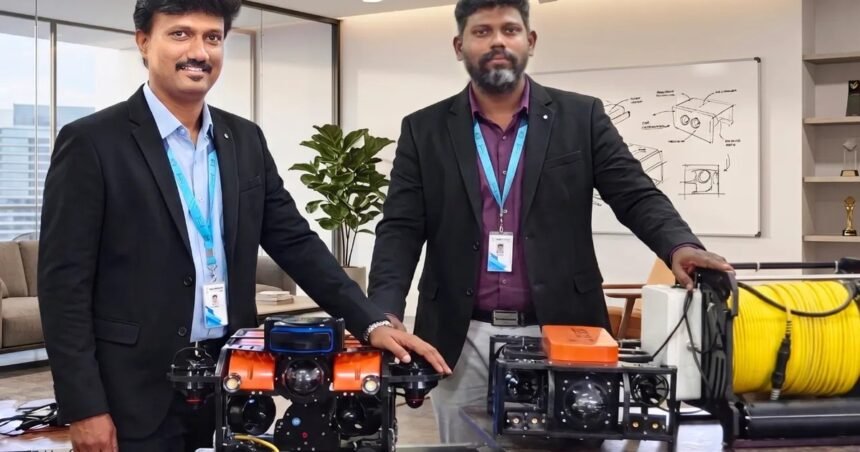
 Vikra Ocean Tech’s remotely operated vehicles, built in Chennai for subsea inspection and offshore work. (Image: Vikra Ocean Tech)
The engineering that sets Vikra apart is the part most buyers never see. Underwater, ordinary cameras go blind fast: light scatters, colours vanish, and murky water turns a survey into guesswork. Vikra builds its own imaging stack in-house — indigenous cameras, lighting systems, diver communication tools and AI-based video enhancement — so the picture coming up the tether is clear enough to make decisions on. The company says its deep-ocean camera and lighting systems are rated to 2,000 metres, and describes them as India’s first systems built to that depth.
That depth matters because the jobs Vikra targets are not laboratory demos. Its machines are built for hydrographic and bathymetric surveys that map the seafloor, high-resolution inspection of subsea assets, offshore exploration, port and harbour work, and disaster response — the kind of missions where sending a diver is expensive, slow or simply unsafe. The company’s ASVs, which survey wide areas of open water without a crew aboard, are already being used in offshore marine exploration, according to the company.
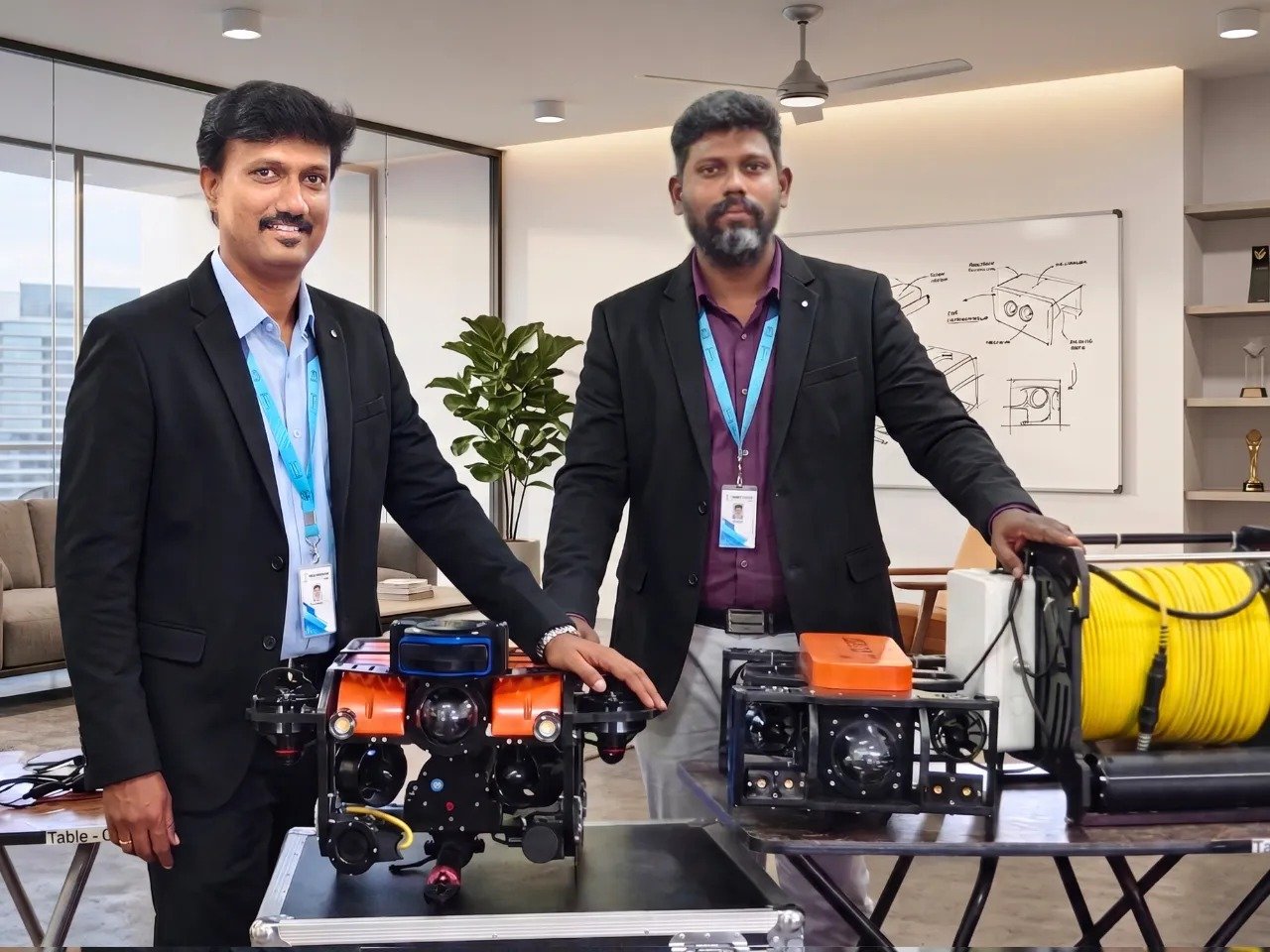
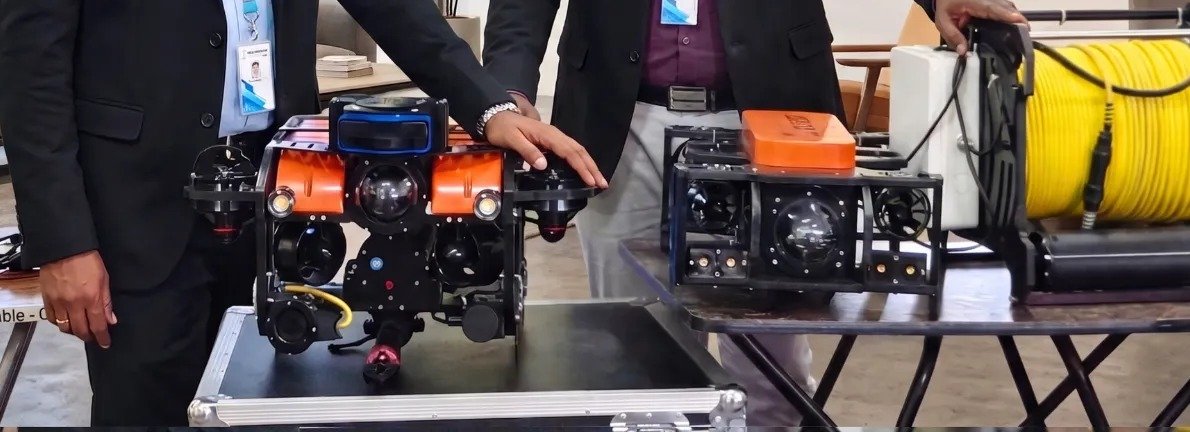 A close view of Vikra’s ROVs and their tether reel — the cameras, lights and thrusters that do the underwater work. (Image: Vikra Ocean Tech)
More Read

The defence establishment has noticed. Vikra says it has received two grants under iDEX, the Ministry of Defence’s Innovations for Defence Excellence programme — one from the Indian Army and one from the Indian Coast Guard — alongside other innovation awards. It has also signed a memorandum of understanding with the Ministry of Ports, Shipping and Waterways, the Maritime India Foundation and the National Technology Centre for Ports, Waterways and Coasts at IIT Madras, after winning their Marathon Challenge, to accelerate autonomous and intelligent maritime technologies.
In April 2026, Vikra raised $1 million in a seed round led by Finvolve, with participation from India Accelerator, to scale manufacturing, strengthen its sales pipeline across defence and public-sector customers, and build recurring revenue through service contracts and annual maintenance agreements. Ashish Bhatia, co-founder of Finvolve and founder and CEO of India Accelerator, said subsea robotics is fast becoming a strategic priority for India across defence, infrastructure and disaster response, and that Vikra’s fully indigenous, integrated stack combines deep-tech innovation with strong on-ground validation.
The founders frame the mission in exactly those terms. Rajagurunathan, Vikra’s co-founder, said the company’s vision is to build a globally competitive ocean robotics ecosystem from India, reducing the country’s dependence on imported systems while delivering robust, cost-effective solutions built for real-world conditions. Rajeuv, his co-founder, added that the investment will strengthen research and development, scale manufacturing and accelerate deployments across defence, offshore energy, research and marine infrastructure.
India’s blue economy runs on what happens beneath the waves — the cables that carry the internet, the pipelines that carry energy, the ports that carry trade. Vikra Ocean Tech is betting that the robots watching over all of it should be designed, built and serviced at home, and that a Chennai workshop can supply machines the whole world currently buys from a handful of foreign specialists. From 2,000 metres down, that is a very Indian idea of self-reliance: not a slogan, but a camera, a light, a thruster and a robot that works.
Keep reading: Sentinel of the Seas: Inside Srishti, the 114-Metre Patrol Ship Goa Shipyard Just Launched for the Indian Navy · The Robot Boat Cleaning India’s Lakes: Inside Eunoia Innovations, the Hyderabad Startup Building Unmanned Vessels for Dirty Water · More Shipbuilding & Maritime stories
Like stories like this? Add Exceptional Technology as a preferred source on Google to see more of our reporting in your search results and Discover feed.