At 4,200 metres above sea level, the air is so thin that most aircraft gasp for it. Propellers bite less, engines lose power, and batteries drain faster in the cold. It is exactly the kind of place where a drone built for India’s mountain borders has to prove itself — so Invente Innovation Labs took its aircraft to Leh, in Ladakh, and flew them there for four straight days.
Invente builds indigenous autonomous jet-powered unmanned aerial platforms — and, just as importantly, the brains behind them: the data pipelines, mission-control interfaces and autonomous intelligence that let the aircraft operate where pilots cannot follow. The company is powered by the Pilani Group, giving it industrial scale: a 1 million sq. ft. precision manufacturing facility in the Hyderabad Aerospace Park and a 30-acre private airfield for flight testing and payload validation. The company says it holds a Defense Industrial License for the manufacture of unmanned systems and maintains a strategic tie-up with Munitions India Limited for the development of armed, mission-ready platforms.
The Leh campaign put two very different aircraft through their paces in the Himalayan environment. Retired Indian Army officer Col Rajmeet Singh YSM highlighted the trials as a milestone in developing unmanned systems capable of operating in high-altitude environments, where the company says its aircraft must keep flying accurately even when satellite navigation is degraded.
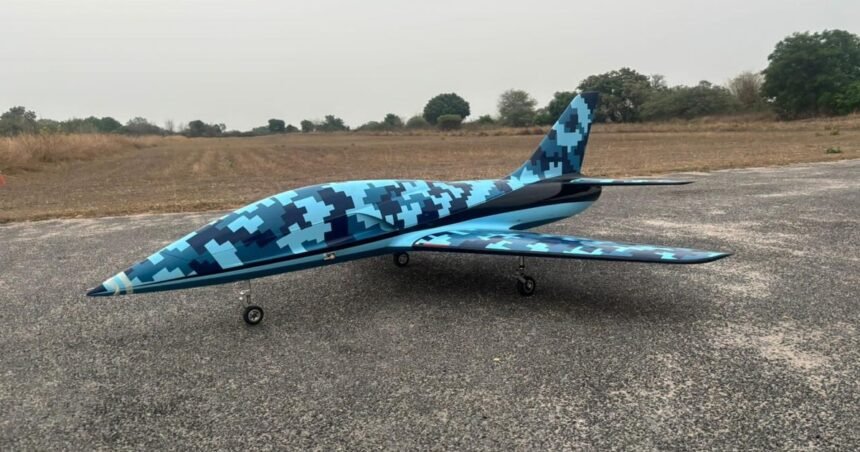
The first platform, Sentry.HAA, is a propeller-powered aircraft designed for reconnaissance, patrol and other missions in mountainous areas. The company says it can take off from around 4,200 metres and has demonstrated a ceiling of up to 5,000 metres above mean sea level, with an endurance of 90–120 minutes, a range of more than 100 km and a payload capacity of 1 kg. Its petrol-powered propulsion system supports autonomous flight modes, including GPS-denied navigation and fail-safe profiles — the kind of independence that matters when a mission runs beyond reliable signals.
The second aircraft is the one that gives the story its speed. Strike-1 is a tactical jet UAV powered by a 250N-class micro-turbojet running on aviation turbine fuel. In Leh, the company says, it climbed from a 4,200-metre take-off altitude to 5,400 metres, reaching a reported maximum speed of 375 km/h, with an operational range of approximately 120 km and around 50 minutes of endurance in full-fuel configuration carrying a 1.5 kg integrated payload. Strike-1 is also being developed with onboard edge-computing capabilities for AI-based video analytics and automated target recognition, and the company plans a terminal strike demonstration at approved live-fire ranges.
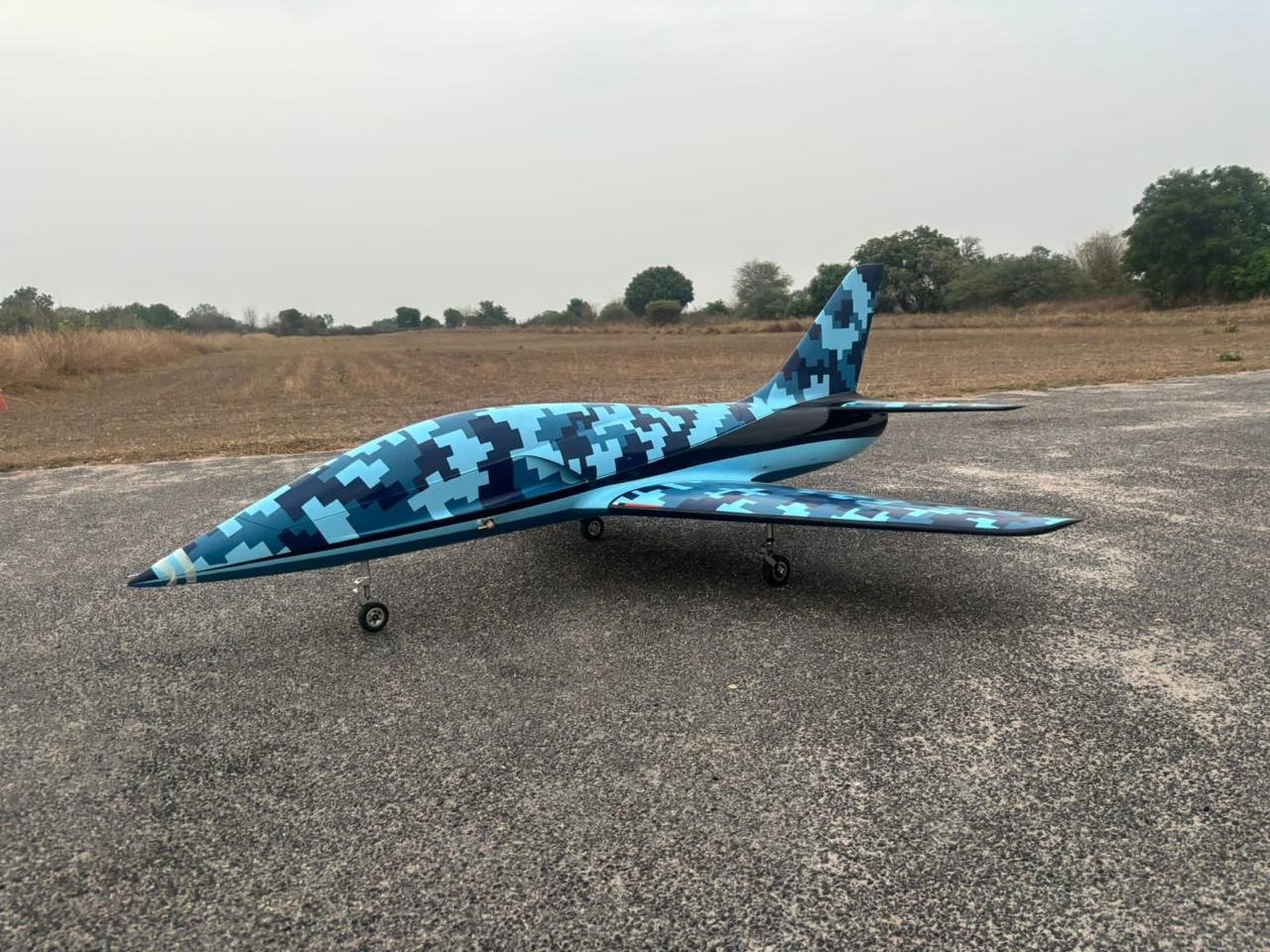 Invente’s Strike-1, the jet-powered tactical UAV that climbed to 5,400 metres in Leh. (Image: Invente)
More Read
Behind the two trial aircraft sits a wider stack the company is building for contested environments: its MK-IV high-altitude, high-speed jet UAS, engineered for rapid response and stratospheric deployment, and tactical drone systems spanning loitering munitions to unjammable swarms. The company’s own homepage carries the same headline as the Leh campaign: autonomous systems successfully tested at 5,000 metres above sea level.
For a country whose most demanding borders run along the highest mountains on Earth, the Leh trials are the point of the whole programme: aircraft designed, built and flown in India, proving in thin Himalayan air that they can watch, range and return where it counts most.
Keep reading: Built for the Day the Links Go Dark: Inside Rebhu Computing, the Startup Giving India’s Unmanned Systems Their Own Brain · From Orbit to Runway: Inside Inbound Aerospace, the Chennai Startup Building India’s Reusable Spaceplane · More Aerospace & Defense stories
Like stories like this? Add Exceptional Technology as a preferred source on Google to see more of our reporting in your search results and Discover feed.