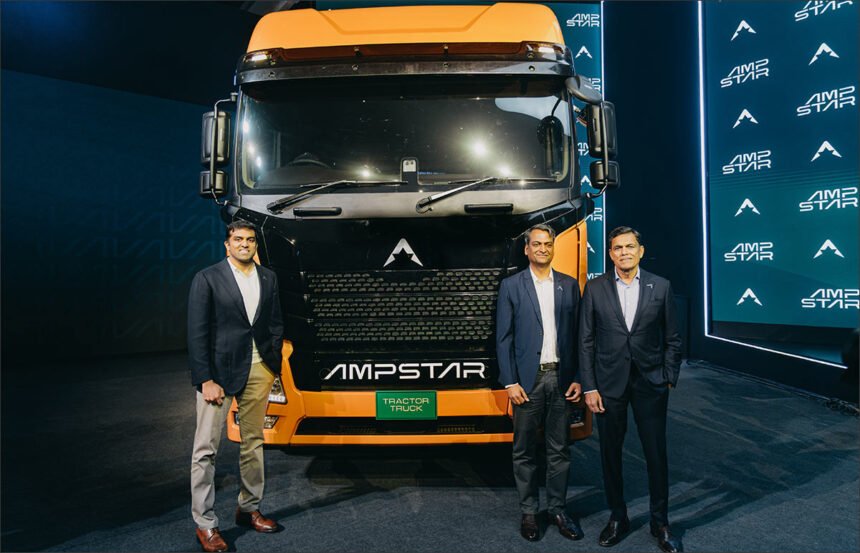
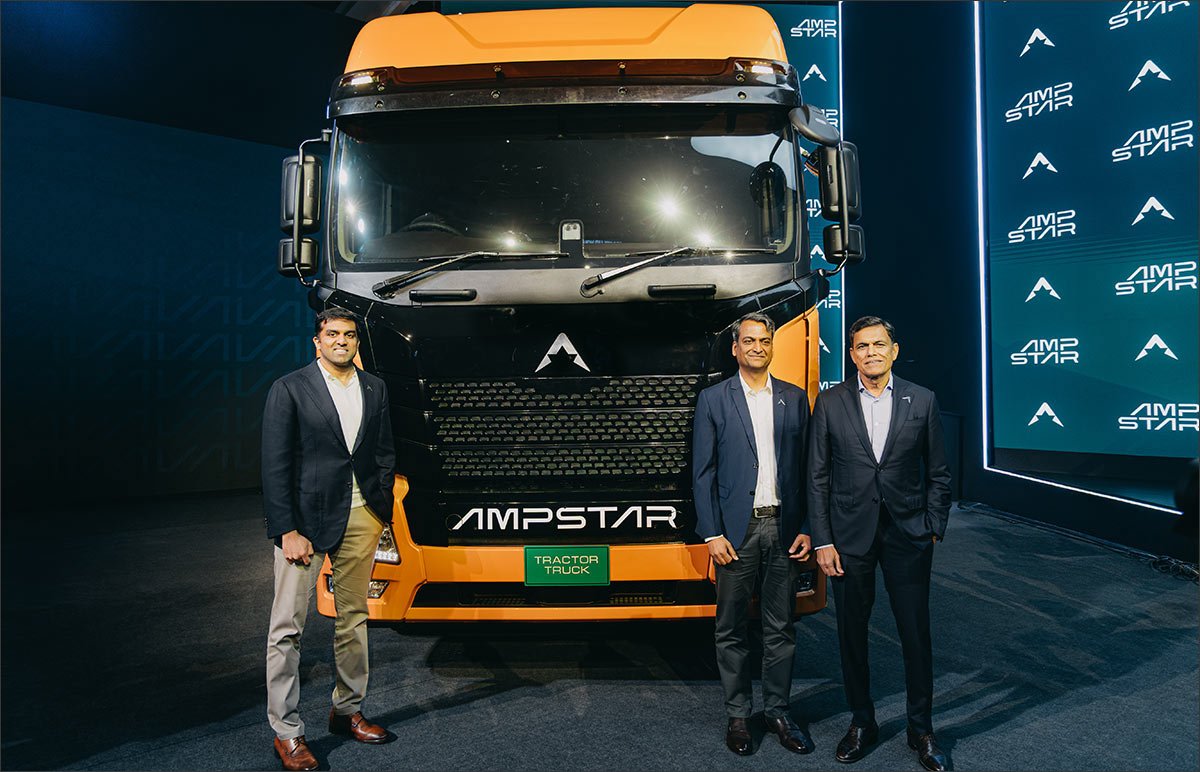
Somewhere between Nandyal in Andhra Pradesh and Vijayanagar in Karnataka, a convoy of trucks is about to start hauling some of the heaviest loads on Indian roads — and not one of them will burn a drop of diesel. On 28 October 2026, JSW Greentech announced its first commercial order: 100 AMPSTAR 4×2 55-tonne electric tractor trucks for JSW Cement, the first sale under its new AMPSTAR brand, barely five weeks after the brand itself was unveiled.
It is a striking debut for a brand-new Indian truckmaker. The 55-tonne tractor-trailer is, in the words of JSW Greentech chief executive Sumit Mittal, one of the most demanding vehicle architectures in commercial transportation — and AMPSTAR is putting a hundred of them straight into daily industrial service, not a pilot, not a showcase, but a working freight corridor.
A 330-kilometre corridor, built for batteries
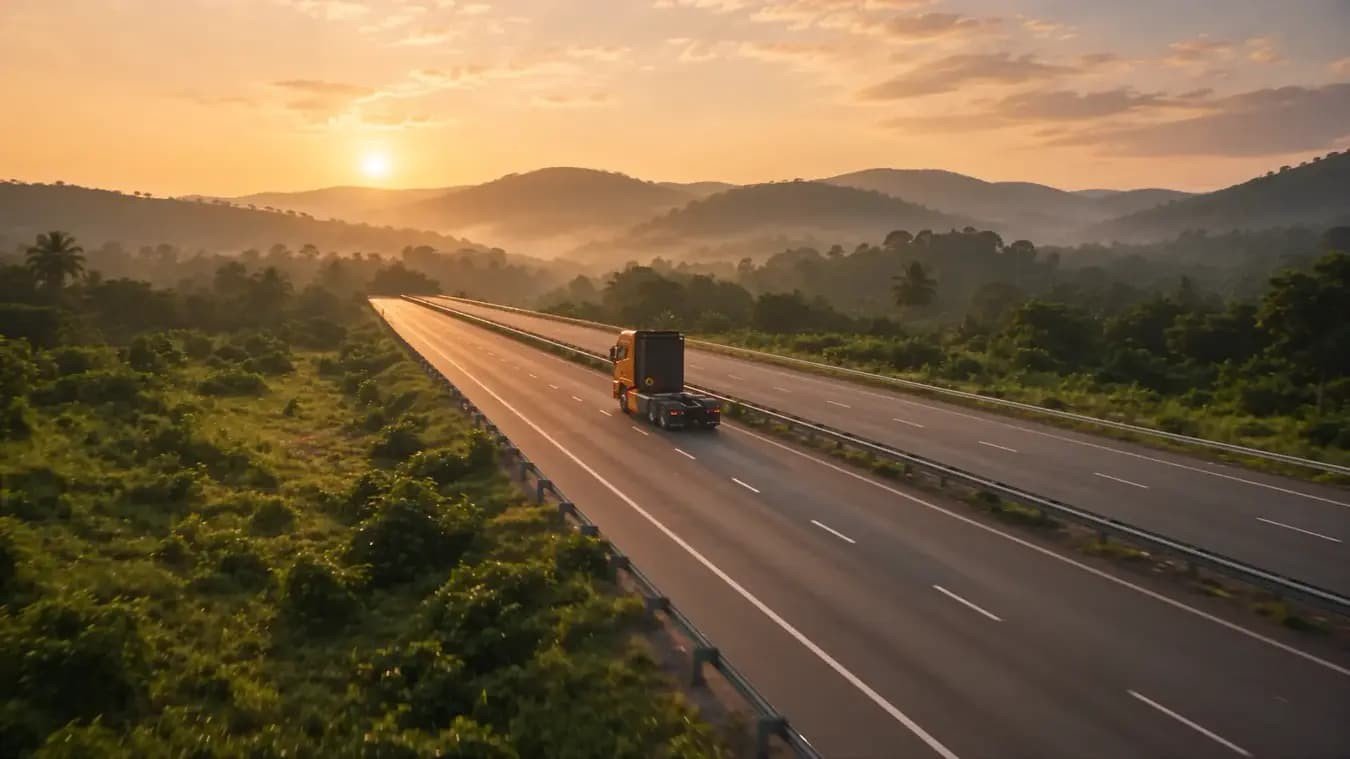
The hundred trucks will move clinker and slag for JSW Cement along an approximately 330-kilometre corridor between Nandyal and Vijayanagar, carrying an estimated 1.25 lakh tonnes of cargo every month. That is the kind of relentless, high-utilisation duty cycle where electric trucks have to prove themselves day after day — and AMPSTAR has designed the whole operation around keeping them moving.
The fleet will run on a Battery-as-a-Service model. JSW Eco-Mobility, a JSW Greentech subsidiary, will supply the batteries and build four dedicated battery-swapping stations along the corridor, so a truck can exchange a depleted battery for a charged one instead of waiting at a charger. Paradeep Parivahan will serve as the logistics partner running the operation. The company says the deployment is expected to save around 4.5 crore litres of diesel and avoid about 6,250 tonnes of carbon dioxide emissions over the contract period.
The trucks arrive road-ready: AMPSTAR’s 4×2 and 6×4 electric tractor trucks have received certification under the Central Motor Vehicle Rules from the Automotive Research Association of India (ARAI), confirming compliance with India’s safety, performance and regulatory standards for the road.
The truck itself: 430 kW of quiet muscle
The AMPSTAR 4×2 55T delivers peak power of 430 kW and peak torque of 2,600 Nm — the pulling power a 55-tonne combination needs on Indian highways and gradients. Under the cab sits a 282 kWh LFP battery, paired with a 6-speed automated manual transmission, CCS2 dual-gun fast charging and a swappable-battery architecture, plus 4G telematics with real-time tracking and data logging for fleet managers.
More Read
The engineering is deliberately Indian. JSW Greentech says it developed the base logic, software and algorithms for the entire electric drivetrain in-house, so vehicles can be tailored to specific customer requirements rather than adapted from an imported platform. The design includes a double-cooling battery system and a high-strength monocoque chassis, built specifically for India’s climate and road conditions, and the company says the truck offers 27 percent gradeability for loaded climbs.
From a September launch to a hundred-truck order
AMPSTAR was launched on 22 September 2026 as the commercial electric vehicle brand of JSW Greentech, the JSW Group’s electric mobility company. The name fuses “Amp” — from ampere, the unit of electric current — with “Star”, for aspiration, leadership and progress, and the brand carries the group’s endorsement as “AMPSTAR: powered by JSW”.
At the launch, JSW Group chairman Sajjan Jindal framed the move as nation-building: moving India’s people and goods on power generated within India rather than fuel sourced from outside. JSW Greentech chief executive Sumit Mittal said the vehicles are designed, engineered and built in India from the ground up — the company’s own drivetrain and its own software, built for Indian roads and operating conditions.
The trucks and buses will be built at JSW Greentech’s greenfield facility at AURIC in Chhatrapati Sambhajinagar, Maharashtra — a 90-acre integrated plant with an annual capacity of 15,000 electric buses and trucks, including an automated truck-cabin line, an integrated battery ecosystem and what the company says is India’s first pre-treatment and electro-deposition process for bus manufacturing. A research and development centre in Pune backs the plant, and the company has invested around Rs 2,500 crore in the electric commercial vehicle business.
A full-stack bet on electric freight
AMPSTAR is designed as a full-stack commercial mobility offering, not just a vehicle sale. Alongside the truck, customers get charging infrastructure, operating solutions, financing and after-sales support, with a choice of outright purchase, leasing or Battery as a Service, and power configurations from 150 kW to 500 kW. The company says its fleet offering can cut operating and maintenance costs by up to a third, with a pay-per-kilometre model for trucks and per-kilometre for buses.
The truck range starts with the 55-tonne tractor-trailer and will expand into tippers and fixed-body dumpers, while the bus portfolio will span 7-metre to 18-metre vehicles for staff transport, city, intercity and school mobility. The ambition is large: JSW Greentech has said it aims to sell 100,000 electric trucks and buses a year by 2030 and rank among India’s top three commercial vehicle makers.
That journey starts with a hundred trucks on one hard-working corridor — clinker and slag, 330 kilometres, swapped batteries and zero diesel. If AMPSTAR can make the economics sing there, India’s heaviest freight may never look back.
Keep reading: No Rare Earths, No Imports: Inside Viridian Ingni, the Chennai Startup Building India’s Own EV Propulsion · The 90-Tonne Giant That Runs on Batteries: Inside Propel Industries, the Coimbatore Company Electrifying India’s Mines · More Automotive & Mobility stories
Like stories like this? Add Exceptional Technology as a preferred source on Google to see more of our reporting in your search results and Discover feed.