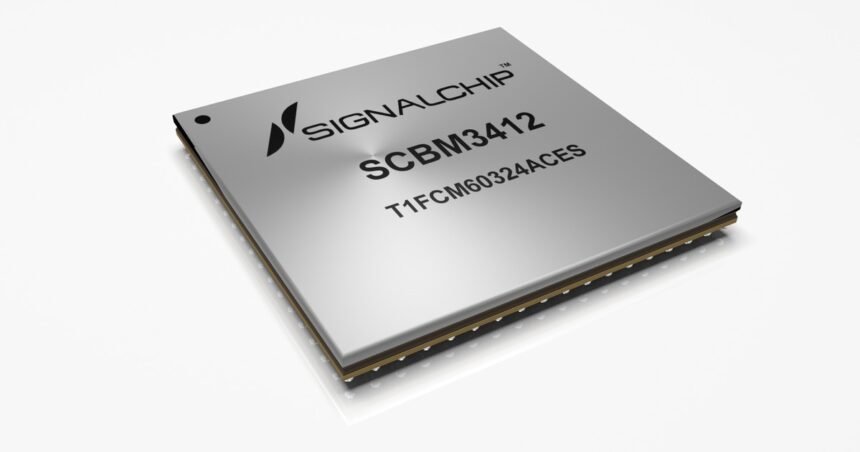
Every machine that moves, senses or talks has a tiny brain tucked inside it — a microcontroller, quietly running the show. The robot arm on a factory floor, the flight controller in a drone, the smart meter on a wall: each one answers to a chip smaller than a postage stamp. For decades, almost every one of those brains in Indian machines has been designed somewhere else. A Bengaluru company that has spent sixteen years changing that story has just shown its newest answer: a homegrown microcontroller called JEET.
JEET, the SCMC4212 microcontroller unit from Signalchip, was showcased at the Emerging Science, Technology and Innovation Conclave (ESTIC) 2026 at Bharat Mandapam in New Delhi, which ran from 27 to 29 October 2026 with around 150 deep-tech startups exhibiting. The company says JEET pairs a Yati 32-bit RISC-V processor with its own Avarta 32-bit digital signal processor, folding memory, power management and other functions into one compact design — a single chip meant to run everything from flight controllers and robots to smart devices and industrial automation.
The team that gave India its first modem chips
Signalchip is no newcomer to this fight. Founded in 2010 in Bengaluru by founder and chief executive Himamshu Khasnis and co-founder Rajesh Mundhada, the fabless semiconductor company set out to do something almost nobody in India had done: design world-class communication chips from scratch, in India, and own the intellectual property behind them.
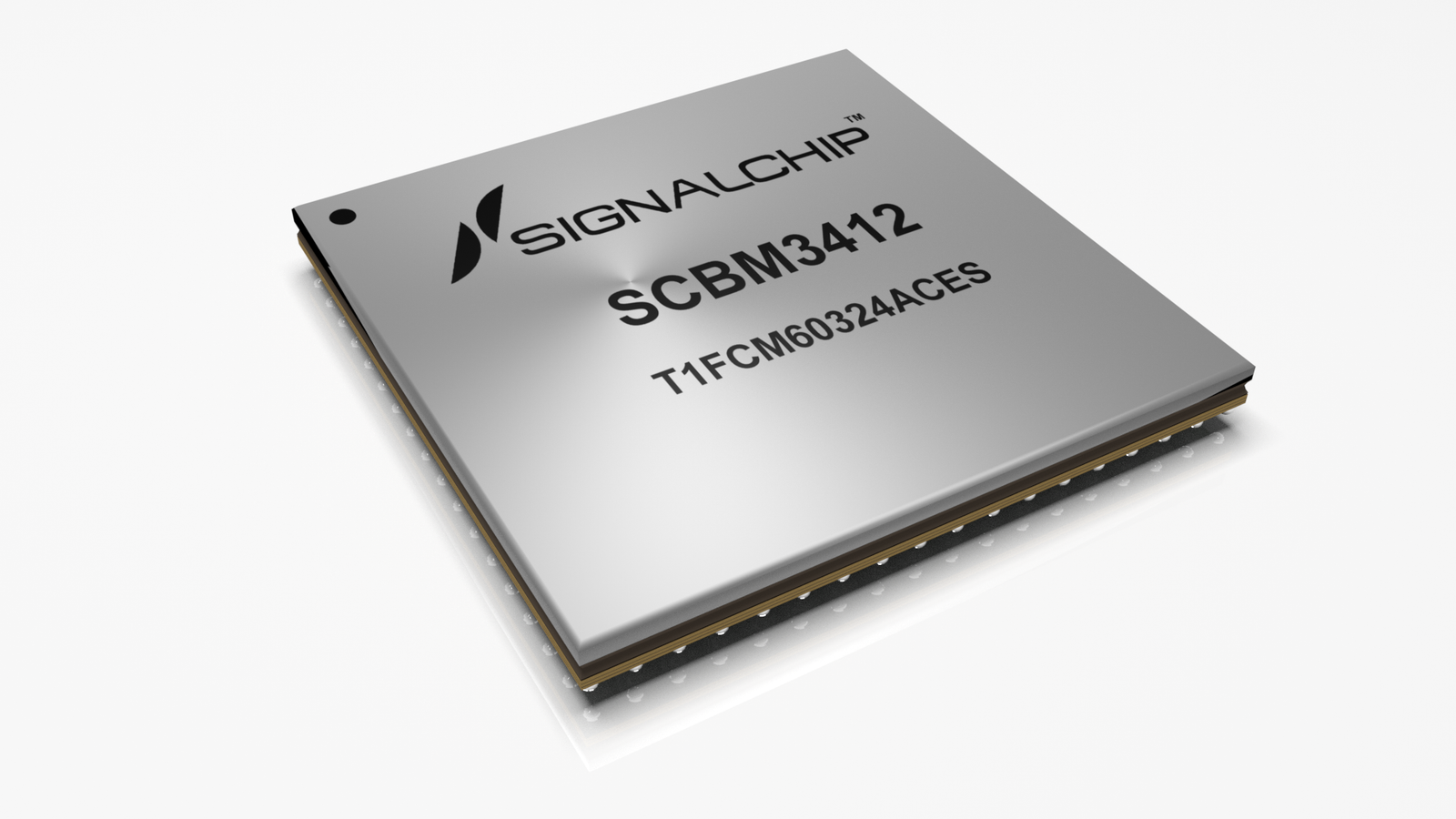
The breakthrough came in February 2019, when the company unveiled India’s first indigenous semiconductor chips for 4G/LTE and 5G NR modems in New Delhi. The Agumbe family — four chips built on more than eight years of research — comprised the SCBM3412 single-chip 4G/LTE modem, the SCBM3404 single-chip 4×4 LTE baseband modem, the SCRF3402 2×2 transceiver for LTE and the SCRF4502 2×2 transceiver for 5G NR. Their radio sections cover all LTE and 5G NR bands up to 6 GHz, and the chips support positioning using India’s own NavIC satellite navigation system. The unveiling was presided over by the then Telecom Secretary, who congratulated the team on designing India’s first indigenous modem chips, and the company was mentored and funded by Zoho founder Sridhar Vembu.
That family built on an even earlier first: the SCRF1401 of 2015, India’s first radio-frequency transceiver chip for high-performance wireless standards such as 3G, 4G and Wi-Fi. From a single RF chip to a full modem family, Signalchip had proved that a small Indian team could master one of the hardest disciplines in engineering — and own it outright.
Two processors, one compact brain
JEET carries that philosophy into a much bigger market. A microcontroller is the workhorse of the electronics world: where a modem chip moves data through the air, a microcontroller makes decisions, drives motors, reads sensors and runs machines. By pairing the Yati RISC-V processor with the Avarta digital signal processor — Signalchip’s own DSP intellectual property, already proven in its base-station platforms — JEET puts general-purpose computing and real-time signal processing on the same piece of silicon.
More Read

The design is deliberately compact, integrating memory, power management and other functions alongside the two processors. That integration is what makes a microcontroller useful: a machine builder gets a complete, ready-to-design-around brain instead of a bag of separate parts. And because the architecture is built on RISC-V, the open instruction set that lets designers build without paying licence fees to a foreign owner, the chip keeps India’s machine builders free from the royalty and supply-chain strings that come with imported silicon.
From towers to everything that moves
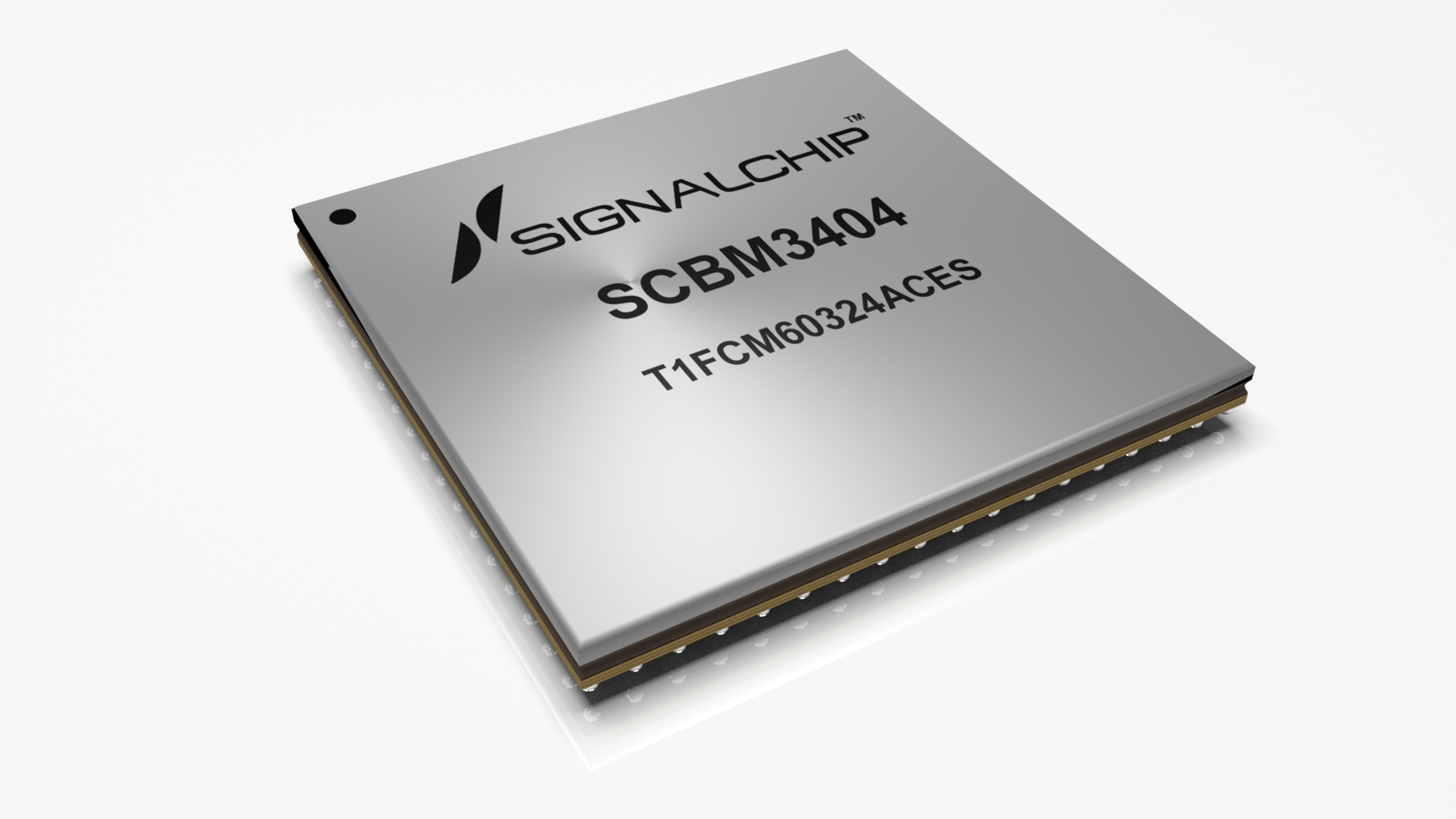
The step from base stations to microcontrollers is a natural one for Signalchip. Its base-station chipsets already serve everything from low-cost indoor small cells to high-performance macro base stations: the SCBM3404, for example, delivers 4×4 MIMO with 400 Mbps downlink and 150 Mbps uplink, carrier aggregation, satellite-synchronisation options and NB-IoT capability, with security accelerators and trusted boot built in. The same hardware-software partitioning and signal-processing craft that squeezes that performance out of a base station now goes into a chip small enough for a drone’s flight controller or a factory robot.
The applications the company points to tell the story of where JEET is headed: flight controllers that keep aircraft steady, robots that work where people cannot, smart devices in homes and factories, and industrial automation across Indian manufacturing. Every one of those machines today runs overwhelmingly on imported brains. A homegrown microcontroller, designed by the same team that already put Indian silicon into the nation’s communications backbone, is a step towards machines that are Indian all the way down to the chip.
A quiet company, a loud statement
Signalchip has never chased headlines. It is a fabless company — it designs chips and owns the intellectual property, while fabrication happens at a foundry — and its work lives inside equipment most people never see. But the arc from the SCRF1401 to Agumbe to JEET is a loud statement all the same: India does not have to import the brains of its machines. The country has the engineers, the designs and now, showcased on a national stage at ESTIC 2026, a microcontroller built to carry that independence into every robot, drone, sensor and smart device that comes next.
Keep reading: Tap, Track, Unlock: Inside Muse Wearables’ Ring One Gen 2, the Indian Smart Ring That Does It All · One Door to Every AI Model: Inside CloudSEK’s KeyVigil, the Gateway Guarding India’s AI Agents · More Industrial Automation & Technology stories
Like stories like this? Add Exceptional Technology as a preferred source on Google to see more of our reporting in your search results and Discover feed.