Picture a patrol boat cutting through the sea with no one at the helm — not because it has been abandoned, but because it does not need anyone there. It watches the water in every direction, plots its own course, steers around other vessels, and carries out its patrol while its crew stays safely ashore. That is the future a Pune company is already building for the Indian Navy, one converted patrol boat at a time.
The company is Accurate Industrial Controls, and its creation is ISACA — short for Intelligent Situational Awareness and Collision Avoidance. It is the autonomy stack that turns a crewed patrol boat into an unmanned surface vessel, and the company says it has now earned the certification that proves it can be trusted at sea.
The brain that sees in every direction
ISACA is not a single sensor or a single piece of software. The company describes it as a full situational-awareness and collision-avoidance system, fusing feeds from radar, inertial navigation, electro-optical and infrared cameras, GNSS positioning, echo sounder, AIS and CCTV into one picture of the world around the boat. From that picture it builds 360-degree awareness, tracks targets, and plans safe manoeuvres — all in line with the International Regulations for Preventing Collisions at Sea, the COLREGs, that every mariner learns.
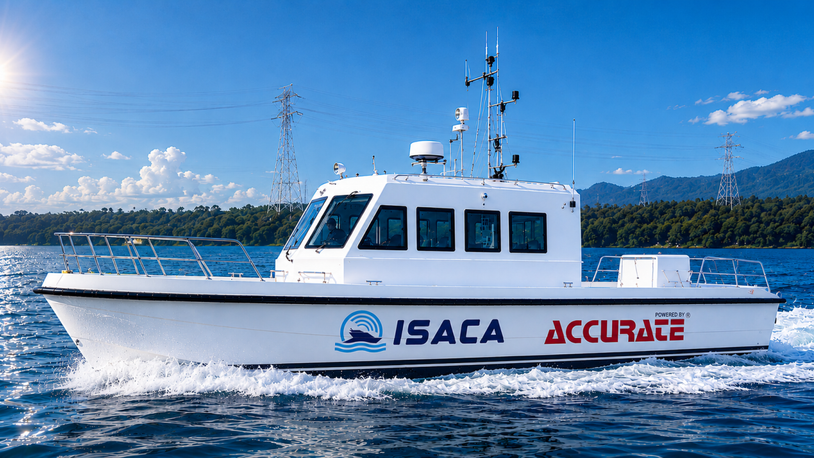
Accurate’s ISACA-equipped workboat at sea (company image).
Crucially, the company says ISACA thinks on board. Its edge-computing architecture processes sensor data on the vessel itself, so autonomous functions keep working without a continuous internet connection or a crew on deck. It generates and continuously optimises routes, patrol patterns and mission plans as conditions change, and it executes the manoeuvres itself. It can also talk directly to the boat: the company says ISACA interfaces with Mercury, Cox and CAN/MODBUS-based propulsion systems, and can be fitted to non-digital propulsion too, taking control of steering and propulsion across both new-build and retrofit vessels.
More Read
2,500 hours at sea before the stamp of approval
Certification is where many autonomy claims stop — and where Accurate’s story gets serious. The company built two test vessels to prove ISACA: a 13-metre interceptor craft and a five-metre search-and-rescue workboat. Together with the Indian Navy, the company says, those boats logged 2,500 hours of sea and river trials, including testing in controlled waters.
The trials culminated in class certification from the Indian Register of Shipping. The ISACA stack was certified to IRS AUTN 4-R(N), following sea trials in the Arabian Sea off Karwar aboard a new 13-metre workboat built for Accurate at SHM Shipyard in Mumbai. In plain terms, an independent Indian classification society has examined the system, watched it perform at sea, and approved it to the standard for autonomous navigation.
Accurate’s director of AI and Robotics, Dharmesh Popatlal Gala, has credited the Indian Navy with providing the development framework and facilitating the controlled-water trials, and the Indian Register of Shipping with supporting the programme through certification.
Six Navy boats, two sizes, one system
That certification unlocked the real prize: a six-vessel deal with the Indian Navy, signed in 2022, under which Accurate completed an Autonomy Stack development programme across five audited milestones. The company is now preparing to convert the first three patrol boats into unmanned surface vessels at the Naval Dockyard in Mumbai, following a feasibility assessment of each hull.
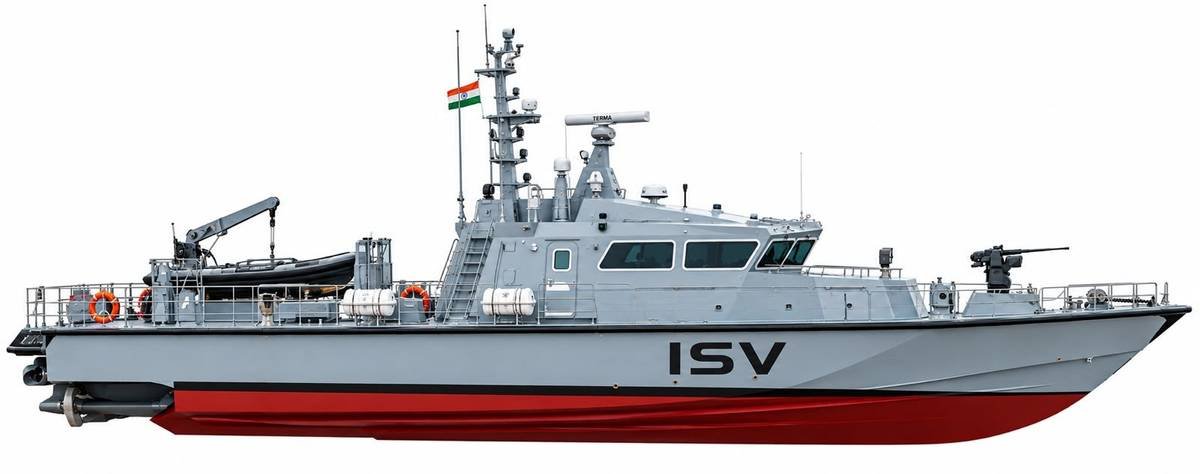
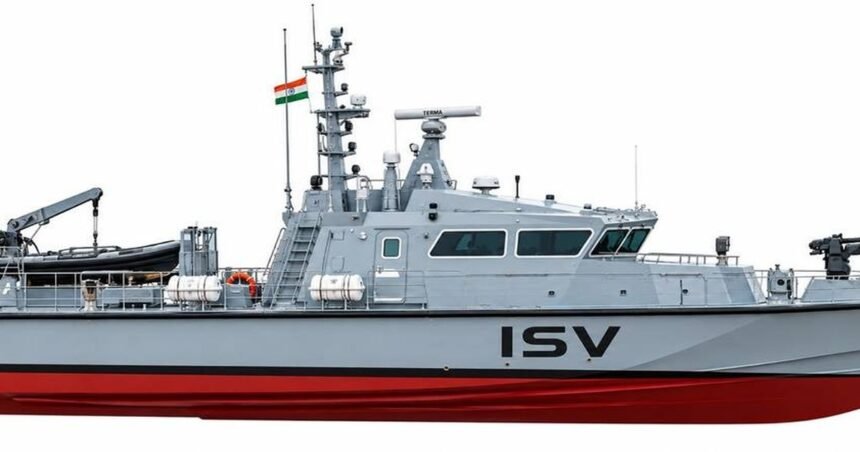
An Immediate Support Vessel of the kind Accurate is converting for the Indian Navy (company image).
The first three conversions tell the story in miniature. One is a 13-metre Fast Interceptor Craft used for coastal reconnaissance. The other two are 23-metre Immediate Support Vessels — larger boats that operate alongside frigates and other major naval vessels in mid-ocean, with a stated range of 400 nautical miles. All six vessels in the deal will receive the full ISACA system, the company says, including multiple sensors, remote command and control, and 360-degree situational awareness.
The same 13-metre workboat design is also finding a second life beyond the Navy. The company says it is receiving orders and interest in both new-build and retrofit versions of the ISACA-equipped boat for commercial and naval markets, and it has built a smaller five-metre autonomous search-and-rescue craft at Sumit Shipyard in Kochi, carrying the same ISACA stack.
From factory floors to the open sea
Accurate did not arrive at autonomy overnight. The company says it has worked for more than 30 years in automation across the steel, automotive and aerospace industries, and moved into the marine sector about five years ago while working with the Indian Army. That industrial-automation DNA shows in the design: ISACA is built to be fitted, not just admired — a retrofit brain for boats that already exist, as well as a system for boats yet to be built.
The applications the company lists read like a tour of India’s coastline: port and harbour security, infrastructure protection, offshore energy, coastal surveillance, environmental monitoring, hydrographic survey, inspection missions, border security and maritime defence operations. An autonomous boat, the company says, can replace crews on dull, dangerous or distant patrols and provide round-the-clock monitoring and persistent awareness at a fraction of the operational cost.
And the ambition does not stop at India’s shores. The company says the ISACA stack will be offered for export to allied navies and coastguards, with interest already coming in from navies, coastguards, ports, harbours and the offshore market in Europe, the Middle East and Asia. A Pune automation specialist that spent three decades making factories smarter is now teaching boats to think for themselves — and the Indian Navy’s next patrol may well sail with no one on board at all.
Keep reading: 300 Metres Down, No Diver Required: Inside Coratia’s Jalasimha, the Robot Guarding India’s Waters · A Robot for the Lake: Inside SCRUB Robotics, the Bengaluru Students Building Autonomous Lake Cleaners · More Shipbuilding & Maritime stories
Like stories like this? Add Exceptional Technology as a preferred source on Google to see more of our reporting in your search results and Discover feed.