India is building solar farms faster than almost anywhere on Earth, and every one of them has the same quiet enemy: dust. A thin film of it settles on a panel, output slips, and the standard fix — crews with water tankers — costs exactly what a dry, remote solar site cannot spare. A Delhi startup called SudoYantra has answered with a machine that weighs less than a suitcase, drinks no water at all, and needs no rails, no crane and no fixed infrastructure to get to work.
The robot is SudoYantra’s panel-cleaning platform, now in its second generation, and the company says it is India’s first sub-20-kilogram waterless solar panel cleaning robot. One operator carries it to the array, sets it down, and the company says it is live in under ten minutes — a job that, for heavier imported machines, can take two to four hours of installation before a single panel is cleaned.
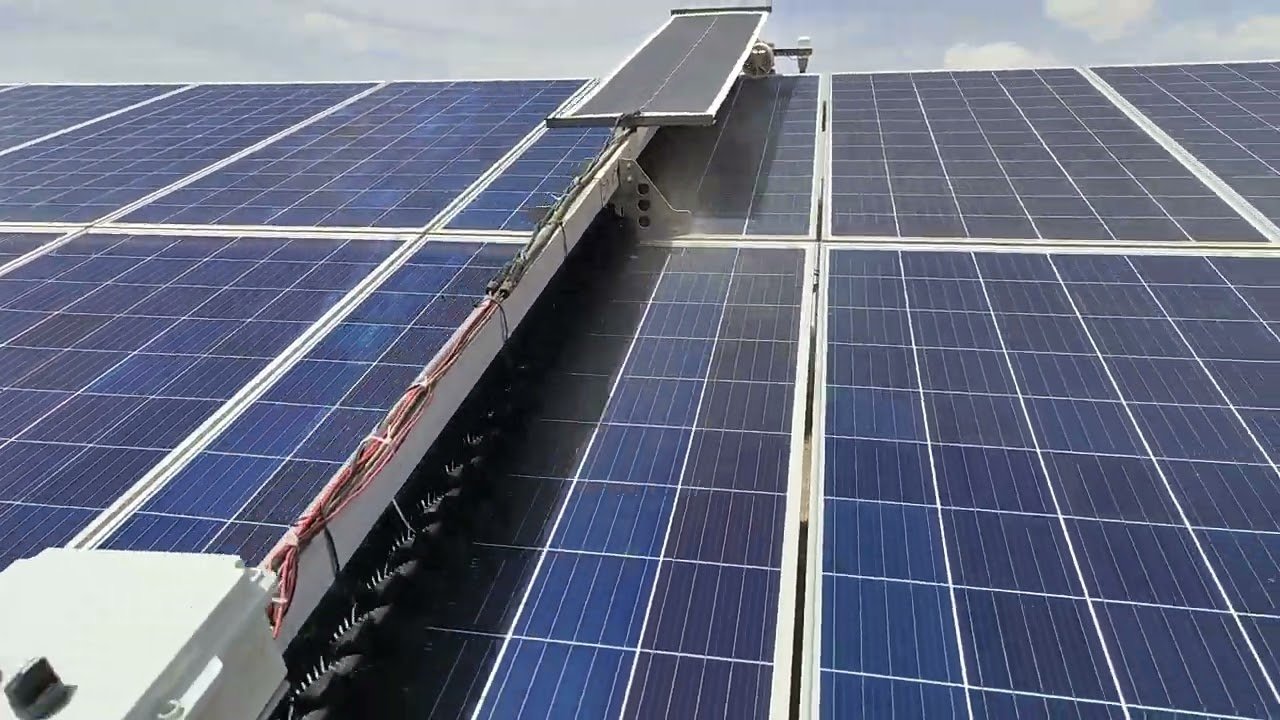
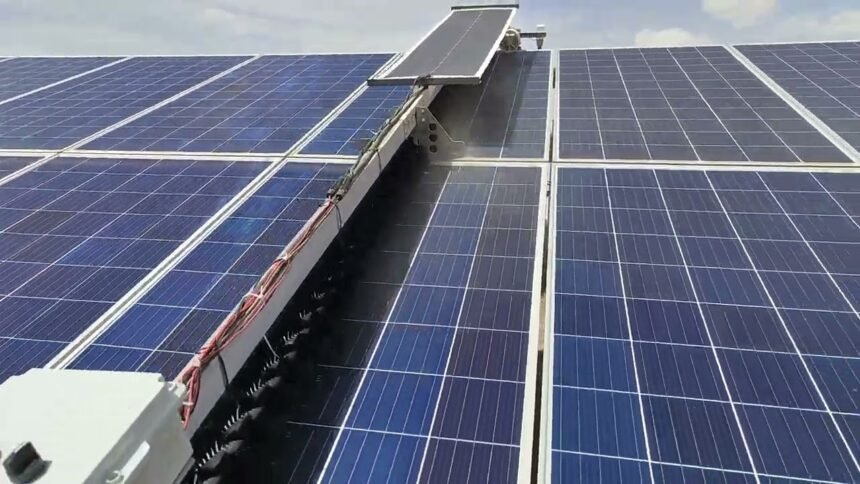
SudoYantra’s waterless cleaning robot at work on a live solar farm.
A robot light enough for one person to carry
Weight is the whole design idea. At under 20 kilograms, SudoYantra’s robot is a single-operator machine: no crane to lift it onto the array, no fixed rails bolted across the plant, no permanent infrastructure to maintain. The company compares that with imported robots weighing 45 to 90 kilograms, which need crane deployment and fixed-rail or fixed-arm setups.
More Read

Instead of rails, the robot roams free across the array. A current-sensing self-straightening algorithm keeps it on course as it crosses the 50-millimetre gaps between panels, and it climbs inclines of up to 30 degrees on trackers and fixed-tilt arrays alike. Its dry-brush system cleans without a drop of water — the company says each clean saves the 2 to 5 litres per panel that water-based systems consume — and its brushes are built to last 6 to 7 years, against a 2-year industry standard the company cites.
The machine is solar powered, draws an ultra-low 3A at peak, and stays connected: an IoT link feeds a dashboard for remote monitoring, camera-based diagnostics and over-the-air updates, with same-day on-site support across India behind it. The economics, the company says, are just as light: a capital cost of ₹90,000 to ₹1.5 lakh per robot and an annual maintenance contract of ₹8,500 per robot per year, against ₹30,000 to ₹50,000 for imported alternatives — a total cost of ownership 40 to 60 percent lower, with payback in 6 to 8 months.
Proven on live solar fields, not just in a lab
SudoYantra says its robots are already working on live, utility-scale megawatt solar fields, and that it proved the design head-to-head against leading imported robots on the same site — testing durability, handling on uneven panels and total cost of ownership. In that trial, the company says, its lightweight system kept running with zero panel stress while the imported machines suffered alignment failures and needed crane deployment.
The early commercial numbers tell the same story. The company says it sold 12 first-generation robots in its first three months of operations, generating ₹18 lakh in revenue from hardware and deployment fees, with a 100 percent annual maintenance renewal rate. Its second generation is now in paid pilots across utility-scale solar, commercial and industrial rooftops and government sites — 4 to 6 pilot sites across three verticals — with HPCL and Radiance Renewables among the names running paid pilots, and NTPC evaluating a 300-robot fleet retrofit.
Designed in Delhi, manufactured in Hyderabad
SudoYantra designs and develops its robots in Delhi and manufactures them in Hyderabad through Cygni Energy, at a capacity the company puts at 100 to 200 robots a month. A provisional patent has been filed for its flexible chassis system — the engineering at the heart of a machine that has to flex across uneven panels without stressing them.
The company has also been noted in coverage of Prof. Ashok Jhunjhunwala’s deep-tech ecosystem as a builder of outdoor robots for India’s solar infrastructure — a sign of how closely its story tracks India’s own push to make, rather than import, the machines its energy transition runs on.
From cleaning panels to building solar farms
Cleaning is only the first act. SudoYantra’s next product line, already on its roadmap, is autonomous panel-installation robots — using the same heavy industrial outdoor mobility platform to automate solar farm construction itself. The logic is the same: India’s solar build-out is too big, too dusty and too spread out for manual, water-hungry maintenance to keep up.
From a Delhi workshop to live megawatt fields, SudoYantra is proving that the most useful robot on a solar farm is not the biggest or the heaviest — it is the one a single person can carry, that wastes nothing, and that gets to work in ten minutes flat.
Keep reading: An Artificial Tree That Eats Carbon: Inside Greengine, the Kanpur Startup Turning Algae Into Climate Infrastructure · Built for India’s Grid, Not Adapted to It: Inside Zenergize’s Homegrown SiC Power Electronics · More Energy & Power stories
Like stories like this? Add Exceptional Technology as a preferred source on Google to see more of our reporting in your search results and Discover feed.