Every electric vehicle on Indian roads carries a small mine inside it — lithium, cobalt, nickel and manganese, packed into a battery that will one day wear out. India imports almost all of those metals today. A Bengaluru startup has spent six years proving that the country does not have to keep digging abroad for them: the richest new mine in India may be the pile of dead batteries it already owns.
That startup is MiniMines Cleantech Solutions, founded in 2020 by Anupam Kumar and Arvind Bhardwaj and based in Bengaluru. Its patented Hybrid Hydrometallurgy process takes end-of-life lithium-ion batteries — from electric vehicles, phones, laptops and energy storage — and turns them back into battery-grade raw materials ready for new cells.
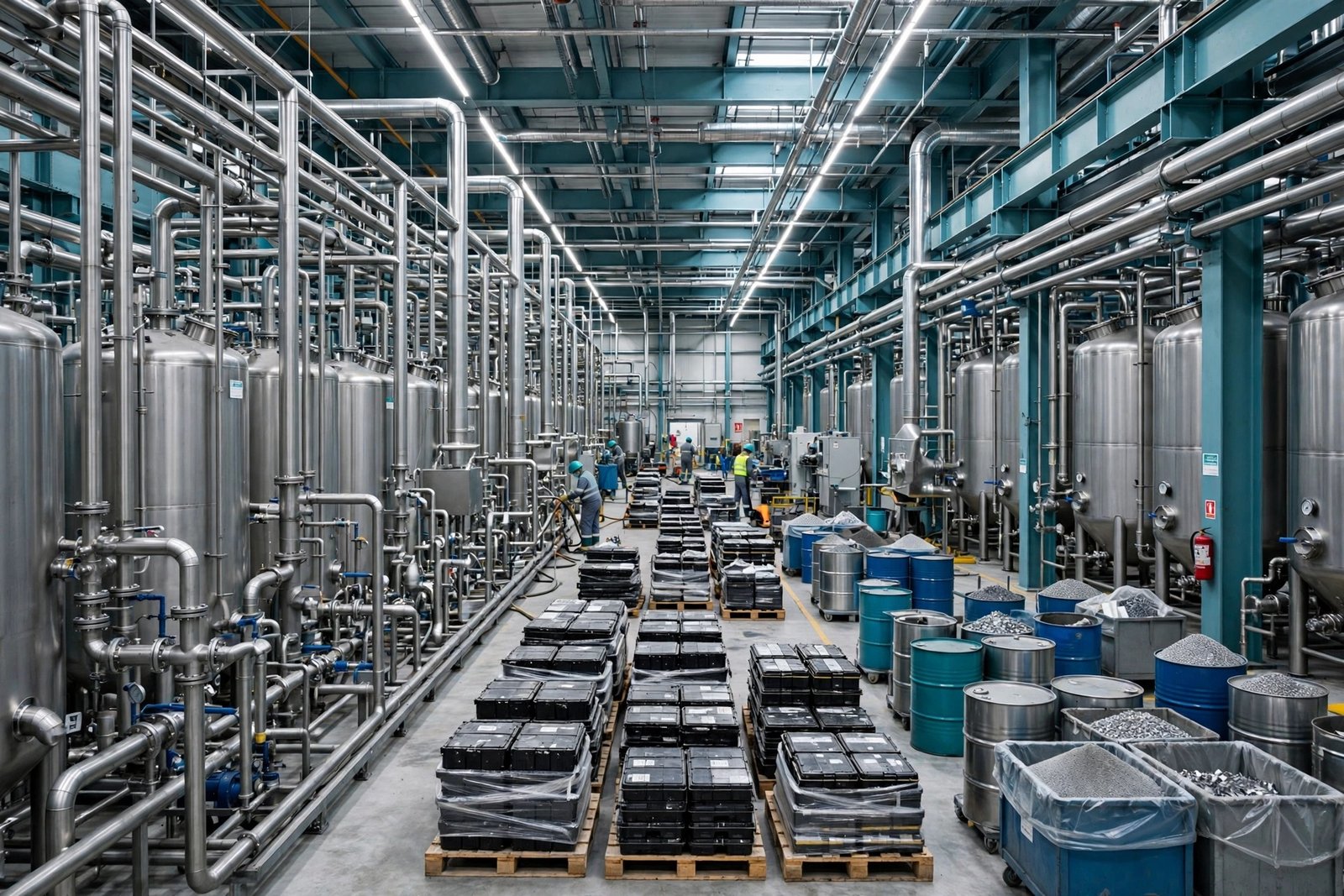
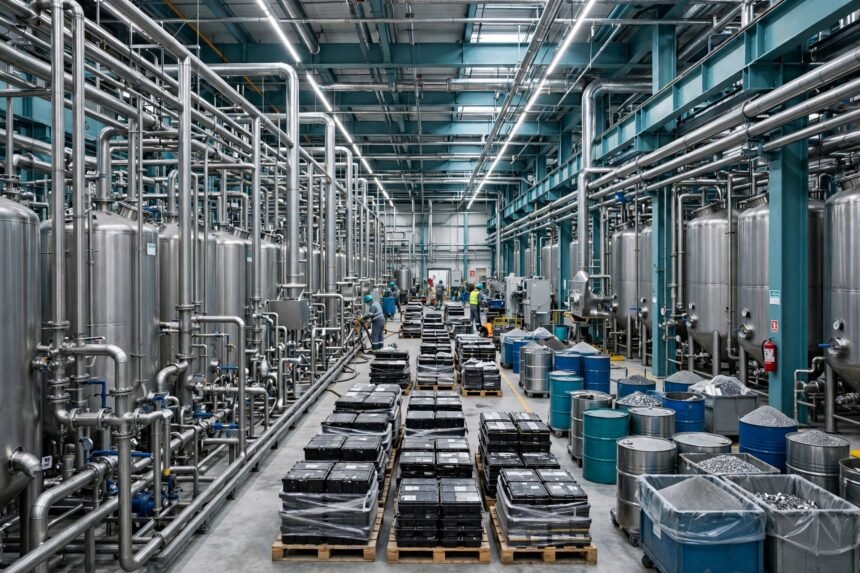
A battery recycling plant of the kind MiniMines operates — refining tanks, battery packs and recovered materials (AI-generated visual based on the company’s official process imagery).
More Read

One process for every kind of battery
The hardest part of battery recycling is that no two dead batteries are alike. Different chemistries, different shapes, different sizes — most recycling lines are built for one kind and struggle with the rest. MiniMines built its process the other way round: the company says its Hybrid Hydrometallurgy method accepts all types of lithium-ion batteries regardless of chemistry or form factor, running them through collection, dismantling, pre-processing and refining in a single unified system.
Out of that system come the metals that matter most to India’s energy future: lithium, cobalt, nickel, manganese, copper and aluminium, plus spherical graphite at up to 99 per cent purity. The company puts its recovery rate above 96 per cent, at around one-tenth the carbon footprint of conventional mining and refining — a genuinely circular loop in which yesterday’s battery becomes tomorrow’s battery.
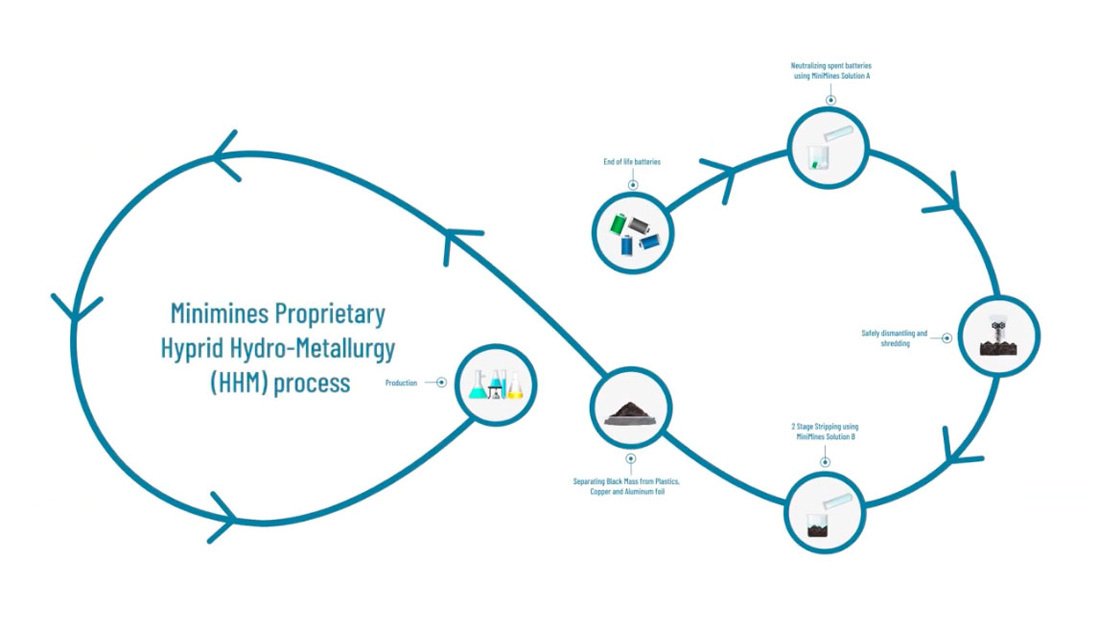
MiniMines’ Hybrid Hydrometallurgy process, from end-of-life batteries to recovered materials (official company diagram).
From a Bengaluru plant to a gigascale refining complex
MiniMines already runs a commercial recycling facility in Bengaluru with an operational capacity of 3,000 tonnes a year, and that plant is the foundation for something much bigger. In November 2025 the company signed an agreement with the Government of Karnataka to build a Rs 350 crore Giga Critical Minerals Refining Complex in Bengaluru, with a first phase refining 15,000 tonnes a year and generating around 13,400 tonnes of annual throughput. The complex will also house a research and training centre, and the company projects more than 1,500 direct and indirect jobs and around Rs 1,300 crore in annual turnover from the facility.
A new plant is scheduled for inauguration in the first quarter of fiscal 2027, and the company aims to reach about 45,000 tonnes a year of total capacity by the end of 2028 — at which point, the company’s chief executive has said, recycling alone could meet roughly a quarter to a third of India’s domestic demand for lithium.
The ambition does not stop at batteries. MiniMines is extending the same recovery platform to rare earth elements from permanent magnets, as well as to solar panels and catalytic converters — the other great stockpiles of valuable materials that India currently throws away or ships abroad for processing.
A patent, a prize and a growing circle of trust
The technology has been gathering institutional backing at every step. In August 2026 MiniMines secured an Indian patent for its Hybrid Hydrometallurgy process, and the company is the first recycler in South India to hold the Central Pollution Control Board’s R4 licence for battery recycling. Its work has been backed by Rs 4.3 crore in grants involving Oil India Limited, ACT Grants and UNIDO, following multiple process validations, and with financial support from the Technology Development Board for commercialising its zero-discharge recycling process. The company has also collaborated with Maruti Suzuki on recycling end-of-life lithium-ion batteries.
In January 2026 came the national spotlight: MiniMines won first prize at the Avinya’26 Startup India Challenge at India Energy Week in Goa, with the award presented by Union Petroleum and Natural Gas Minister Hardeep Singh Puri. The citation was for exactly what the company is building — a safe, scalable, high-efficiency route to securing India’s critical and rare earth mineral supply chains from domestic resources.
That is the promise at the heart of this story: a country racing to electrify its transport and store its solar power need not remain dependent on imported metals to do it. With every battery it recovers, MiniMines is turning India’s waste stream into its own mineral wealth — cleaner, closer to home, and ready for the next generation of Indian manufacturing.
Keep reading: Earlier, Gentler, Closer to Home: Inside MEDxAI’s Cervilens, the AI Helping Catch Cervical Cancer Early · A Full Blood Lab in a Carry Case: Inside Primary Healthtech’s Mobilab, the AI Kit Taking Diagnostics to India’s Doorstep · More Chemicals, Materials & Life Sciences stories
Like stories like this? Add Exceptional Technology as a preferred source on Google to see more of our reporting in your search results and Discover feed.