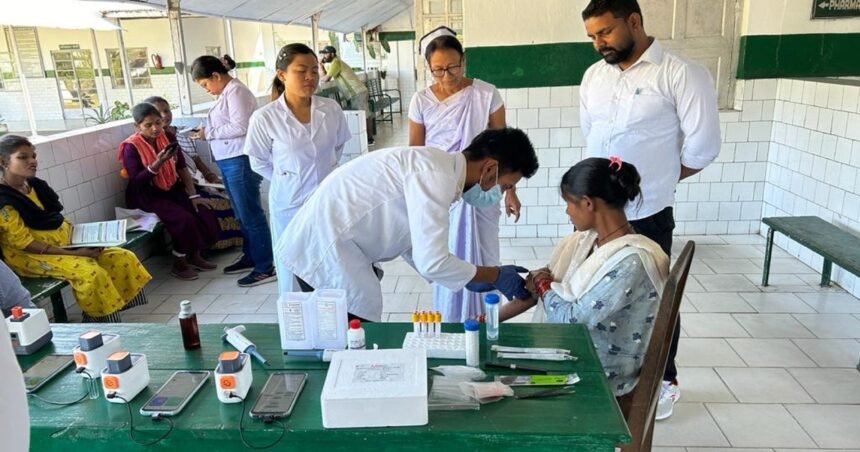
Picture a health camp in a village far from the nearest diagnostic lab. A health worker pricks a finger, slots the sample into a device the size of a lunchbox, and within minutes a full panel of blood results is on a phone screen — kidney, liver, heart, diabetes markers and more — with a digital report ready to share with a doctor. No couriered samples, no days of waiting, no long journey to a town laboratory. That is the future Primary Healthtech is already delivering across India with Mobilab, its portable, AI-powered blood-testing device.
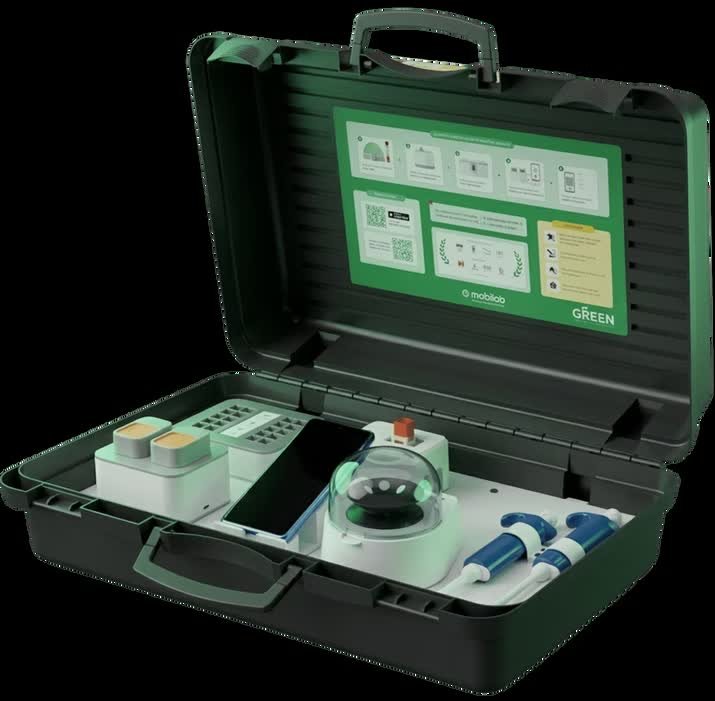
Mobilab is a battery-operated clinical chemistry analyser that packs a pathology lab into a carry case. The company says it can test more than 25 blood parameters covering kidney, liver, heart and pancreas health, along with vitamins and some cancer markers — the early-warning signals for the chronic, non-communicable diseases that now drive most of India’s disease burden. It runs on an IoT-enabled Android app, delivers results in about 10 minutes, and, the company says, manages around 150 tests on a single battery charge — enough for a full day of camps in places where the power supply itself cannot be taken for granted.
The lab that travels
The idea behind Mobilab is disarmingly simple: instead of bringing the patient to the lab, bring the lab to the patient. A health worker carries the kit to the doorstep, runs the test on the spot, and the result arrives as a digital report with the patient’s electronic health record attached — ready to be shared with a doctor anywhere. For primary health centres, rural camps and home visits, that collapses a diagnostic journey that used to take days into a single sitting.
The device is designed for exactly the conditions where conventional labs struggle. It is portable, battery-operated and operable by a health worker without specialist laboratory training, so a single kit can serve a village camp in the morning and a school screening in the afternoon. The company says the next-generation Mobilab M1 will run five tests simultaneously, cutting waiting times further as the platform scales toward commercial manufacturing.
Built on Indian research
Primary Healthtech was founded by IIT Guwahati alumni Sahil Jagnani and Ankit Choudhury, and the company remains rooted in the institute — incubated at the IIT Guwahati Research Park and the Centre for Nanotechnology, with its R&D centre on campus. Its core technology rests on a patent for a transmittance-based system for point-of-care quantification, transferred from IIT Guwahati, and the company has filed more than six further patent applications covering its integrated mixers, assay development, centrifuges and proprietary optical systems.
The engineering is deliberately frugal and fully indigenous: a compact analyser, its own cartridges and optics, and an AI/ML layer that turns raw readings into report-ready results. Early research support came from the Biotechnology Industry Research Assistance Council (BIRAC), along with the SWASTHA Centre of Excellence of the Ministry of Electronics and Information Technology and the ICMR-DHR Centre of Excellence — a deep bench of Indian public research backing a private product.
More Read
Tested on 10,000 patients
Mobilab’s claims rest on an unusually thorough validation trail for a young device. The company says the device has undergone trials on more than 10,000 patients, and 11 parameters have been validated in NABL-accredited and government laboratories. Its reliability has been checked at hospitals including Guwahati Medical College & Hospital, Guwahati Neurological Research Centre, Nemcare, Army Hospital and AIIMS New Delhi — and the device has received a manufacturing licence from the Central Drugs Standard Control Organisation (CDSCO), India’s drug and device regulator.
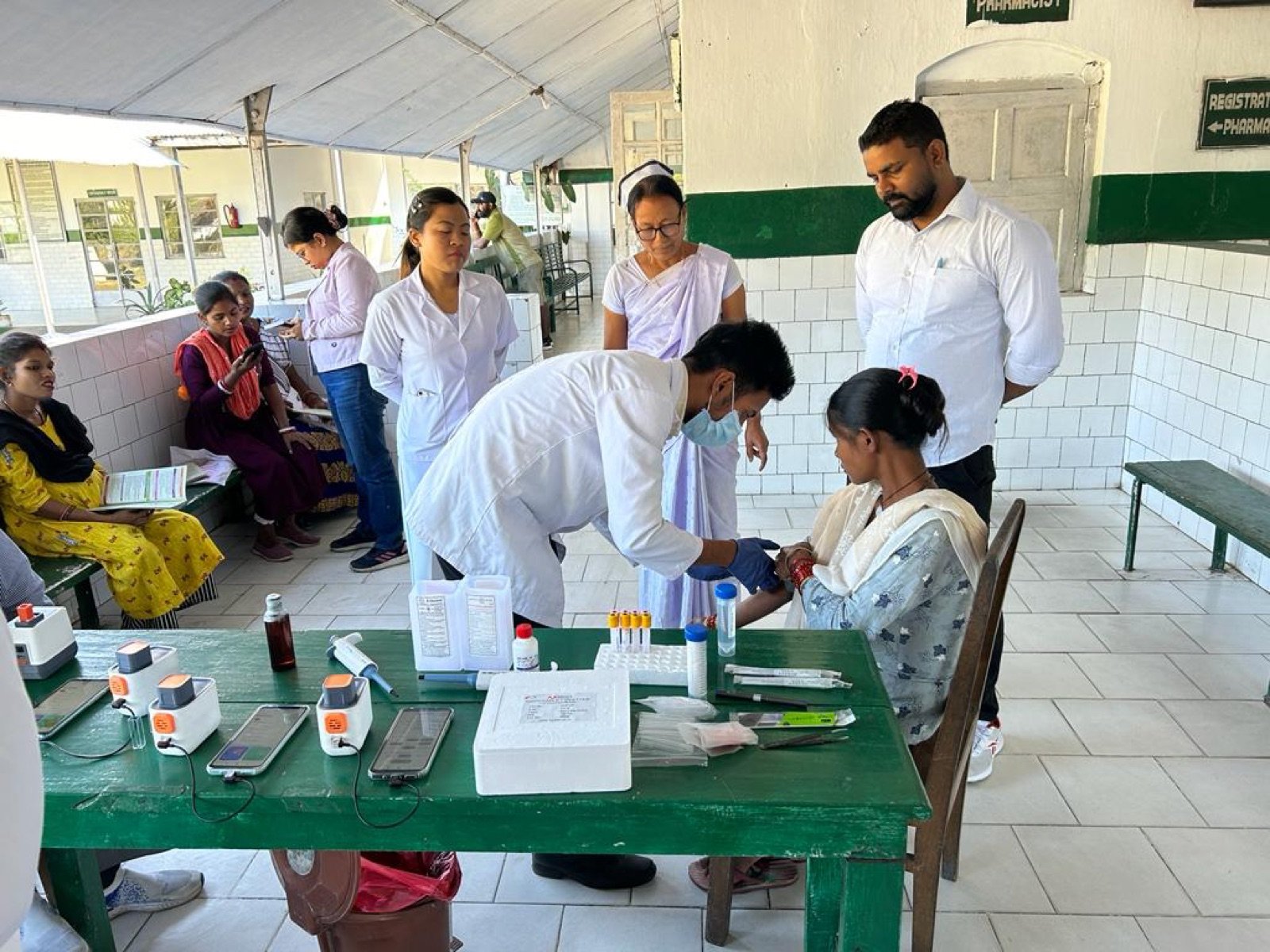
Deployment has followed validation. Mobilab has been used across Assam, Maharashtra, Uttar Pradesh, Madhya Pradesh, Gujarat, Delhi and Arunachal Pradesh, taking laboratory-grade testing to communities that previously had to travel for even basic blood work.
Backed to scale
In August 2025, the Technology Development Board (TDB) under the Department of Science and Technology signed an agreement with Primary Healthtech to support the next phase of Mobilab — upgrading the M1 prototype to perform five tests at once and setting up commercial-scale manufacturing. It is the kind of public backing that signals a technology moving from promising prototype to national infrastructure.
The founders describe the mission plainly: bridging the healthcare gap for rural and underserved communities, so that advanced diagnostics are available at the point of care, anywhere in India. With chronic diseases now the country’s largest health challenge, a device that catches kidney, liver and heart trouble early — at the doorstep, for a fraction of lab cost — is not just a clever gadget. It is a piece of public-health infrastructure, built in India, for the places that need it most.
Keep reading: From Farm Waste to Fashion: Inside AltMat’s Altag, the Fibre Spun From India’s Crop Leftovers · A Molecule a Decade in the Making: Inside Pioxaniliprole, India’s First Home-Grown Insecticide · More Chemicals, Materials & Life Sciences stories
Like stories like this? Add Exceptional Technology as a preferred source on Google to see more of our reporting in your search results and Discover feed.