For six months, a 147-foot-long machine crawled across India at barely 10 kilometres a day. It rode a 260-wheel trailer out of Paradip Port in Odisha, across four states and seven districts of Uttar Pradesh, with electricity wires lifted overhead, overbridges cleared and temporary iron-sheet roads laid wherever the road ran too narrow. The journey alone cost about ₹15 crore. Its destination: Kumbhi, in Uttar Pradesh’s Lakhimpur Kheri district, where the machine is now being installed as the heart of India’s first industrial-scale bioplastic plant.
That plant is Balrampur Bioyug, the polylactic acid (PLA) venture of Balrampur Chini Mills Limited (BCML), one of India’s largest integrated sugar companies. When it begins operations — expected in November — sugarcane grown in the surrounding Terai belt will go in one end of a single integrated campus and come out the other as compostable bioplastic, ready to be turned into packaging, bottles, cutlery, textiles and more.
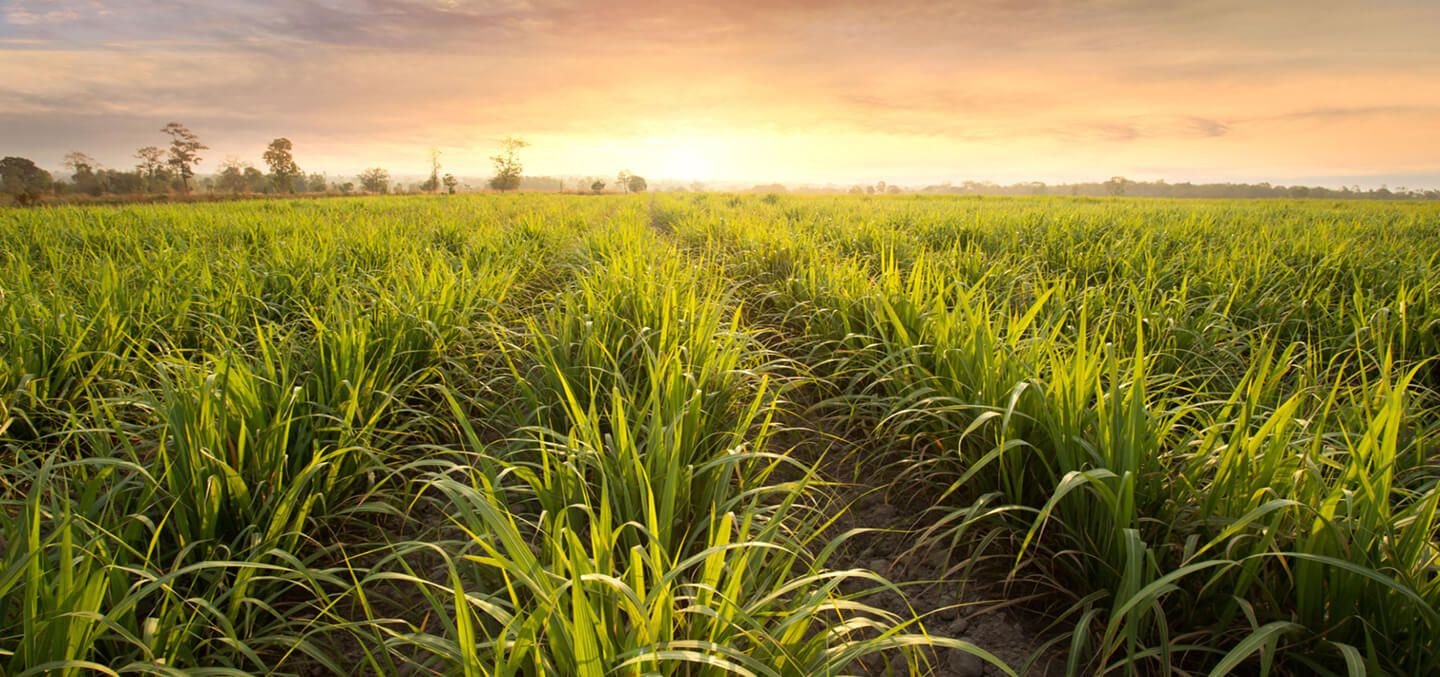
Sugarcane fields like those feeding Bioyug’s Kumbhi plant (official company imagery).
One site, from cane to compostable plastic
What makes Bioyug a first is the integration. The company says its Kumbhi facility is the first plant anywhere to consolidate the entire PLA production cycle — from sugarcane feedstock to finished biopolymer — at a single site, beside BCML’s existing sugar mill. Sugarcane is processed into sugar, converted into lactic acid, and then polymerised into PLA, which is finished as pellets that manufacturers can mould into everyday products.
The greenfield plant is designed to produce 80,000 tonnes of PLA a year, backed by an investment of ₹3,080 crore deployed in phases over about two and a half years. The company says the entire production process will run on 100% renewable energy, and the facility incorporates a Zero Liquid Discharge system, so no industrial liquid waste leaves the site. BCML itself brings serious scale to the bet: founded in 1975, it runs ten sugar factories in Uttar Pradesh with a combined crushing capacity of 80,000 tonnes of cane a day, alongside distillery and co-generation operations.
More Read

Plastic that returns to the earth
PLA is a bio-based polymer made from renewable feedstocks such as sugarcane and corn starch, offering an alternative to conventional plastics derived from fossil fuels. The company says producing a kilogram of PLA takes 1.7 kilograms of raw sugar and emits 0.5 kilograms of CO₂ — far below conventional plastic — and the finished material is 100% compostable in industrial facilities. Through anaerobic digestion and composting it can also be converted into biogas and nutrient-rich fertiliser, closing the loop from field to product and back to the soil.
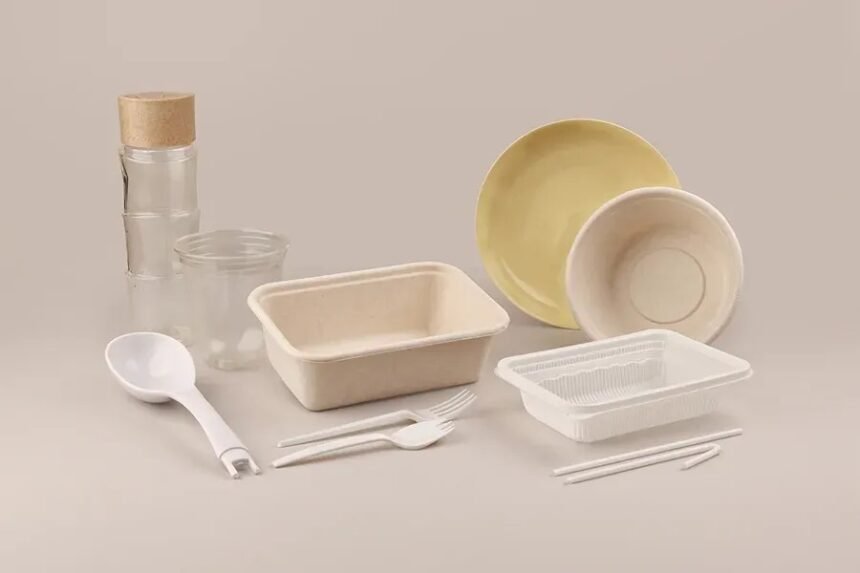
The applications run wide: food packaging and food service, disposable tableware, bottles, textiles, biomedical products and 3D printing. The company says Bioyug’s PLA can replace single-use plastic items including straws, tea cups, disposable cutlery, trays, bottles and curd cups — the very products at the centre of India’s single-use plastic fight.
The machine that travelled 10 kilometres a day
The star of the build is the cyclisation reactor that made the epic road journey from Belgium via Paradip Port. Standing around 20 feet high and 23 feet wide on its trailer, the vessel needed a team of about 35 trained personnel travelling with it the whole way, a detailed route survey conducted months in advance, and coordination with the National Highways Authority of India, public works departments, police, municipal bodies, forest officials and electricity departments. Where roads were too narrow, crews laid heavy iron sheets to carry the load through.
Its arrival at Kumbhi marked the final major step before commissioning. Installation has begun, and the company expects the plant to begin operations in November.
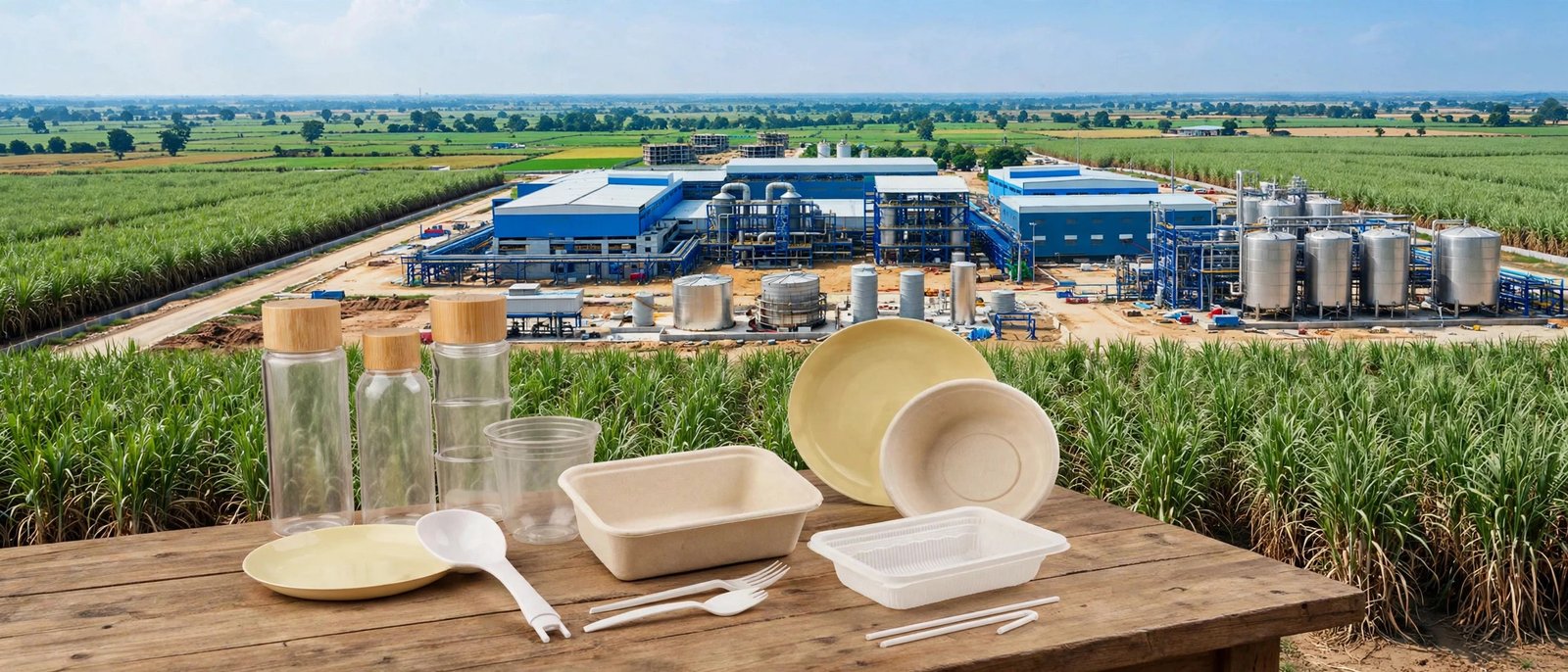
An AI-generated scene of the Bioyug plant and its compostable PLA products, based on the company’s official plant and product imagery.
Buyers are already lining up
Bioyug is not waiting for the plant to prove itself before finding customers. BCML has signed a memorandum of understanding with the Lucknow Cantonment Board and secured its first government institutional order for compostable PLA products, including garbage bags, bottles, pens and folders. On World Environment Day 2026, the two hosted Bioyug Green Command 2026 in the presence of Defence Minister Rajnath Singh, and on 15 August 2026 they inaugurated a ‘Waste to Wealth’ project using PLA-enabled industrial composting to turn horticultural and food waste into compost, with the first batch yielding one tonne of compost.
The project also rides a policy tailwind: in October 2024, Uttar Pradesh approved the country’s first comprehensive bioplastic policy, offering incentives for exactly this kind of low-carbon manufacturing. Balrampur Chini launched the Bioyug brand formally in May 2025, and the company says the venture supports India’s journey towards net-zero emissions by 2070.
India imports most of its advanced polymers today. Bioyug’s bet is that the country’s sugarcane fields can supply a homegrown alternative — one that gives farmers a new high-value outlet for their cane, gives industry a compostable material made in India, and gives the plastic in daily life a way back to the earth.
Balrampur Chini Mills’ foundation stone laying ceremony for the PLA plant at Kumbhi, Uttar Pradesh.
Keep reading: The Mine Above Ground: Inside MiniMines, the Bengaluru Startup Turning Dead Batteries Into Critical Minerals · Earlier, Gentler, Closer to Home: Inside MEDxAI’s Cervilens, the AI Helping Catch Cervical Cancer Early · More Chemicals, Materials & Life Sciences stories
Like stories like this? Add Exceptional Technology as a preferred source on Google to see more of our reporting in your search results and Discover feed.