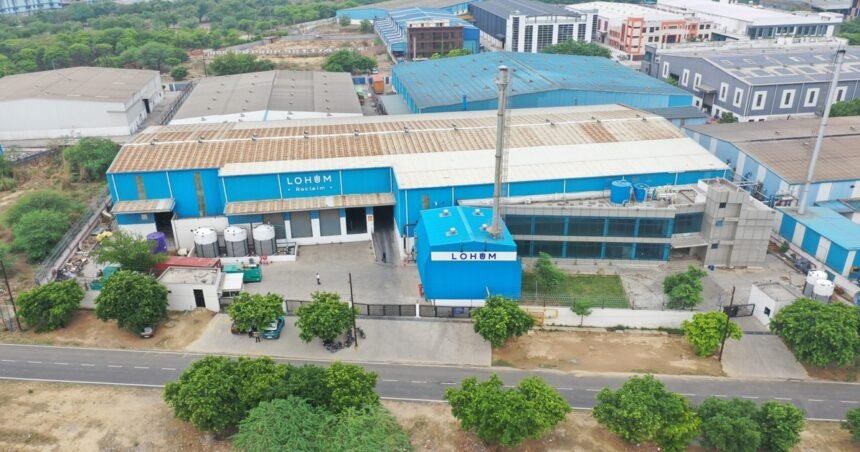
Picture a spent electric-vehicle battery arriving at a plant in Greater Noida, its useful road life over. Weeks later, the lithium, cobalt and nickel inside it are back in the economy as battery-grade minerals, pure enough to build a brand-new battery. That round trip — from dead battery to fresh raw material — is the business LOHUM Cleantech has spent eight years perfecting, and it is now taking the company from India’s recycling plants to lithium mines abroad.
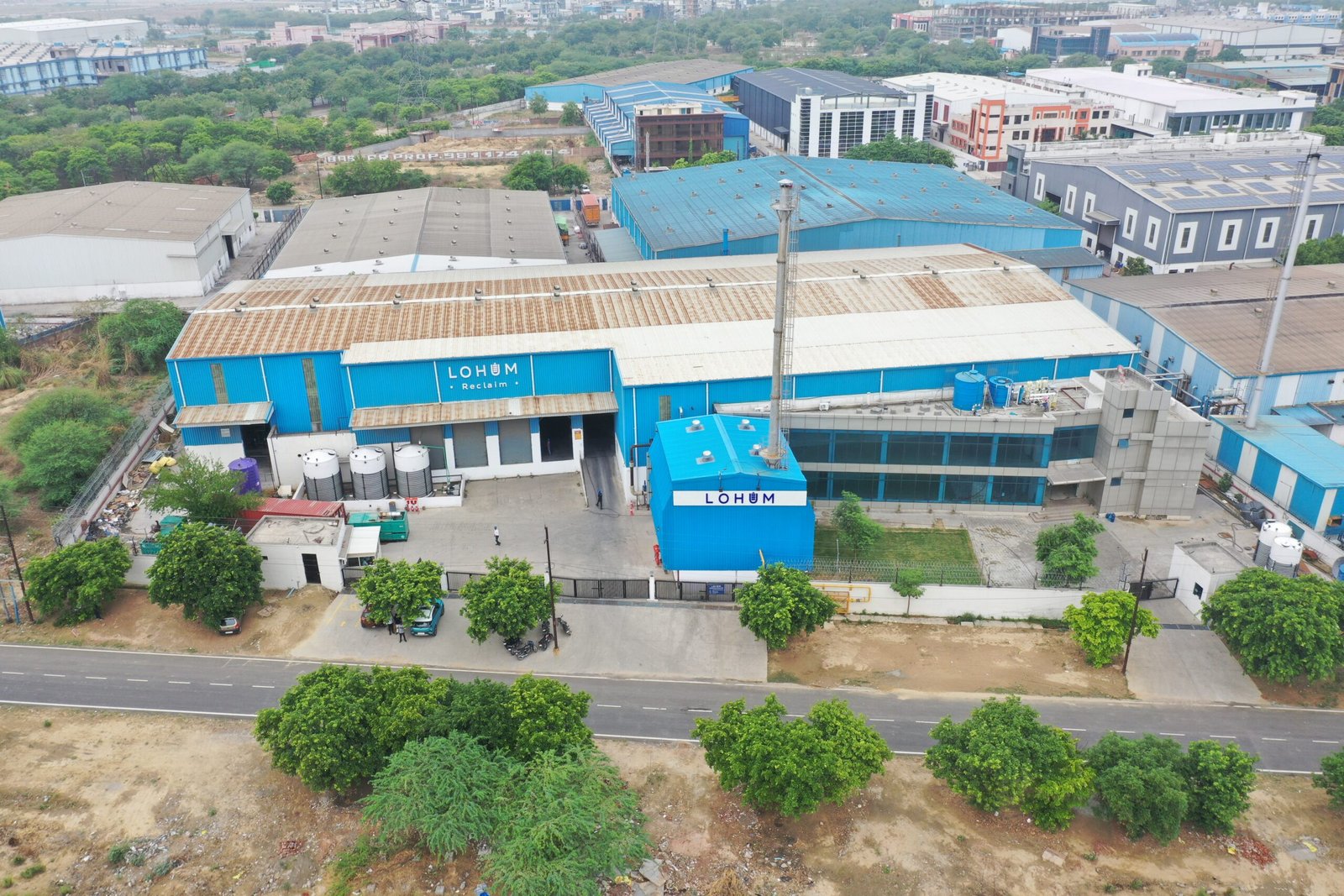 LOHUM’s Reclaim facility in Greater Noida. (Image: LOHUM)
India’s largest battery recycler
Founded in 2018 by Rajat Verma and headquartered in Greater Noida, LOHUM is India’s largest lithium-ion battery recycler by market share, processing around 20,000 tonnes of battery material a year. The company describes itself as India’s largest producer of sustainable critical minerals and advanced materials, and it is a partner to India’s National Critical Mineral Mission, the government’s push to secure the minerals behind clean energy, electronics and defence.
The heart of the operation is NEETM, LOHUM’s proprietary multi-stage hydrometallurgical process. Instead of smelting batteries at high temperature, NEETM uses liquid-based extraction to pull metals out of shredded battery waste, known as black mass. The company says the process recovers around 95% of battery raw materials — lithium, cobalt, nickel, aluminium and copper — at purities approaching 99.5%, and that it works across every cell chemistry, so no battery type is turned away. The company also says the route cuts carbon emissions by around half compared with mining virgin minerals.
In March 2025, LOHUM launched what it calls India’s first battery-grade lithium refinery, with an initial capacity of 1,000 metric tonnes a year. The company now operates eight facilities, including what it describes as India’s largest lithium and cobalt refineries in Greater Noida and a plant in Gujarat, with two more sites under development in South India and joint ventures in the United States and Sharjah. It is also one of the few Indian recyclers to hold an R4 licence, which permits it to import lithium-ion battery scrap for recycling, feeding overseas volumes into its Indian refineries.
From Glencore to Mercedes-Benz
LOHUM’s materials already travel deep into the global battery supply chain. In September 2022 the company partnered with Glencore, the Swiss commodities giant, to supply specialty chemicals for the battery supply chain in a deal worth $200 million. It is Mercedes-Benz Energy’s first Asian partner for lithium-ion battery recycling and repurposing, taking second-life battery modules at a scale of 50 MWh a year and offering a buy-back guarantee to recycle them when their second life ends.
More Read

Closer to home, LOHUM has worked with MG Motor India on second-life energy storage, and its partnership with Altigreen is set to recycle 1 GWh of electric three-wheeler batteries over three years. Its customer and partner network spans Ather, Tata Motors Nepal, Stellantis and Log9 Materials, among more than 200 global customers and partners the company counts today.
 Battery-grade lithium carbonate produced at LOHUM’s refinery. (Image: LOHUM)
The leap: mining lithium abroad, refining it at home
The most striking chapter of the LOHUM story opened in October 2026, when the company became the first Indian business to begin overseas lithium mining operations, in Zimbabwe. The company plans to invest $100 million over the next 12 to 18 months in an ore-processing plant there, and to build 30,000 tonnes a year of lithium carbonate refining capacity in India to process that feedstock.
That refined lithium will feed a planned 20,000-tonne cathode active material plant worth around Rs 2,000 crore, the key ingredient that turns raw lithium into battery-ready cathodes. A cathode-material plant in Krishnagiri, Tamil Nadu, reported to span 65 acres and scale to 20 GWh, is part of the same build-out. The company has set itself a revenue target of Rs 10,000 crore by 2029, and its place on the 2026 Hurun India Gazelle Index, published in November 2026, marks it as one of the country’s fastest-rising young companies.
A second life before recycling
LOHUM’s model does not stop at recycling. The company builds first-life battery packs with new cells and second-life packs refurbished from used cells, so a battery can serve in a vehicle, then in stationary storage, and only then be broken down for its minerals. It is also a registered Extended Producer Responsibility partner under India’s Battery Waste Management Rules, helping manufacturers meet their collection and recycled-material targets with digitised, traceable tracking across the material lifecycle.
It is a neat inversion of the usual mining story. Instead of digging new holes for every new battery, LOHUM is proving that India’s fastest-growing mineral reserve is the one already sitting in its drawers, its telecom towers and its growing fleet of electric vehicles — and that refining it at home is how the country loosens its dependence on imported critical minerals.
Keep reading: Built Around the Person, Not the Chair: Inside NeoMotion’s NeoFly and NeoBolt · A Checkup Without the Hospital Visit: Inside Clinics On Cloud’s Health ATM, the Pune Kiosk · More Chemicals, Materials & Life Sciences stories
Like stories like this? Add Exceptional Technology as a preferred source on Google to see more of our reporting in your search results and Discover feed.